


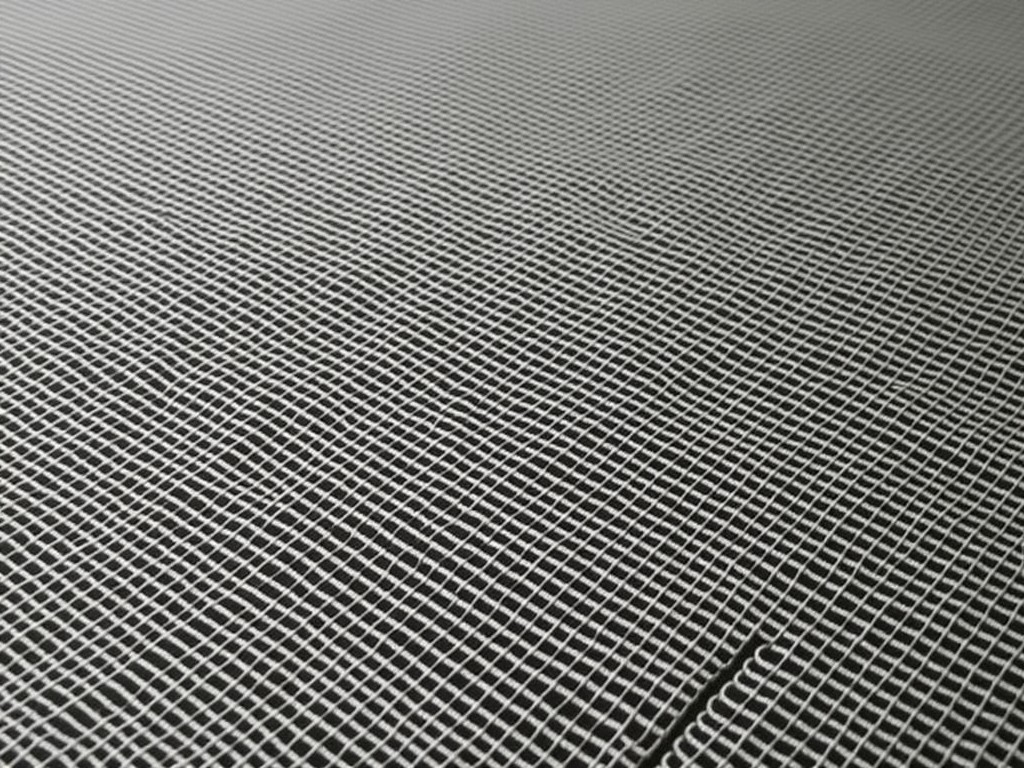
304 Stainless Steel Filter Mesh Supplier
304 Stainless Steel Filter Mesh Supplier
Selecting a filter mesh supplier requires understanding how material properties, weave precision, and manufacturing consistency directly impact filtration performance in industrial processes. This page explains the technical characteristics of 304 stainless steel filter mesh, its functional advantages in demanding environments, and the considerations that ensure reliable integration into your systems.
Material Properties and Corrosion Resistance
304 stainless steel contains 18% chromium and 8% nickel, forming a passive chromium oxide layer that resists oxidation in ambient air and many aqueous environments. This alloy maintains structural integrity at temperatures up to 870°C intermittently and 925°C continuously, making it suitable for hot fluid filtration and steam systems. Its resistance to common inorganic acids, alkalis, and organic compounds allows use in food processing, pharmaceutical wash systems, and chemical rinsing lines where hygiene and durability are critical.
Unlike carbon steel or lower-grade alloys, 304 does not require protective coatings that could degrade or contaminate filtrate. Its non-magnetic annealed state (though slight magnetism may develop from cold working during weaving) avoids interference with magnetic sensors or pumps in sensitive installations. The material’s tensile strength of approximately 505 MPa and yield strength of 215 MPa provide sufficient mechanical stability for high-pressure differential applications without permanent deformation.
Weave Types and Filtration Precision
Filter mesh performance depends on weave pattern, wire diameter, and aperture size—factors that determine flow rate, particle retention, and mechanical strength. Plain Dutch weave offers high strength and fine filtration by using thicker warp wires and finer shute wires, creating a tortuous path that captures sub-micron particles while maintaining robust flow characteristics. Twill weave provides balanced tensile strength in both directions, ideal for applications requiring resistance to bidirectional stress, such as vibratory screening or pulsating flow systems.
Mesh count (wires per inch) and micron rating are inversely related; higher mesh counts yield smaller apertures but reduce open area and increase pressure drop. For example, a 200 mesh plain weave with 0.1mm wire diameter has approximately 75µm apertures and 36% open area, whereas a 400 mesh equivalent drops to 38µm apertures and 25% open area. Selecting the correct combination ensures optimal particle capture without excessive energy loss or frequent cleaning cycles.
Surface Finish and Cleanability
Surface roughness affects both filtration efficiency and cleanability. A smoother finish (Ra < 0.8µm) reduces particle adhesion and facilitates CIP (clean-in-place) procedures, essential in sanitary industries like dairy, beverage, and biopharmaceuticals. Electropolishing further enhances corrosion resistance by removing surface iron and smoothing microscopic imperfections, extending service life in aggressive environments such as nitric acid passivation baths or alkaline cleaning solutions.
Conversely, a slightly rougher finish may improve particle capture in depth filtration mechanisms where retention occurs within the mesh structure rather than solely on the surface. This trade-off is application-specific: surface filtration benefits from smoothness, while depth filtration may leverage controlled texture. Suppliers should provide profilometer data or surface finish specifications upon request to validate suitability for your cleaning protocols and contamination thresholds.
Customization and Dimensional Stability
Industrial filtration systems often require non-standard dimensions, shapes, or edge treatments to fit existing housings or accommodate installation constraints. Custom cutting to precise diameters, widths, or lengths eliminates gaps that could allow bypass filtration. Laser or water jet cutting ensures clean edges without burrs or deformation, preserving mesh integrity and preventing wire loosening during operation.
Additional options include welded seams for cylindrical filters, reinforced peripheries with stainless steel rings for high-tension applications, and pleating to increase effective surface area within confined spaces. Pleated configurations can increase filtration area by 300–500% compared to flat panels of the same footprint, reducing velocity and extending service intervals. All modifications are performed in-house to maintain material traceability and avoid cross-contamination.
Quality Control and Traceability
Consistent performance begins with raw material verification. Certified mill test reports (MTRs) confirm chemical composition and mechanical properties of the 304 stainless steel wire before weaving. In-process checks monitor wire tension, weave alignment, and dimensional accuracy to prevent defects such as skipped wires, double picks, or uneven tension that could compromise filtration uniformity or create weak points.
Final inspection includes aperture verification via optical microscopy or bubble point testing, tensile strength validation, and visual examination for surface defects. Each batch is assigned a unique traceability code linking to raw material logs, production parameters, and inspection records. This level of documentation supports regulatory compliance in FDA-regulated industries and facilitates root cause analysis if performance issues arise post-installation.
Typical Applications Across Industries
In food and beverage processing, 304 mesh filters pulp, seeds, and particulates from juices, wines, and dairy streams without imparting metallic taste or risking contamination. Its ability to withstand repeated CIP cycles with caustic and acidic solutions ensures longevity in bottling lines and pasteurization systems. Pharmaceutical manufacturers use it for buffer filtration, cell harvesting, and final product polishing where particulate control directly impacts product safety and efficacy.
Chemical processing plants deploy 304 mesh in catalyst recovery, polymer filtration, and solvent purification where resistance to organic solvents and mild acids is required. Automotive manufacturers integrate it into paint recirculation systems to remove pigments and fillers, preventing nozzle clogging and ensuring coating uniformity. Environmental applications include wastewater pretreatment for removing fibrous debris and protecting downstream membranes or UV disinfection units.
| Industry | Application | Key Requirement |
|---|---|---|
| Food & Beverage | Juice clarification | Non-toxic, cleanable, acid-resistant |
| Pharmaceutical | Sterile filtration pre-filter | Low particle shed, CIP/SIP compatible |
| Chemical | Catalyst retention | Solvent resistance, mechanical stability |
| Automotive | Paint recirculation | Abrasion resistance, consistent flow |
| Environmental | Pretreatment screening | Debris removal, corrosion resistance |
Ordering Information and Technical Support
To receive an accurate quotation, provide the following details: mesh count or micron rating, wire diameter, weave type (plain, twill, Dutch), dimensions (width, length, diameter), edge finish (cut, sealed, ringed), and any surface treatment (electropolished, passivated). Specify operating conditions including temperature, pressure differential, fluid chemistry, and cleaning frequency to ensure the recommended configuration matches your process demands.
Samples are available for validation testing under actual process conditions. Lead times typically range from 2–4 weeks for standard specifications, with expedited options available for critical projects. Technical support includes material selection guidance, weave optimization for flow vs. retention trade-offs, and installation recommendations to prevent premature fouling or mechanical failure.