


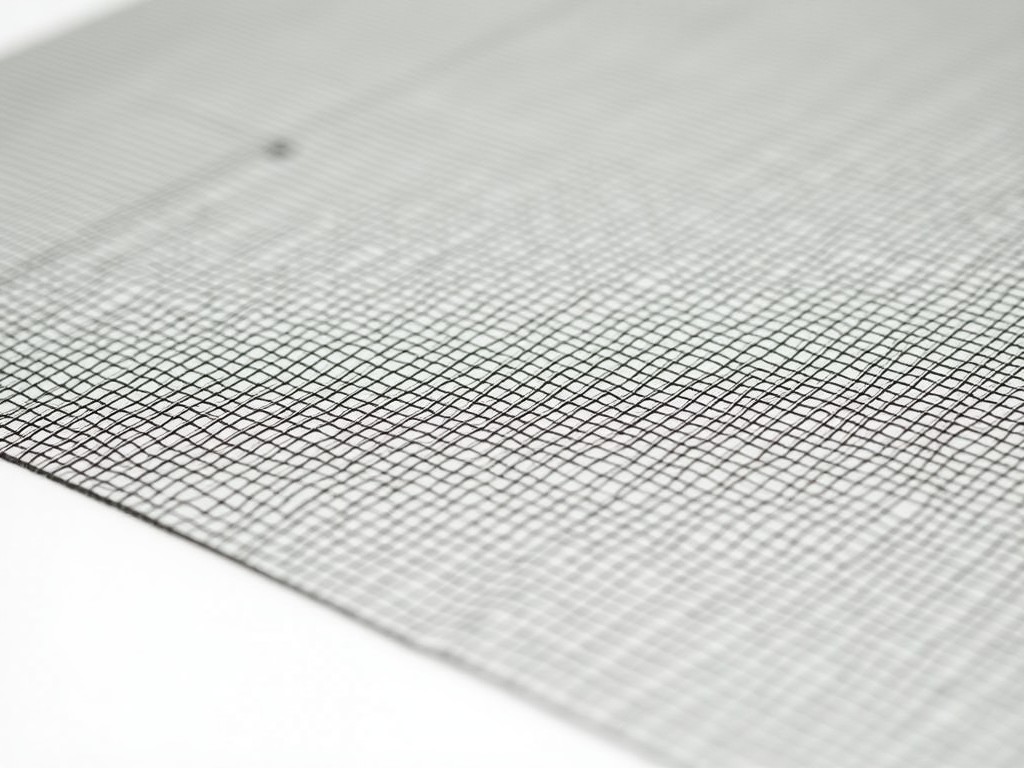
304 Stainless Steel Insect Fly Mosquito Screen Mesh Exporter
304 Stainless Steel Insect Fly Mosquito Screen Mesh
This mesh is manufactured from 304 grade stainless steel wire, woven into a uniform grid pattern to create a barrier against flying insects while maintaining airflow and visibility. The material selection provides inherent corrosion resistance suitable for exterior installations in humid, coastal, or industrial environments where standard materials may degrade.
The base alloy composition—approximately 18% chromium and 8% nickel—forms a passive oxide layer that resists rust and staining without requiring additional coatings. Wire diameters typically range from 0.20 mm to 0.50 mm, with aperture sizes between 0.8 mm and 2.0 mm, determined by the mesh count (e.g., 18x16, 20x20, 30x30). These dimensions balance insect exclusion efficiency with minimal pressure drop across the screen.
Technical Specifications
| Parameter | Typical Range | Notes |
|---|---|---|
| Wire Diameter | 0.20 – 0.50 mm | Selected based on required tensile strength and open area |
| Mesh Count | 14x14 to 30x30 threads per inch | Higher counts increase insect exclusion but reduce airflow |
| Aperture Size | 0.8 – 2.0 mm | Effective against common flies, mosquitoes, and small insects |
| Open Area Percentage | 60% – 75% | Calculated from wire diameter and mesh count; impacts ventilation efficiency |
| Tensile Strength (Wire) | 500 – 750 MPa | Typical for cold-drawn 304 stainless steel; varies with temper |
| Operating Temperature | -40°C to +400°C | Limited by oxidation resistance of 304 SS; no polymeric components |
Unlike polyester or fiberglass alternatives, 304 stainless steel mesh does not become brittle under UV exposure, nor does it absorb moisture that could promote microbial growth. The smooth wire surface minimizes particle accumulation, reducing maintenance frequency in dusty or high-pollution environments. Electrical conductivity of the base material allows for grounding integration in applications requiring static dissipation.
Material Properties and Performance
The austenitic structure of 304 stainless steel retains ductility after weaving, enabling the mesh to withstand impact and vibration without cracking. Post-weaving stress relief treatments are typically unnecessary due to the low carbon content (<0.08%), which minimizes sensitization risk during standard manufacturing processes. This contributes to long-term structural integrity in dynamic installations such as retractable screens or vibrating equipment guards.
Corrosion resistance is effective in atmospheric conditions with chloride concentrations below 200 ppm. In marine or chemical processing environments with higher chloride exposure, alternative grades such as 316 stainless steel may be recommended—but for most architectural, agricultural, and general industrial insect screening applications, 304 provides adequate service life with minimal maintenance.
Fire performance is non-combustible; the mesh does not contribute to flame spread or smoke generation, meeting requirements for installation in fire-rated assemblies where insect screening is required as part of ventilation or emergency egress systems. Melting point exceeds 1400°C, ensuring stability under extreme thermal conditions unrelated to fire exposure.
Applications
In food processing facilities, this mesh is installed over ventilation openings, cooling tower air intakes, and dryer exhausts to prevent insect contamination of product streams while allowing sufficient air exchange for humidity and temperature control. The non-toxic, inert nature of 304 stainless steel complies with FDA and EU food contact regulations when used as a barrier rather than a direct contact surface.
Agricultural applications include greenhouse ventilation screens, livestock barn inlet covers, and storage silo vents. Here, the mesh excludes pests such as whiteflies, aphids, and stored-product insects without impeding the airflow necessary for temperature regulation or gas exchange in grain storage. The material’s resistance to fertilizer vapors and cleaning agents ensures longevity in chemically active environments.
Industrial uses encompass transformer breather vents, compressor air intakes, and control panel ventilation where fine particulates or insect nests could cause overheating or electrical faults. The mesh’s durability reduces replacement cycles compared to polymeric screens that may crack or deform under thermal cycling or mechanical stress from nearby equipment.
Customization Options
Widths are available from 100 mm to 3000 mm in standard roll formats, with slit-to-width services for narrow dimensions required in retrofits or OEM integration. Lengths are typically supplied in 30 m or 50 m rolls, but custom lengths can be produced to minimize splices in large-area installations such as curtain walls or continuous ductwork.
Mesh count and wire diameter combinations can be adjusted to optimize for specific insect sizes—finer meshes for no-see-ums (0.25 mm aperture) or coarser weaves for larger flies where maximum airflow is critical. Edge treatments include selvaged wires to prevent fraying, or hemmed edges with stainless steel binding tape for frame attachment.
Surface finishes range from mill finish (as-woven) to electropolished for enhanced smoothness in sanitary applications. Passivation treatments are available upon request to maximize corrosion resistance in aggressive environments, though the base 304 alloy already provides sufficient protection for most outdoor installations.
Quality Control and Testing
Raw material verification includes mill test certificates confirming chemical composition (Cr: 18-20%, Ni: 8-10.5%, C: ≤0.08%) and mechanical properties of the wire prior to weaving. Incoming wire is inspected for diameter tolerance (±0.01 mm) and surface defects using optical sorting systems to ensure consistent weave integrity.
Finished mesh undergoes aperture uniformity checks via optical gauging or laser scanning to verify that opening sizes conform to specification across the entire roll width. Tensile strength of the woven joint is sampled using grab tests on cut specimens to ensure the interlock does not slip under load—a critical factor in high-wind or impact-prone installations.
Visual inspection under standardized lighting identifies weaving errors such as double picks, missing wires, or tension variations. Rolls are measured for width and length accuracy, and edge quality is assessed to confirm selvage integrity or hem adhesion. All inspections follow documented procedures aligned with ISO 9001 principles, though specific certification status varies by manufacturer.
Packaging and Export Logistics
Rolls are wound onto rigid paper or plastic cores with inner diameter ratings matched to standard dispensing equipment. Protective wrapping includes polyethylene film to prevent surface contamination during transit, followed by an outer layer of kraft paper or woven polypropylene fabric for abrasion resistance. End caps secure the roll ends to prevent loosening.
For export shipments, rolls are packed into corrugated cartons or wooden crates depending on dimensions and quantity. Carton marking includes product code, mesh specification, roll length, weight, and country of origin. Palletization uses ISPM 15-compliant timber or plastic pallets with strapping or stretch wrap to prevent shifting during handling.
Documentation provided with each shipment includes commercial invoice, packing list, certificate of origin, and material test report upon request. Shipping terms are typically FOB or CIF as agreed, with lead times influenced by raw material availability and customization complexity—typically 2–4 weeks for standard specifications, longer for special finishes or non-standard widths.
Comparison with Alternative Materials
| Material | Corrosion Resistance | UV Stability | Temperature Limit | Typical Use Case |
|---|---|---|---|---|
| 304 Stainless Steel | Excellent in rural/urban atmospheres; good in marine with limits | Inherent; no degradation | Up to 400°C | Permanent exterior installations; food/pharma zones |
| Polyester Mesh | Poor; absorbs moisture, degrades | Fair; UV stabilizers extend life to 3–5 years | Up to 80°C | Temporary residential screens; low-cost barriers |
| Fiberglass Mesh | Good; inert but surface can fray | Poor; UV degrades binder over time | Up to 100°C | Window screens; low-traffic ventilation |
| Aluminum Mesh | Good; forms oxide layer | Inherent; no UV issues | Up to 250°C | Lightweight vents; non-structural guards |
Selecting 304 stainless steel mesh represents a lifecycle cost decision: higher initial expenditure offset by elimination of replacement cycles, reduced maintenance labor, and avoidance of process contamination risks associated with degrading alternatives. For projects requiring a service life exceeding 10 years in outdoor or hygienically sensitive environments, the material characteristics justify the specification.
To discuss your specific requirements—including aperture size, wire diameter, width, length, or surface treatment—provide your project parameters for a technical evaluation and quotation. Share details such as environmental exposure, insect type to be excluded, airflow constraints, and any regulatory compliance needs.
Request Technical Quotation