


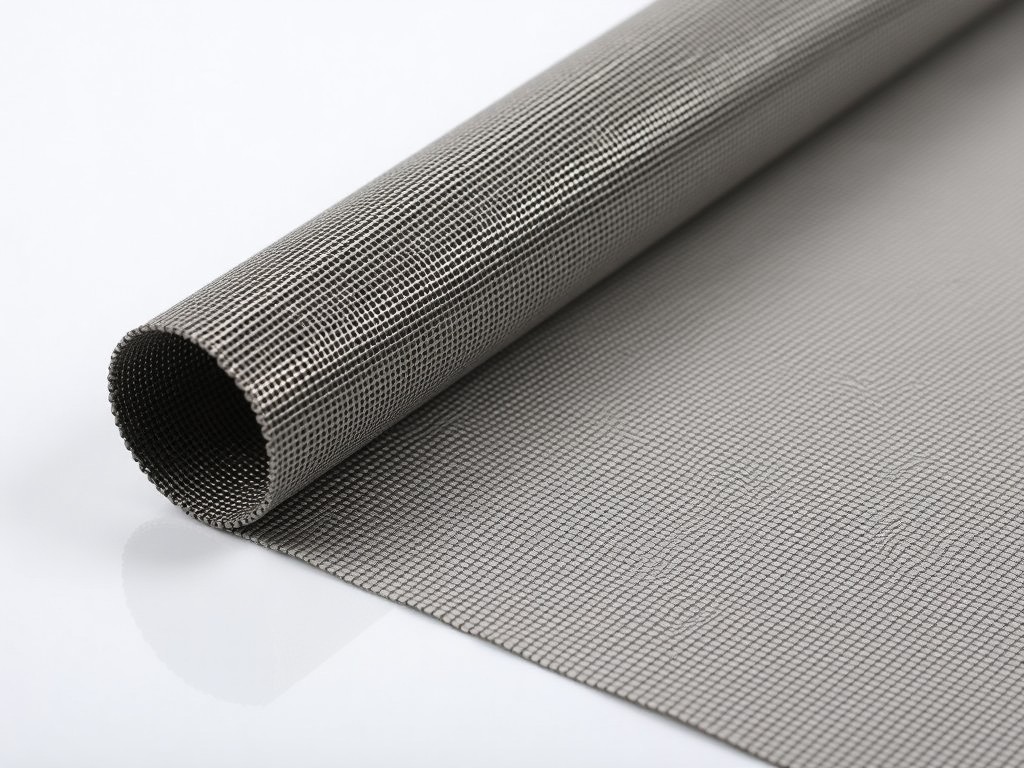
304L Plain Weave Stainless Steel Filter Mesh
304L Plain Weave Stainless Steel Filter Mesh
304L plain weave stainless steel filter mesh is a precision-engineered filtration medium composed of low-carbon austenitic stainless steel wires interlaced in a simple over-under pattern. The "L" designation indicates a maximum carbon content of 0.03%, which minimizes carbide precipitation during welding and enhances resistance to intergranular corrosion in as-welded conditions. This material combination delivers consistent pore structure, mechanical stability, and chemical inertness suitable for continuous operation in demanding industrial environments.
Material Properties and Composition
The base alloy, AISI 304L, contains 18-20% chromium and 8-12% nickel, forming a passive chromium oxide layer that provides inherent corrosion resistance across a wide pH range. Unlike standard 304, the reduced carbon content prevents sensitization during thermal cycling, maintaining ductility and toughness after fabrication processes such as weaving, cutting, or edge rolling. The wire diameter and opening size are precisely controlled during weaving to achieve repeatable filtration ratings, typically ranging from 5 microns to 2 millimeters, depending on application requirements.
Weave Structure and Filtration Performance
Plain weave, also known as tabby weave, represents the simplest and most stable interlacement pattern where each warp wire passes alternately over and under each weft wire. This symmetry results in uniform pore size distribution, consistent flow resistance, and mechanical isotropy in both machine and cross directions. Compared to twill or Dutch weaves, plain weave offers lower pressure drop at equivalent micron ratings due to straighter flow paths, making it ideal for applications requiring high throughput with moderate particle retention efficiency.
Typical Industrial Applications
This filter mesh is selected in processes where contamination control directly impacts product yield, equipment longevity, or regulatory compliance. In chemical processing, it separates catalysts from reaction mixtures under elevated temperatures and corrosive media. In food and beverage production, it enables sterile filtration of liquids and powders without leaching contaminants, meeting FDA and 3-A sanitary standards. Pharmaceutical manufacturers use it for buffer clarification and intermediate purification where extractables must be minimized. Additionally, it serves as a pre-filter in water treatment systems, protecting downstream membranes from particulate fouling in municipal and industrial wastewater streams.
Key Technical Parameters
| Parameter | Typical Range / Value |
|---|---|
| Wire Diameter | 0.05 mm – 2.0 mm |
| Opening Size | 0.05 mm – 5.0 mm |
| Mesh Count | 5 – 500 threads per inch |
| Open Area Percentage | 10% – 70% |
| Tensile Strength (Wire) | 500 – 750 MPa |
| Operating Temperature | -200°C to 400°C |
| Corrosion Resistance | Excellent in acidic, alkaline, and organic environments |
Customization Options
Filtration performance can be tailored through precise selection of wire diameter, mesh count, and roll width to match specific process constraints. Standard roll widths range from 500 mm to 2000 mm, with slit widths available down to 25 mm for cartridge or disc fabrication. Edge treatments include plain cut, hemmed, or welded borders to prevent fraying and facilitate integration into housings. For high-vibration environments, mesh can be laminated to perforated backing sheets or framed in stainless steel rings to enhance rigidity without compromising flow characteristics. All customizations are subject to manufacturability reviews to ensure dimensional stability and filtration integrity.
Quality Assurance and Testing
Quality control begins with raw material verification via mill test reports confirming chemical composition and mechanical properties. During production, wire tension and pick count are monitored in real time to maintain consistent weave geometry. Finished rolls undergo dimensional inspection using optical comparators and bubble point testing to validate pore size distribution and permeability. Surface cleanliness is assessed through wipe tests to ensure no residual oils or particulates that could contaminate sensitive processes. Each batch is traceable to the raw material lot, and documentation including conformance certificates is provided upon request.
For technical consultation, sample requests, or quotation inquiries regarding 304L plain weave stainless steel filter mesh for your specific filtration challenge, contact our engineering team.
Submit Inquiry