


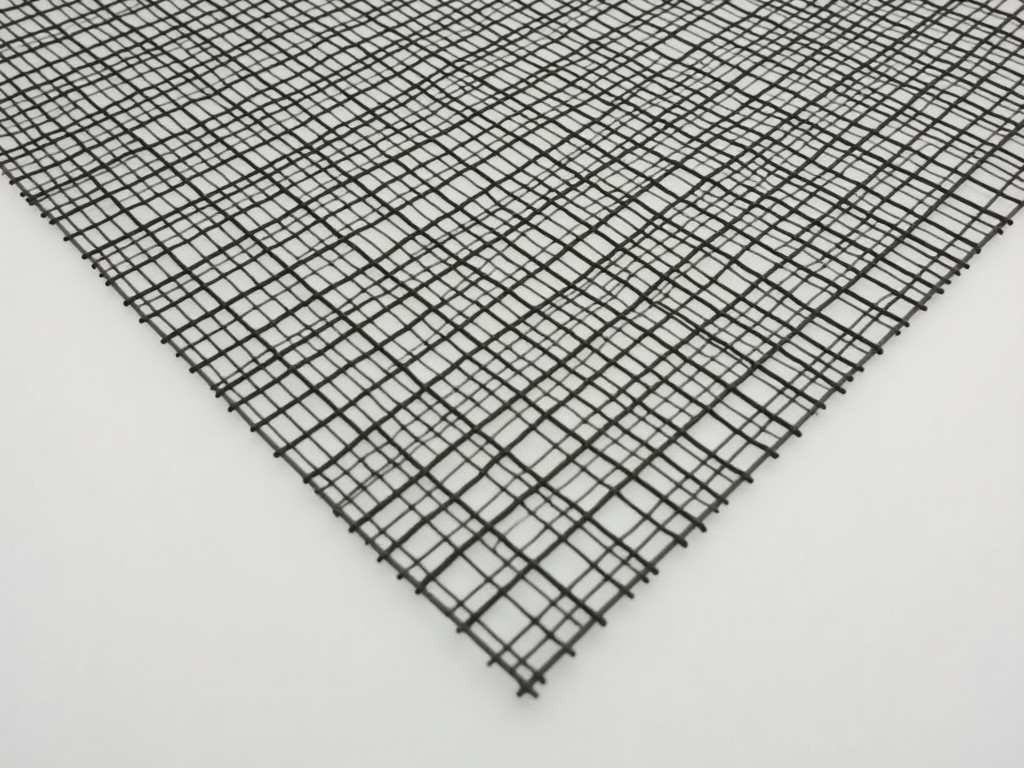
316 Epoxy Coated Stainless Steel Wire Mesh Supplier
316 Epoxy Coated Stainless Steel Wire Mesh
This product page details the technical characteristics, manufacturing considerations, and application suitability of 316 epoxy coated stainless steel wire mesh for industrial procurement decisions. Information is presented to support engineering evaluation and risk mitigation in sourcing.
Material Base and Coating System
The substrate is austenitic 316 stainless steel wire, selected for its molybdenum content (typically 2-3%) which enhances resistance to pitting and crevice corrosion in chloride-containing environments compared to 304 grade. The base wire undergoes cold drawing to achieve precise tensile strength and diameter tolerances before weaving.
The epoxy coating is a thermosetting bisphenol-A based formulation applied via fluidized bed or electrostatic spray deposition. Coating thickness is controlled to 150-250 micrometers, measured magnetostrictively, to provide a continuous dielectric barrier that isolates the stainless steel substrate from direct chemical contact while maintaining flexibility during bending or impact.
Adhesion between the epoxy and 316 substrate is critical; surface preparation includes alkaline cleaning, deionized water rinsing, and light abrasion to achieve a profile of 1.5-3.0 micrometers Ra, verified by pull-off testing per ASTM D4541 to ensure minimum adhesion strength of 5.0 MPa.
Weave Patterns and Structural Properties
Plain weave (1x1) provides symmetrical mesh openings and equal tensile strength in both warp and weft directions, suitable for general filtration and screening where bidirectional load distribution is required. Twill weave (2x2) offers increased drape and conformability to curved surfaces while maintaining open area percentage, beneficial in applications requiring sealing or gasketing over irregular profiles.
Dutch weave variations (e.g., 5x8) use finer weft wires packed tightly against coarser warp wires to achieve high filtration precision with relatively low pressure drop. The asymmetric structure retains mechanical stability despite the fine weft, as the warp wires carry primary tensile loads.
Mesh count (openings per linear inch) and wire diameter directly determine open area percentage and flow characteristics. For example, a 20 mesh x 0.45mm wire plain weave yields approximately 41% open area, while a 100 mesh x 0.15mm Dutch weave achieves 30% open area with particle retention down to 20-25 micrometers.
Chemical and Environmental Resistance
The epoxy coating provides isolation resistance to a broad spectrum of chemicals including aliphatic hydrocarbons, dilute acids (up to 20% sulfuric or nitric acid at ambient temperature), alkalis, and aqueous salt solutions. Performance limits are defined by the coating’s glass transition temperature (Tg ~60-80°C) and chemical permeability coefficients, which increase significantly above 80°C.
Under continuous immersion in chlorinated water or seawater, the 316 substrate remains protected as long as the coating remains intact; discontinuities exceeding 50 micrometers in diameter may allow localized electrolyte penetration, though the inherent passivation of 316 slows corrosion propagation. UV exposure degrades epoxy over time; outdoor applications benefit from UV-stabilized formulations or periodic recoating schedules based on radiant exposure levels.
In cyclic thermal environments, the coefficient of thermal expansion mismatch between epoxy (~50-70 ppm/°C) and 316 stainless steel (~16 ppm/°C) induces interfacial stress. Cycling between -20°C and 120°C is typically sustainable for 5,000+ cycles without delamination when coating thickness and cure schedule are optimized.
Typical Industrial Applications
In chemical processing plants, this mesh is used as a support medium for catalyst beds in fixed-bed reactors where epoxy coating prevents metal leaching into product streams and protects against acidic washcoats. The open area allows uniform gas distribution while the coating maintains integrity under periodic thermal cycling during regeneration.
Food and beverage facilities specify epoxy coated 316 mesh for strainers and sieves handling acidic fruit concentrates or brine solutions; the coating eliminates metallic contamination risks and withstands frequent CIP (clean-in-place) cycles with sodium hydroxide or peracetic acid solutions at temperatures up to 90°C.
Marine engineering applications include seawater intake pre-filters and splash zone screens where the coating resists biofouling adhesion and chloride-induced pitting that would compromise bare stainless steel over extended submersion periods. The mesh retains structural integrity despite constant wave impact and debris loading.
Quality Control and Testing Protocols
Incoming 316 wire is verified for chemical composition via optical emission spectroscopy (OES) with carbon content confirmed below 0.08% to maintain corrosion resistance post-welding if applicable. Diameter tolerance is measured to ±0.002mm using laser micrometry at multiple points along the wire length.
Post-weaving, mesh dimensions are inspected against CAD templates using vision systems with 0.01mm resolution to detect wire misalignment, missing picks, or tension variations. Open area uniformity is validated by bubble point testing with isopropyl alcohol to ensure consistent pore size distribution across the sheet.
Coating integrity is assessed via holiday detection (DC voltage >67.5V) to identify pinholes thicker than the coating, followed by cross-section adhesion testing and flexural bend tests over 3x diameter mandrels to evaluate coating flexibility without cracking. Salt spray resistance (ASTM B117) is monitored with periodic sampling, targeting <5% red rust after 1000 hours exposure.
Customization Parameters
Wire diameter ranges from 0.10mm to 2.00mm in 0.01mm increments, enabling fine-tuning of flow resistance and mechanical strength for specific process requirements. Mesh count is available from 5 to 500 openings per inch, with Dutch weave configurations extending effective filtration ratings below 10 micrometers.
Sheet dimensions are customizable up to 2.0m width and 6.0m length in flat panels, or fabricated into cylinders, cones, and complex geometries with welded or clamped edges. Edge treatments include hemmed, fringed, or reinforced with stainless steel binding wire to prevent fraying during handling or installation.
Epoxy formulation can be modified for specific resistance requirements: phenolic-modified for higher temperature stability (up to 150°C), or filled with alumina or silica for enhanced abrasion resistance in slurry handling. Color options (black, white, gray, transparent) are available for visual inspection or UV stability considerations.
Comparison: Epoxy Coated vs. Bare 316 Stainless Steel Mesh
| Property | Bare 316 SS Mesh | Epoxy Coated 316 SS Mesh |
|---|---|---|
| Chemical Isolation | Direct substrate exposure | Dielectric barrier prevents contact |
| UV Resistance | Inherent (no degradation) | Requires UV stabilizer; degrades over time |
| Abrasion Resistance | High (substrate hardness) | Moderate; improved with fillers |
| Electrical Conductivity | Conductive | Insulative (>10^12 Ω·cm) |
| Surface Roughness (Ra) | 0.2-0.8 µm (as-drawn) | 1.5-3.0 µm (coated profile) |
| Max Continuous Use Temp | 400°C (oxidizing) | 80-150°C (coating dependent) |
The table above illustrates trade-offs; epoxy coating sacrifices high-temperature capability and abrasion resistance for chemical isolation and electrical insulation, which are critical in applications where product purity or process safety outweighs mechanical extremes.
Procurement Considerations
Lead times typically range from 3-6 weeks for standard specifications, extending to 8-12 weeks for custom weaves, non-standard dimensions, or specialized epoxy formulations requiring material qualification. Minimum order quantities are generally 5 square meters for stocked weaves, increasing to 20 square meters for custom developments to offset setup costs.
Technical data sheets include coil weight calculations (based on density of 8.0 g/cm³ for 316 SS plus 1.2 g/cm³ for epoxy), roll dimensions for handling equipment planning, and bend radius recommendations to prevent coating damage during installation (minimum 5x wire diameter for cold bending).
Export packaging uses UV-stabilized polyethylene wrap, edge protectors, and humidity-indicating desiccants within wooden crates or steel-reinforced cartons to prevent mechanical damage and moisture ingress during transit. Documentation includes material test reports (MTRs) for wire composition and coating adhesion certificates per batch.
For technical consultation, custom specification requests, or quotation preparation, contact our engineering team.
Request Technical Quote