


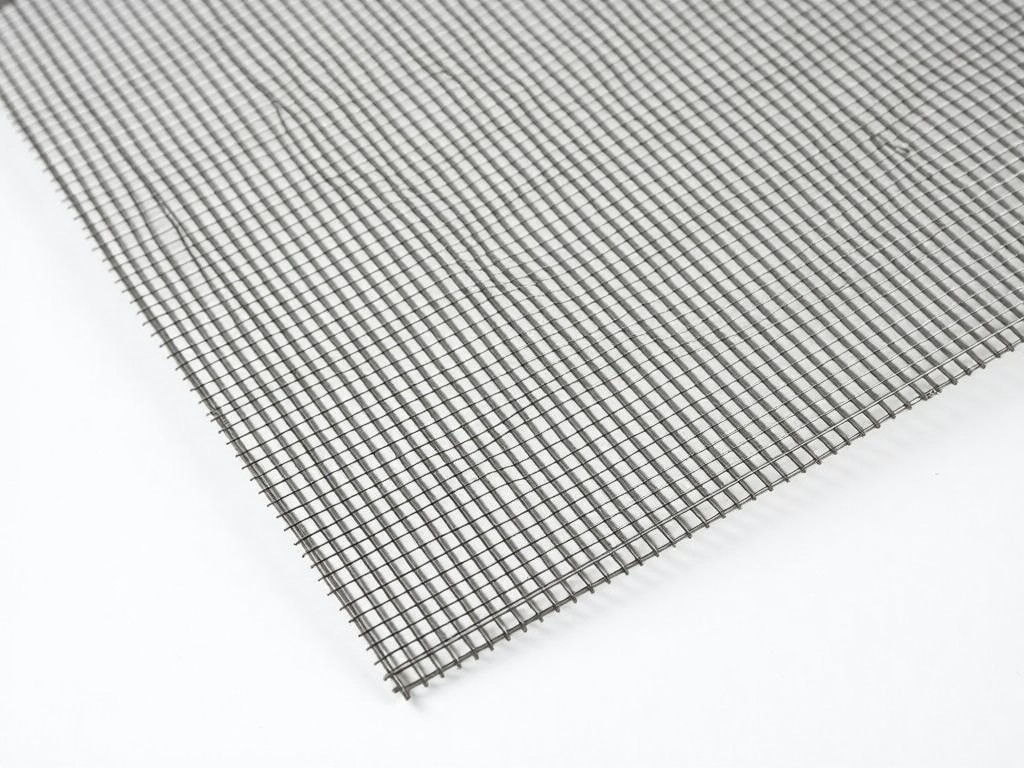
316 Marine Stainless Steel Fly Screen Factory Suppliers
316 Marine Stainless Steel Fly Screen Factory Suppliers
Marine-grade fly screens require materials that resist chloride-induced pitting and crevice corrosion in salt spray environments. 316 stainless steel contains 2-3% molybdenum, which significantly improves resistance to chlorides compared to 304 grade, making it suitable for continuous exposure to seawater or high-humidity coastal atmospheres.
For fly screen applications, the alloy maintains structural integrity at temperatures up to 870°C in intermittent service and provides sufficient tensile strength (typically 515 MPa minimum) to withstand wind loads and impact from debris without permanent deformation.
Wire diameter and mesh opening directly affect airflow, insect exclusion efficiency, and structural rigidity. Common specifications for marine fly screens range from 0.8mm to 1.2mm wire diameter with mesh apertures between 1.2mm and 2.0mm, balancing visibility, airflow, and pest exclusion.
A 1.0mm wire diameter with 1.4mm mesh opening achieves approximately 65% open area, providing adequate ventilation while blocking insects as small as 2mm. Thicker wires (1.2mm) increase burst pressure resistance but reduce open area to ~55%, which may require larger frame cross-sections to maintain equivalent airflow.
Manufacturers typically specify mesh count per linear inch (e.g., 18x16 mesh) rather than metric aperture; conversion is necessary when comparing international specifications. For example, 18x16 mesh corresponds to approximately 1.41mm aperture with 1.0mm wire.
Frame compatibility influences installation durability and galvanic corrosion risk. Aluminum frames are common due to weight savings, but direct contact between 316 stainless steel and aluminum in wet environments can accelerate galvanic corrosion of the aluminum unless isolated.
Using non-conductive spacers (e.g., nylon or PVC washers) or applying a dielectric coating to the frame mating surface prevents electrochemical coupling. Stainless steel frames (also 316 grade) eliminate galvanic concerns but increase weight and cost, typically reserved for structural reinforcement in high-wind zones.
Fastener selection must match the screen material; using 304 stainless screws with 316 mesh is acceptable, but 316 fasteners are preferred for full system compatibility in severe environments. Avoid carbon steel or galvanized fasteners, which will corrode preferentially and stain the surrounding mesh.
Surface finish affects both appearance and long-term maintenance. A 2B mill finish is standard for 316 stainless steel fly screen mesh, offering a smooth, slightly reflective surface that resists dirt adhesion and is easy to clean with fresh water rinsing.
For architectural applications requiring reduced glare, a brushed (No. 4) finish can be specified, which creates unidirectional satin lines that diffuse light. This finish increases surface area slightly, potentially improving salt retention in marine environments, necessitating more frequent cleaning schedules.
Mirror finishes (No. 8) are generally avoided for fly screens due to high visibility of fingerprints, water spots, and reduced scratch resistance, which compromises both aesthetics and functionality over time in exposed installations.
| Specification | Typical Range | Notes |
|---|---|---|
| Wire Diameter | 0.8mm - 1.2mm | Thicker wires increase durability but reduce open area |
| Mesh Aperture | 1.2mm - 2.0mm | Balances insect exclusion and airflow |
| Open Area Percentage | 55% - 68% | Dependent on wire diameter and mesh count |
| Tensile Strength (Min) | 515 MPa | For annealed 316 stainless steel wire |
| Operating Temperature | -196°C to 870°C | Intermittent service; continuous use limited by oxidation |
Quality assurance protocols ensure batch consistency and traceability. Reputable suppliers provide mill test certificates (MTCs) confirming chemical composition (Cr: 16-18%, Ni: 10-14%, Mo: 2-3%) and mechanical properties for each heat of wire used in production.
Visual inspection follows ASTM A480/A480M standards for surface discontinuities, with acceptable limits defined for scratches, pits, and roll marks. Dimensional verification includes wire diameter tolerance (±0.02mm) and mesh count accuracy (±2% per linear inch) using calibrated optical comparators or laser scanning systems.
Salt spray testing (ASTM B117) may be performed upon request, typically exposing samples to 5% NaCl fog for 500+ hours with acceptance criteria of no red rust or base metal corrosion. For marine applications, customers often require cyclic corrosion testing (e.g., ASTM G85 Annex A3) to simulate wet/dry and salt spray cycles more accurately.
Customization capabilities extend beyond standard mesh specifications to include edge treatments, framing integration, and modular panel systems. Hemmed or folded edges (typically 5-10mm fold) prevent wire fraying and provide a safe handling edge during installation.
For retractable or sliding screen systems, suppliers can integrate low-friction coatings (e.g., PTFE-based) on the mesh edges or provide U-channels and guide tracks manufactured from compatible 316 stainless steel or UV-stabilized polymers. Magnetic closure strips or weighted bottom bars are available for tensioned screen applications in doors or hatches.
Panel sizes are commonly limited by transport constraints; maximum single-panel dimensions usually do not exceed 2.4m in height or 1.2m in width for ease of handling. Larger installations are fabricated as modular sections with interlocking splines or bolt-together frames to maintain alignment and structural continuity across joints.
Packaging methods protect against mechanical damage and surface contamination during transit. Mesh rolls are typically wound on corrosion-resistant cores (plastic or coated steel) with inner diameter sized to prevent over-bending, wrapped in polyethylene film, and secured with biodegradable straps.
Flat panels are separated by corrugated cardboard or HDPE sheets, placed on wooden or plastic pallets, and stabilized with corner guards and stretch wrapping. For export shipments, desiccant packets are included to control humidity within the package, and external markings indicate handling instructions (e.g., "Keep Dry," "This Side Up").
Lead times depend on material availability and customization complexity; standard mesh rolls from stock may ship within 3-5 business days, while custom-fabricated panels with special edge treatments or integrated frames typically require 2-4 weeks. Customers should provide CAD drawings or detailed sketches with tolerances to minimize revision cycles.
Selecting a factory supplier involves evaluating technical capability, quality systems, and logistical responsiveness beyond price alone. Key considerations include in-house wire drawing and weaving capacity (indicating control over raw material quality), ISO 9001 certification, and experience supplying marine or architectural clients.
Requesting samples allows verification of mesh uniformity, edge finish, and actual open area under backlighting. Suppliers should provide cut-to-length samples (e.g., 300mm x 300mm) representing the exact specification, not general stock items. Confirm whether sample costs are creditable against future orders.
Inquire about the supplier’s process for handling non-conforming material, including quarantine procedures, root cause analysis, and corrective action timelines. Transparent communication about potential delays (e.g., due to alloy surcharges or wire diameter changeovers) reflects operational maturity and reduces procurement risk.
Environmental and regulatory compliance is increasingly relevant for marine installations subject to international conventions. 316 stainless steel is fully recyclable and does not contain substances restricted under RoHS, REACH, or MARPOL Annex III, making it suitable for use on commercial vessels and offshore platforms.
Unlike some polymer-based screens, it does not degrade under UV exposure or release microplastics. Fire performance meets non-combustible classifications (e.g., Euroclass A1) when evaluated as a standalone material, though final assembly ratings depend on frame and sealing components.
Suppliers should be able to provide material safety data sheets (MSDS) for the stainless steel grade and confirm compliance with regional regulations such as the EU Construction Products Regulation (CPR) or US Coast Guard equipment standards where applicable.
To initiate a technical inquiry, provide the following details: intended installation location (e.g., coastal, offshore, portside), exposure conditions (salt spray frequency, wind load requirements), dimensions and quantity, frame material and attachment method, and any applicable industry standards (e.g., ISO 12944 for corrosion protection, IMO MSC/Circ.1120 for marine ventilation).
Include preferred mesh specification (wire diameter and aperture) or performance goals (e.g., minimum airflow rate, maximum insect size excluded). Indicate whether samples are required for approval and the desired delivery timeline. Clear specifications enable accurate quotations and reduce the need for iterative clarification.
For project-based procurement, consider requesting a technical data package that includes material test reports, surface finish documentation, and recommended installation guidelines. This documentation supports engineering sign-off and long-term maintenance planning.
For technical specifications, sample requests, or project consultation, contact our engineering team to discuss your marine fly screen requirements.