


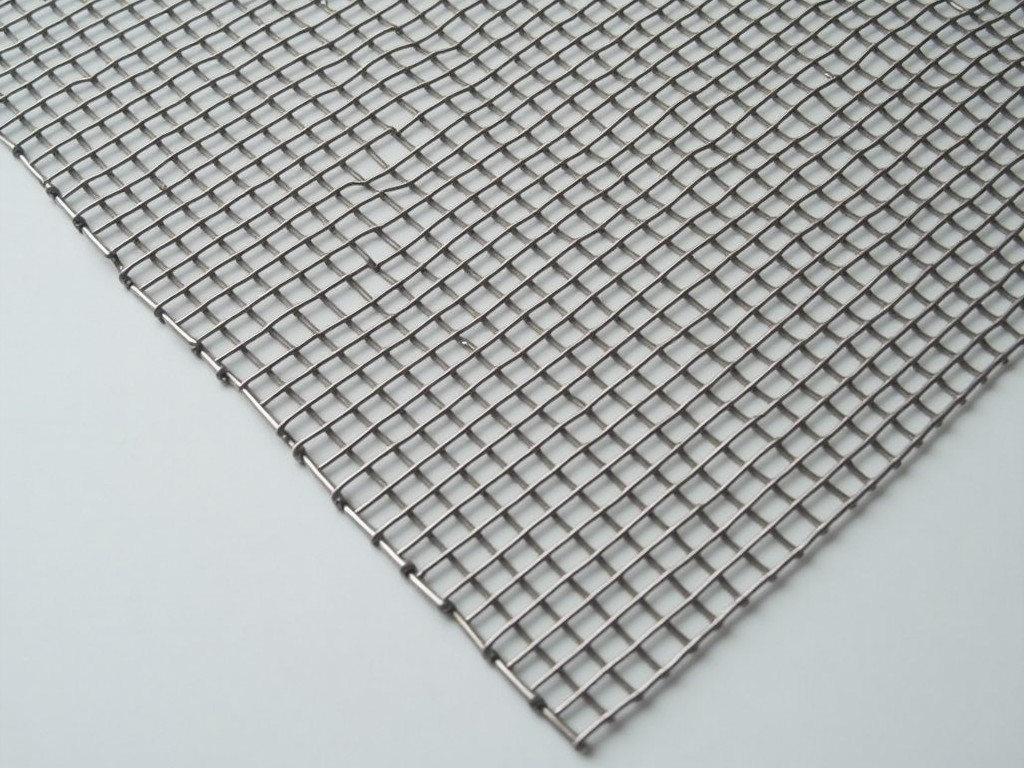
316 Stainless Steel Window Screen Mesh Supplier
316 Stainless Steel Window Screen Mesh Supplier
For coastal facilities, marine installations, and chemical processing environments, window screen mesh must resist chloride-induced corrosion while maintaining structural integrity under prolonged UV exposure and wind loading. Standard 304 stainless steel screens often exhibit pitting and staining within 18–24 months in salt-laden atmospheres, compromising both function and appearance. 316 stainless steel, with its 2–3% molybdenum addition, provides significantly enhanced resistance to pitting and crevice corrosion in these aggressive conditions, making it the preferred material for exterior architectural screening where longevity and low maintenance are critical.
Our 316 stainless steel window screen mesh is manufactured from cold-drawn wire meeting ASTM A240/A240M specifications, ensuring consistent composition and mechanical properties. The alloy’s nickel-chromium-molybdenum balance delivers a minimum tensile strength of 515 MPa and yield strength of 205 MPa, enabling the mesh to withstand typical wind pressures of up to 1500 Pa without permanent deformation. Unlike coated or plated alternatives, the homogeneous corrosion resistance of 316 SS extends through the entire wire cross-section, eliminating concerns about coating delamination or edge exposure over time.
Technical Specifications and Construction
Mesh performance is defined by three interdependent parameters: wire diameter, opening size, and weave pattern. These factors collectively determine airflow efficiency, insect exclusion capability, structural rigidity, and resistance to impact damage. Selecting the wrong combination can result in excessive pressure drop in HVAC applications, inadequate pest control, or premature fatigue failure under cyclic loading.
We produce 316 SS window screen mesh in standard weave patterns optimized for architectural use. Plain (square) weave offers balanced bidirectional strength and is suitable for most fixed installations. Twill weave provides enhanced drapability and surface smoothness for retractable systems, while Dutch weave achieves finer filtration with heavier warp wires for high-pressure differential environments. All variants are available in diameters ranging from 0.20 mm to 0.50 mm and opening sizes from 0.8 mm to 2.0 mm, allowing precise tuning of open area percentage (typically 60–80%) and mesh count (10–30 threads per inch).
Typical specifications include:
- Wire diameter: 0.20 mm – 0.50 mm (customizable)
- Opening size: 0.8 mm – 2.0 mm (customizable)
- Weave patterns: Plain, Twill, Dutch
- Open area: 60% – 80% (dependent on wire and opening)
- Mesh count: 10 – 30 threads per inch
Material Properties and Environmental Resistance
The superiority of 316 stainless steel in marine and industrial atmospheres stems from its ability to form a stable, self-healing chromium oxide passive layer. Molybdenum enhances this layer’s resistance to breakdown by chloride ions, which are prevalent in sea spray, de-icing salts, and certain industrial emissions. In ASTM B117 salt fog testing, 316 SS wire typically shows no visible rust after 1000+ hours, whereas 304 SS may exhibit red rust within 200–400 hours under identical conditions.
Beyond corrosion resistance, 316 SS maintains its mechanical properties across a wide temperature range. The alloy retains over 90% of its room-temperature tensile strength at 150°C and remains ductile down to cryogenic temperatures, making it suitable for installations in both hot climates and refrigerated facilities. Its non-magnetic nature in the annealed condition (typically <1.0 μr) also avoids interference with nearby sensitive electronic equipment, a consideration in laboratories and medical facilities.
Key material characteristics:
| Property | Typical Value | Relevance to Window Screen |
|---|---|---|
| Composition (Cr/Ni/Mo) | 16–18% / 10–14% / 2–3% | Enables chloride pitting resistance |
| Tensile Strength | 515 – 690 MPa | Resists wind load and impact |
| Yield Strength | 205 – 275 MPa | Prevents permanent sagging |
| Elongation at Break | 40 – 60% | Accommodates thermal expansion |
| Maximum Service Temp | 870°C (intermittent) | Withstands solar gain and fire exposure |
| Magnetic Permeability | <1.0 μr (annealed) | Safe near sensors and MRI rooms |
Applications in Harsh Environments
Architectural screening in coastal zones faces a unique combination of environmental stressors: salt aerosol deposition, high UV index, wind-driven rain, and thermal cycling. In these conditions, material selection is not merely about longevity—it directly affects lifecycle cost, maintenance access requirements, and building aesthetics. A screen that corrodes or stains within a few years necessitates frequent replacement, often requiring scaffolding or specialized access, increasing both risk and expense.
316 SS window screen mesh is commonly specified for:
- Beachfront residential and hospitality buildings
- Marine facilities, docks, and port administration buildings
- Chemical plants and wastewater treatment centers with outdoor control rooms
- Food processing plants requiring washdown-resistant enclosures
- Pharmaceutical and laboratory facilities with pressurized ventilation
In each case, the mesh serves as a barrier against insects, debris, and small animals while allowing unimpeded airflow for natural ventilation or HVAC makeup air. The open area percentage is carefully selected based on the required air changes per hour (ACH) and the maximum allowable pressure drop across the screen, typically kept below 50 Pa to avoid excessive fan energy consumption.
Customization and Manufacturing Considerations
Industrial buyers often require mesh tailored to specific framing systems, mounting methods, or operational demands. Width, length, edge treatment, and corner configurations all influence installation efficiency and long-term performance. We produce flat panels in widths up to 2.0 meters and lengths up to 30 meters, with standard edge options including folded hem, welded border, or raw cut for on-site fabrication. All edges are deburred to prevent injury during handling and to ensure clean sealing against gaskets or adhesive tapes.
For retractable or roll-up systems, we supply mesh on cores with precise tension control to prevent telescoping or edge damage during cycling. Custom perforations for cable pass-throughs, reinforced mounting strips, or integrated spline grooves can be incorporated based on CAD drawings or physical samples. Surface finishes are typically left in the as-rolled, annealed condition to preserve the passive oxide layer; however, electropolishing is available upon request for applications requiring ultra-clean surfaces or enhanced visual reflectivity.
Customization parameters include:
- Panel width: up to 2000 mm
- Panel length: up to 30,000 mm
- Edge treatment: folded hem, welded, raw, or taped
- Corner configurations: butt, lapped, or reinforced
- Mounting features: spline channels, gasket tracks, or clip receptacles
- Surface finish: annealed, electropolished, or coated (per spec)
Quality Assurance and Traceability
Consistent performance begins with raw material control. We source 316 SS wire from mills that provide mill test reports (MTRs) confirming chemical composition and mechanical properties per ASTM A240. Each production lot is assigned a unique traceability code linked to the wire coil number, weaving parameters, and inspection records. This enables full material traceability from raw stock to finished panel, a requirement for projects subject to ISO 9001, ASME, or military procurement standards.
In-process monitoring includes diameter verification via laser micrometry, tension control during weaving to ensure uniform opening size, and visual inspection under 10x magnification for defects such as broken wires, skips, or double picks. Finished panels undergo dimensional verification, squareness checks, and open area validation using calibrated grid methods. For critical applications, we can provide salt spray test reports (ASTM B117) or tensile strength validation from third-party laboratories.
Standard inspection protocol covers:
- Wire diameter tolerance: ±0.01 mm
- Opening size uniformity: ±5% across panel
- Weave integrity: no missing or crossed wires per 100 mm²
- Edge straightness: <2 mm deviation over 1 m length
- Surface cleanliness: free of oils, particulates, or rust stains
To discuss your specific requirements for 316 stainless steel window screen mesh—including custom dimensions, weave patterns, edge treatments, or project-specific certification needs—please contact our technical team. We provide detailed quotations, lead time estimates, and sample panels upon request to support your evaluation process.