


316L Stainless Steel Reverse Dutch Weave Filter Mesh Supplier
316L Stainless Steel Reverse Dutch Weave Filter Mesh Supplier
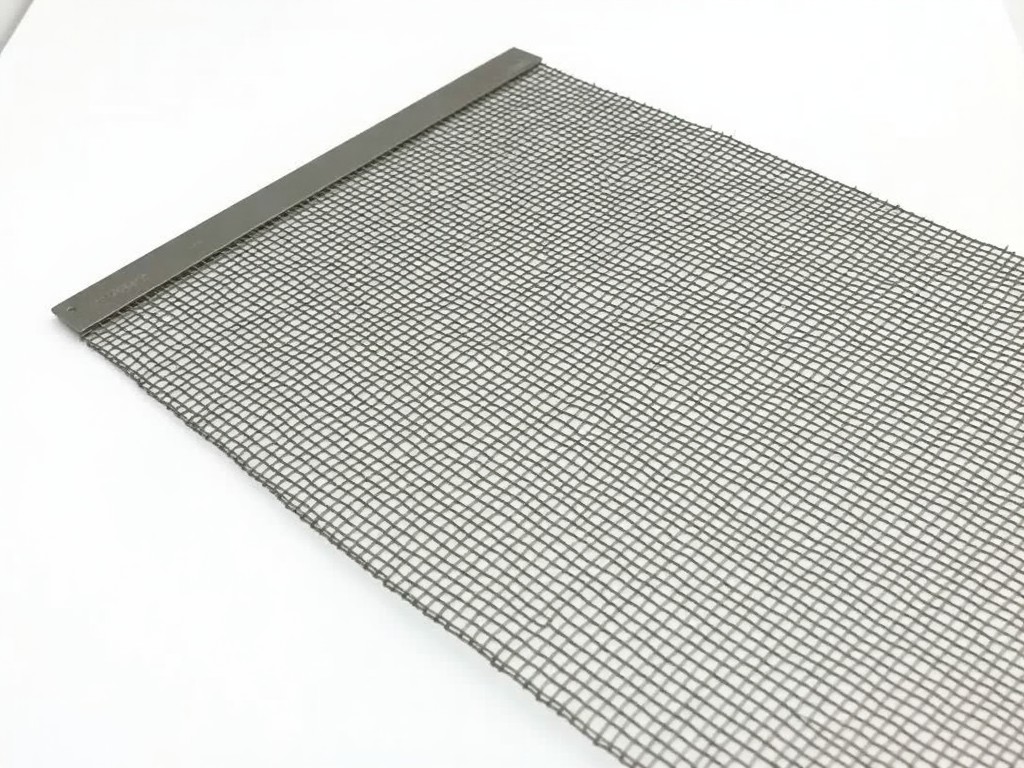
Reverse Dutch weave filter mesh made from 316L stainless steel is engineered for high-precision liquid and gas filtration where retention of fine particulates and resistance to corrosion are critical. Unlike standard weaves, the reverse Dutch configuration features a finer warp wire count with heavier shute wires, creating a tapered pore structure that maximizes dirt-holding capacity while maintaining precise surface filtration. This design is particularly effective in applications requiring consistent performance under variable flow conditions and exposure to aggressive chemicals.
The 316L alloy provides enhanced resistance to pitting and crevice corrosion in chloride-rich environments compared to standard 304 stainless steel, due to its lower carbon content and higher molybdenum levels. This makes it suitable for prolonged exposure to seawater, chemical processing streams, and pharmaceutical sanitization cycles. The material’s stability at elevated temperatures—retaining mechanical integrity up to approximately 870°C (1600°F) in intermittent service—further expands its utility in thermal processing and steam filtration systems.
As a supplier specializing in precision woven filtration media, we focus on delivering consistent mesh specifications tailored to process requirements, including exact micron ratings, tensile strength, and porosity profiles. Each roll or cut piece undergoes dimensional and visual inspection to ensure conformity to stated parameters before shipment.
Technical Characteristics of 316L Reverse Dutch Weave Mesh
The reverse Dutch weave structure is defined by its asymmetric wire arrangement: a high density of fine warp wires (typically in the micron range) combined with fewer, heavier shute wires. This creates a gradient pore structure where the surface presents the smallest openings for particle capture, while the depth provides a tortuous path that increases retention efficiency without excessive pressure drop. The resulting filter cake forms primarily on the surface, allowing for effective backwashing or mechanical cleaning in reusable systems.
Typical specifications for 316L reverse Dutch weave mesh include warp wire counts ranging from 200 to 800 wires per inch and shute wire counts from 50 to 200 wires per inch, depending on the target retention rating. The absolute micron rating—defined as the largest spherical particle that will pass through under defined test conditions—can range from 1 to 20 micrometers, with corresponding bubble point pressures between 15 and 150 psid. Air permeability typically falls between 10 and 200 L/min/cm² at 0.5 in. H₂O pressure drop, varying with mesh grade.
Mechanical properties of the 316L base material contribute to dimensional stability under tension. The alloy exhibits a tensile strength of approximately 515 MPa (75 ksi) and a yield strength of 205 MPa (30 ksi) in the annealed condition, with elongation exceeding 40%. These values ensure the mesh withstands stretching during installation and periodic cleaning cycles without permanent deformation. Post-weaving stress relief treatments are available upon request to further enhance dimensional stability in high-vibration environments.
Industrial Applications and Process Fit
In pharmaceutical manufacturing, 316L reverse Dutch weave mesh is used for sterile filtration of biologics, buffer solutions, and final product rinsing, where compliance with USP Class VI and ISO 10993 standards requires materials that do not leach contaminants. The smooth surface finish and passivation compatibility reduce the risk of protein adsorption and biofilm formation, supporting clean-in-place (CIP) and steam-in-place (SIP) protocols.
Chemical processing plants deploy this mesh in catalyst recovery systems, where fine solid particles must be separated from corrosive reaction mixtures containing acids, solvents, or salts. The chloride resistance of 316L prevents premature failure in environments such as acetic acid production or esterification processes, while the high dirt-holding capacity extends filter cycle times between maintenance intervals.
Food and beverage applications include clarification of juices, wine, and edible oils, where the mesh removes yeast, polyphenols, and wax particulates without altering flavor profiles. The inert nature of 316L ensures no metallic taste or discoloration, and the material withstands repeated exposure to hot water, steam, and alkaline cleaning agents used in sanitation routines.
Additional uses span hydraulic fluid filtration in power generation, polymer melt filtration in extrusion lines, and airborne contaminant capture in semiconductor wet benches. In each case, the selection of reverse Dutch weave is driven by the need for a balance between surface filtration efficiency, depth retention, and cleanability—factors that standard plain or twill weaves cannot optimize simultaneously.
Customization and Supply Options
We supply 316L reverse Dutch weave mesh in standard roll widths of 300 mm, 500 mm, and 1000 mm, with lengths tailored to customer specifications—typically ranging from 10 to 50 linear meters per roll. Custom slit widths down to 25 mm are available for precision die-cutting or integration into microfluidic devices. All edges can be thermally sealed, ultrasonically welded, or left raw depending on downstream processing needs.
Mesh can be provided as flat sheets, die-cut discs, pleated blanks, or pre-formed cylinders for cartridge assembly. For OEM integration, we offer technical support in selecting the appropriate mesh grade based on fluid chemistry, operating temperature, pressure differential, and required service life. Prototypes or short-run samples are available for validation testing prior to bulk order placement.
Surface treatments such as electropolishing, passivation, or protective coatings (e.g., PTFE impregnation) can be applied upon request to enhance release properties or chemical compatibility. All products are traceable to mill certification, and documentation including material test reports (MTRs) and inspection reports is provided with every shipment.
Quality Control and Inspection Protocols
Quality assurance begins with verification of incoming 316L wire diameter and chemical composition against ASTM A240/A240M standards. Each batch is checked for ferrite content using magnetic induction methods to ensure it falls within the acceptable range for corrosion resistance and weldability. Wire tensile properties are validated via sample testing before weaving commences.
During production, real-time monitoring of wire tension and pick count ensures consistent weave geometry. Finished mesh undergoes optical inspection at 10x magnification to detect broken wires, skips, or double picks. Porosity and pore size distribution are validated using bubble point testing and liquid permeability assays per ASTM F316 standards. A minimum of 5% of each production lot is subjected to dimensional audit, including width, length, and wire count verification.
For critical applications, additional testing such as surfactant bubble point, airflow resistance, or particle challenge testing (using ISO 12103-1 test dust) can be arranged. All inspection records are retained for traceability, and non-conforming material is quarantined and dispositioned per documented procedures. We maintain ISO 9001:2015 certification for our manufacturing and quality management processes.
Comparison with Alternative Weave Types
| Property | Plain Weave | Twill Weave | Reverse Dutch Weave |
|---|---|---|---|
| Warp Wire Density | Low to Medium | Medium | Very High |
| Shute Wire Density | Low to Medium | Medium | Low |
| Surface Pore Size | Uniform | Slightly Irregular | Smallest (Precision Surface Filtration) |
| Depth Pore Structure | Uniform | Uniform | Graded (Tortuous Path, High Dirt Holding) |
| Pressure Drop (at same flow) | Lowest | Low | Moderate (offset by higher retention) |
| Cleanability | Good | Fair | Good (surface cake allows backwash) |
| Typical Use Case | Coarse filtration, screening | General purpose, moderate pressure | Fine particle retention, corrosive fluids, pharma/chemical |
The reverse Dutch weave excels in applications where surface retention of sub-micron particulates is required without sacrificing cleanability. Unlike plain weaves, which rely on uniform pore size and offer limited depth retention, or twill weaves, which prioritize strength over precision, the reverse Dutch structure combines a tight sealing surface with a deep, graded media that captures particles throughout its thickness. This dual-action mechanism reduces the frequency of filter changeouts in batch processes and extends the operational life of continuous filtration systems.
Ordering Information and Lead Times
To request a quotation or technical consultation, provide the following details: target micron rating or bubble point requirement, operating fluid composition and temperature, maximum allowable pressure drop, preferred roll or cut dimensions, and any required certifications (e.g., FDA compliance, USP Class VI, ISO 13485). This enables us to recommend the optimal mesh specification and validate suitability for your process conditions.
Standard inventory items (common grades in 500 mm width) typically ship within 5–7 business days after order confirmation. Custom specifications, non-standard widths, or treated surfaces generally require 10–15 business days for production and quality validation. Expedited processing is available for critical projects upon mutual agreement.
All shipments are packaged in moisture-resistant barrier bags with desiccant packs, then placed in rigid cartons to prevent deformation during transit. Export packaging includes heat-sealed poly liners and corner protection for palletized loads. We provide commercial invoices, packing lists, and certificates of conformity with every shipment. For sample requests, contact our technical team to arrange evaluation pieces labeled with full traceability.
Partner with a supplier that prioritizes technical precision and process understanding in every specification. We work closely with engineers and procurement teams to ensure the filtration media performs as expected in real-world conditions.