


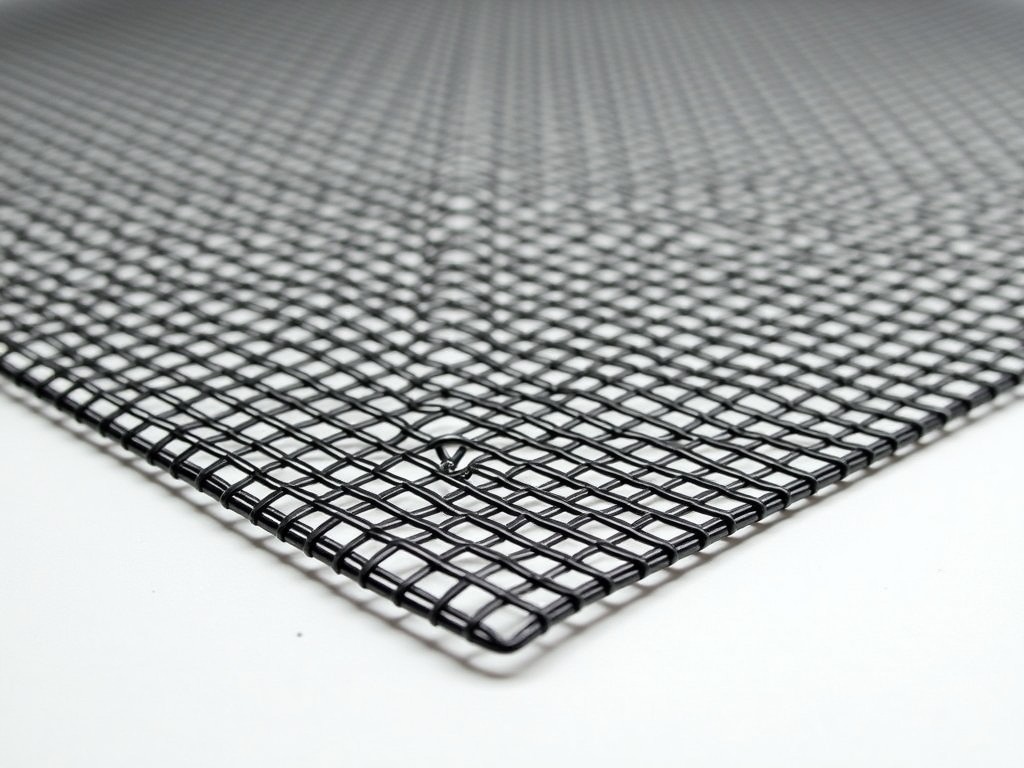
Black Stainless Steel Wire Mesh Manufacturers
Black Stainless Steel Wire Mesh Manufacturers
Black stainless steel wire mesh is produced from austenitic stainless steel grades (typically 304 or 316L) that undergo a controlled surface treatment to achieve a uniform black finish without compromising corrosion resistance or mechanical properties. The finish is applied through processes such as physical vapor deposition (PVD), black oxide conversion, or specialized painting systems designed for metallic substrates, ensuring adhesion and durability in demanding environments.
Manufacturers specify the base alloy composition to ensure compatibility with the finishing process. For example, 316L stainless steel contains molybdenum (2–3%) which enhances resistance to chlorides and makes it suitable for marine or chemical processing environments where the black finish must retain integrity over time. The wire diameter, opening size, and weave pattern are defined during weaving and remain critical to the mesh’s filtration, screening, or shielding performance.
The black finish is not a coating that can peel or delaminate under normal industrial conditions when applied via PVD or proper chemical conversion. PVD deposits a thin, dense layer of titanium zirconium nitride (TiZrN) or chromium nitride (CrN) at temperatures below 200°C, preserving the substrate’s metallurgical structure. This results in a surface hardness of approximately 1500–2000 Vickers, significantly higher than the base stainless steel, improving wear resistance in abrasive applications.
Alternative finishes like black oxide or paint are used when cost or specific aesthetic requirements dominate, but they require careful evaluation. Black oxide creates a magnetite layer (Fe3O4) through chemical reaction with the surface, offering moderate corrosion resistance and minimal dimensional change. Paint systems, while economical, introduce organic layers that may degrade under UV exposure or high temperatures, making them less suitable for permanent outdoor or high-heat installations.
Industrial buyers select black stainless steel wire mesh for applications where visual discretion, light absorption, or reduced glare is essential. In architectural facades, the finish minimizes visual distraction while maintaining structural openness. In optical instrumentation or sensor housings, it reduces internal reflections that could interfere with signal accuracy. In food processing or pharmaceutical environments, the smooth, non-porous finish supports cleaning protocols and minimizes product adhesion.
Customization options include wire diameter (typically 0.1 mm to 3.0 mm), aperture size (from 50 microns to 50 mm), weave patterns (plain, twill, Dutch, or welded), and panel dimensions. Manufacturers accommodate custom shapes, edge treatments (hemmed, framed, or welded edges), and mounting features based on CAD drawings or physical samples. Tolerances are held to ISO 9044 or ASTM E2016 standards for specification consistency.
Quality control involves verifying both the base material and the finish. Material certificates (EN 10204 3.1) confirm alloy composition. Finish uniformity is assessed via spectrophotometry to measure L*a*b* values, ensuring color consistency across batches. Adhesion testing (ASTM D3359) confirms coating integrity, while salt spray tests (ASTM B117) validate corrosion resistance of the finished product under accelerated conditions.
| Parameter | Typical Range / Specification | Notes |
|---|---|---|
| Base Alloy | AISI 304, 316L, 321 | 316L preferred for chloride exposure |
| Wire Diameter | 0.1 mm – 3.0 mm | Custom diameters available |
| Aperture Size | 50 µm – 50 mm | Dependent on weave and wire size |
| Weave Pattern | Plain, Twill, Dutch, Welded | Affects flow, strength, and rigidity |
| Finish Type | PVD (TiZrN/CrN), Black Oxide, Paint | PVD offers highest durability |
| Surface Hardness (PVD) | 1500–2000 HV | Substantially higher than base SS |
| Width (Rolls/Panels) | Up to 2000 mm | Custom widths available |
| Length (Rolls) | Up to 50 m | Panels cut to size |
Applications span industries where performance and appearance must coexist. In aerospace, black mesh is used in avionics shielding to prevent electromagnetic interference while minimizing cockpit glare. In automotive design, it integrates into grille systems or sensor covers where a low-reflective surface improves camera and lidar functionality. In industrial filtration, the finish aids in visual inspection of trapped particulates against a dark background, improving detection accuracy in process monitoring systems.
Architectural applications include interior cladding, elevator cab infill, and lighting fixtures where the mesh provides translucency, sound diffusion, or fall protection without visual prominence. The black finish reduces the perception of thickness, allowing designers to use heavier gauge mesh for structural reasons while maintaining a lightweight visual profile. Outdoor installations benefit from the finish’s UV stability when PVD-applied, avoiding fading or chalking common with painted alternatives.
Manufacturers typically require the following information for quotation: base alloy preference, wire diameter, aperture size, weave type, finish specification (PVD, oxide, or paint), panel dimensions or roll width/length, edge treatment, and any applicable industry standards (e.g., FDA, ISO 10993, ASTM). Providing a sketch, CAD file, or physical sample significantly reduces lead time and ensures accurate interpretation of requirements.
Lead times vary based on complexity. Standard weave patterns in stock alloys with PVD finish may ship in 2–3 weeks. Custom weaves, non-standard diameters, or large-format panels typically require 4–6 weeks. Expedited options are available for critical projects, subject to production capacity and material availability. Samples are usually provided within 5–7 business days upon receipt of specifications, with shipping costs borne by the requester.
Packaging is designed to prevent damage during transit. Rolls are wrapped in polyethylene film, placed on rigid cores, and secured in cardboard boxes or wooden crates. Flat panels are separated by polyethylene sheets, edge-protected with cardboard or plastic corner guards, and strapped to pallets. For export shipments, moisture-barrier bags and desiccants are included to prevent corrosion during sea freight, particularly for uncoated or oxide-finished mesh.
To initiate a quotation or request technical consultation, provide your application details and material requirements. Our engineering team will respond with a detailed proposal including material certifications, finish specifications, tolerances, and lead time.
Request Quote or Technical Support