


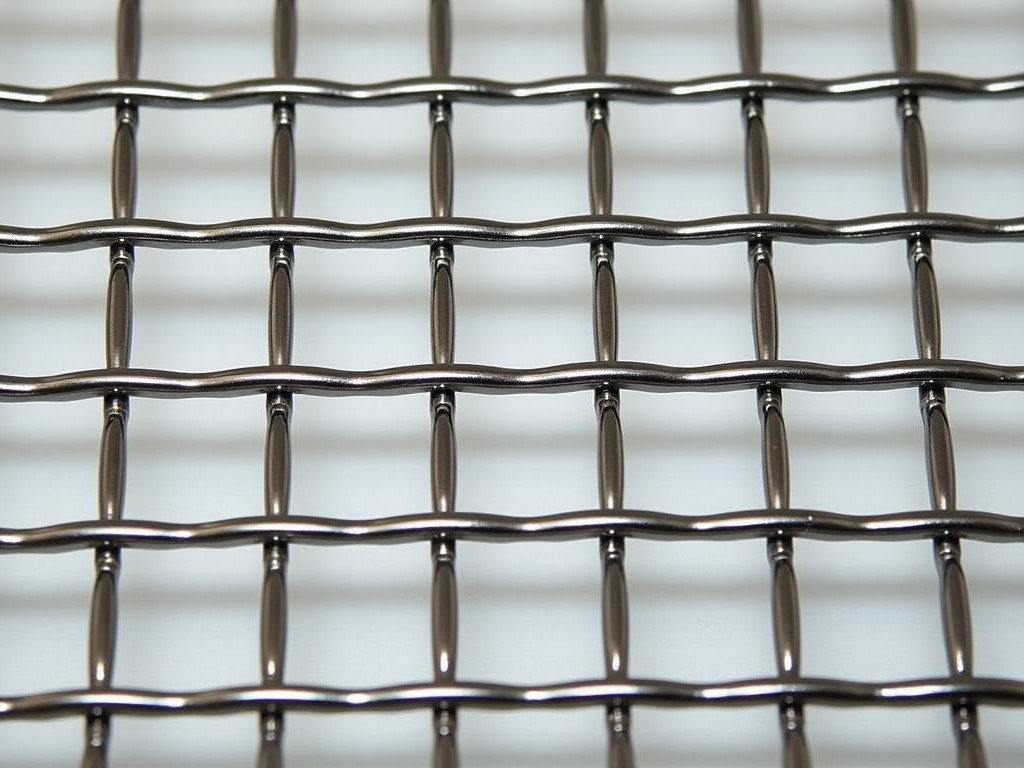
Buy Stainless Steel Wire Mesh Online
Stainless Steel Wire Mesh: Technical Specifications for Industrial Procurement
Selecting the correct stainless steel wire mesh requires understanding material grades, weave patterns, and dimensional tolerances that directly impact performance in filtration, separation, and barrier applications. This guide details the engineering specifications critical for industrial buyers evaluating online purchasing options.
Material Grade Selection and Corrosion Resistance
AISI 304 and 316L are the predominant grades for industrial wire mesh, differing primarily in molybdenum content. Grade 304 contains 18% chromium and 8% nickel, offering adequate resistance to atmospheric corrosion and mild chemicals. Grade 316L adds 2-3% molybdenum, significantly enhancing resistance to chlorides and acidic environments, making it suitable for marine exposure or chemical processing. Carbon content in both grades is kept below 0.03% to minimize carbide precipitation during welding.
Weave Patterns and Open Area Characteristics
The weave pattern determines flow dynamics, particle retention, and mechanical strength. Plain weave (square mesh) provides symmetrical openings with equal warp and shoot wire diameters, delivering predictable flow characteristics. Twill weave allows larger wire diameters for a given mesh count, increasing strength and abrasion resistance while maintaining open area. Dutch weave features finer shoot wires, creating a tight surface for micron-level filtration while supporting coarser warp wires for structural integrity.
Mesh Count, Wire Diameter, and Dimensional Tolerances
Mesh count (wires per linear inch) and wire diameter define the opening size and open area percentage. For example, a 100 mesh count with 0.018mm wire diameter yields approximately 70 micron openings and 30% open area. Tolerances typically adhere to ASTM E2016 standards, with opening size variations held to ±5% for precision filtration applications. Thickness tolerance is generally ±10% of nominal value, critical for gasketing or sealing applications where compressive load matters.
Typical Industrial Applications and Performance Requirements
In chemical processing, 316L mesh with 50-200 mesh count serves as catalyst supports or particle separators where corrosion resistance and precise pore size prevent contamination. Food and beverage applications often specify 304 grade with electropolished finish to meet sanitary standards, using mesh counts from 20 to 150 for sieving and dewatering. Architectural applications prioritize aesthetic consistency and wind load resistance, frequently utilizing 316L with larger opening patterns (4-20 mesh) for cladding or sunscreens.
Surface Treatments and Functional Modifications
Beyond base material, surface treatments modify functional properties. Electropolishing removes surface contaminants and reduces micro-roughness to below 0.4μm Ra, improving cleanability and corrosion resistance in hygienic environments. Passivation (typically nitric acid treatment) enhances the passive chromium oxide layer on 304 and 316L grades. For high-temperature applications exceeding 400°C, annealing relieves internal stresses from weaving, preventing distortion during thermal cycling.
Quality Control and Testing Protocols
Industrial buyers should verify compliance with ASTM E2016 for mesh count and opening size, and ASTM A240/A240M for sheet material properties. Widely accepted inspection methods include optical microscopy for wire diameter verification, bubble point testing for pore size distribution in filtration grades, and tensile testing per ASTM A370 to confirm tensile strength (typically 500-750 MPa for 304, 480-620 MPa for 316L). Dimensional stability is assessed via length and width tolerance checks under controlled tension.
Customization Parameters for Project-Specific Requirements
Key customization options include alloy composition (e.g., 316Ti for titanium stabilization), edge treatment (hemmed, selvaged, or welded), and roll width (typically 0.5m to 2.5m standard, wider upon request). Length tolerances are usually ±0.5% for cut-to-size panels. Custom specifications often require detailed engineering drawings specifying mesh orientation, tolerances for non-square openings, and any required post-weaving treatments like stress-relief annealing.
Comparison of Common Specifications
| Parameter | Typical 304 Specification | Typical 316L Specification |
|---|---|---|
| Chromium Content | 18% | 16-18% |
| Nickel Content | 8% | 10-14% |
| Molybdenum Content | None | 2-3% |
| Max Service Temp (Continuous) | 870°C | 925°C |
| Chloride Resistance | Moderate | High |
For technical inquiries regarding material certification, custom weave development, or application-specific testing requirements, contact our engineering team to discuss your project parameters.
Request Technical Consultation