


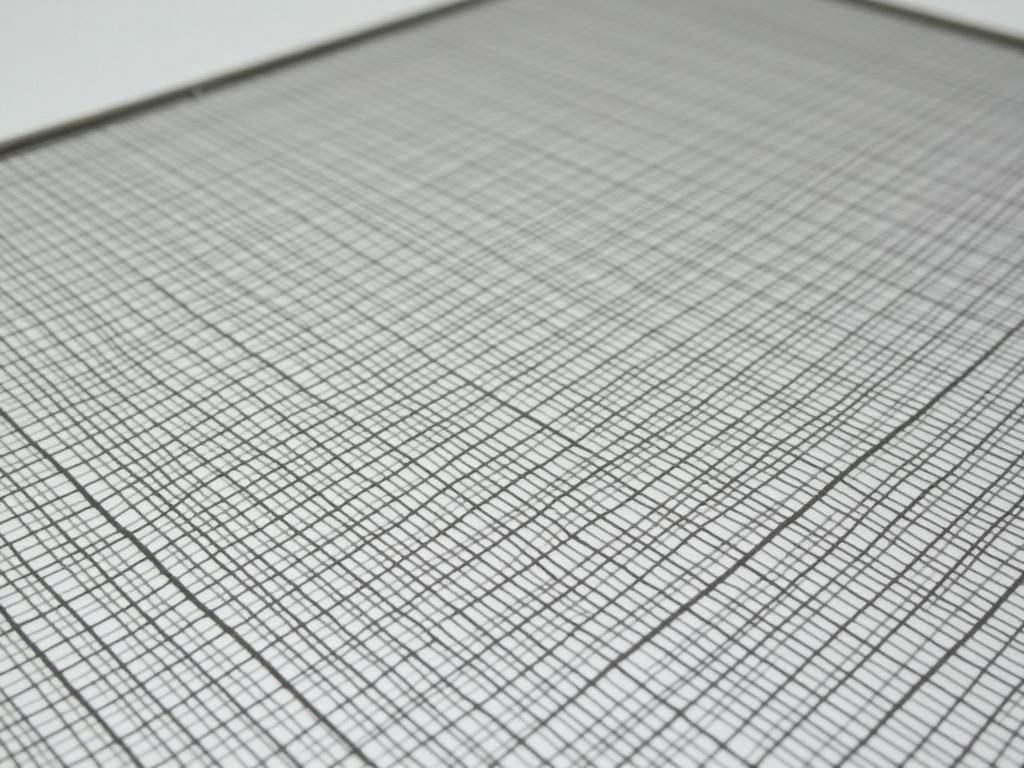
Cheap Bulk Stainless Steel Wire Mesh Supplier
Cheap Bulk Stainless Steel Wire Mesh Supplier
When procuring stainless steel wire mesh in volume, cost efficiency must not compromise material integrity or dimensional consistency. Industrial buyers prioritize suppliers who can deliver uniform specifications across large quantities while maintaining traceable material certifications. This page outlines the technical considerations for selecting a bulk supplier, focusing on measurable attributes that impact performance in filtration, screening, and structural applications.
Material Composition and Grade Selection
Stainless steel wire mesh performance depends directly on alloy chemistry. Common grades like 304 and 316 differ in corrosion resistance due to nickel and molybdenum content. 304 contains approximately 18% chromium and 8% nickel, suitable for general industrial environments. 316 adds 2-3% molybdenum, significantly improving resistance to chlorides and acidic conditions—critical in marine, chemical processing, or food-grade applications. Wire diameter tolerance, typically ±0.02mm for precision weaving, affects open area consistency and pressure drop in fluid systems.
Weave Patterns and Open Area Specifications
The weave pattern determines mechanical strength, flow characteristics, and particle retention. Plain weave offers balanced strength and flexibility, with open area calculated as (1 - wire diameter / pitch)² × 100%. Twill weave allows heavier wire diameters for the same mesh count, increasing durability under abrasive loads. Dutch weave, featuring finer warp wires and coarser weft, achieves high filtration efficiency with lower pressure drop—ideal for hydraulic filtration. Open area tolerance must be controlled within ±3% to ensure consistent performance across batches.
Bulk Procurement Considerations: Roll Dimensions and Packaging
For high-volume orders, roll dimensions impact handling efficiency and material waste. Standard roll widths range from 0.9m to 2.4m, with lengths up to 50m depending on wire diameter and weave density. Heavier gauges (e.g., >1.0mm wire) reduce maximum roll length to prevent deformation during transit. Packaging must include moisture barriers and edge protection—typically polyethylene wrapping and rigid end caps—to prevent corrosion and mechanical damage during storage and transport. Core materials (cardboard, plastic, or steel) should match handling equipment to avoid roll slippage.
Quality Control and Documentation Requirements
Reliable bulk supply requires verifiable quality assurance. Material test reports (MTRs) should confirm chemical composition per ASTM A240/A240M. Mechanical properties like tensile strength and elongation must align with grade specifications—e.g., 304 stainless steel typically exhibits 515-725 MPa tensile strength. Mesh dimensions are validated via optical measurement or calibrated gauges at multiple points across the roll. Suppliers should provide batch traceability, linking each roll to raw material lot numbers and inspection records.
Comparison of Common Specifications for Bulk Orders
| Parameter | Typical Range (304 Grade) | Typical Range (316 Grade) | Impact on Application |
|---|---|---|---|
| Wire Diameter | 0.10mm - 2.00mm | 0.10mm - 2.00mm | Affects strength, open area, pressure drop |
| Mesh Count | 2 - 400 mesh/inch | 2 - 400 mesh/inch | Determines particle retention precision |
| Open Area | 20% - 70% | 20% - 70% | Influences flow rate and efficiency |
| Roll Width | 0.9m - 2.4m | 0.9m - 2.4m | Impacts handling and waste in cutting |
| Roll Length | 10m - 50m | 10m - 50m | Splices increase with longer lengths |
| Surface Finish | Mill finish, annealed | Mill finish, annealed | Affects cleanliness and adhesion |
Applications Where Bulk Consistency Matters
In continuous industrial processes, mesh variability causes downtime and product defects. For example, in food dehydration belts, inconsistent open area leads to uneven drying and moisture gradients. In chemical filtration, fluctuating wire diameter alters capture efficiency, risking contaminant breakthrough. Architectural cladding requires uniform appearance—variations in weave tension create visible distortion under sunlight. Bulk buyers benefit from suppliers who use computerized looms with real-time tension monitoring to maintain specification adherence across thousands of square meters.
Customization Logic for Volume Orders
Customization in bulk purchasing follows economic thresholds. Non-standard wire diameters or alloy grades (e.g., 316L, 904L) require minimum order quantities to justify machine retooling and material changeover. Mesh count adjustments are feasible within loom constraints—typically ±10% of standard counts without reconfiguration. Edge treatments like selvedging or welding add cost but prevent fraying in high-vibration environments. Suppliers should provide clear MOQs and lead time impacts for each customization option, enabling buyers to weigh performance gains against cost and schedule.
Request a technical quotation for bulk stainless steel wire mesh