


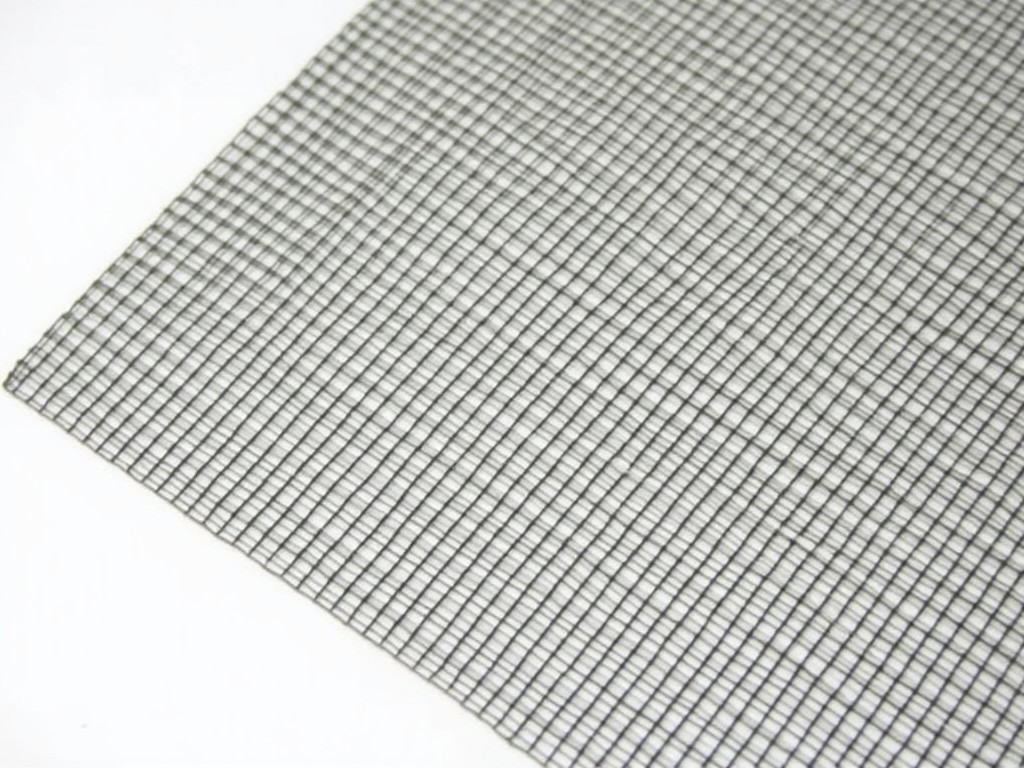
China Screen Mesh Stainless Steel
China Screen Mesh Stainless Steel
Screen mesh made from stainless steel wire is a precision-engineered filtration and separation component used across industrial processes where particle control, durability, and corrosion resistance are critical. Manufactured in China to international specifications, these meshes combine material science with weaving technology to deliver consistent performance in demanding environments.
Material Composition and Properties
The base material for screen mesh is typically austenitic stainless steel grades such as 304, 316L, or 316, selected for their balance of corrosion resistance, tensile strength, and formability. Grade 304 offers adequate resistance to atmospheric corrosion and mild chemicals, while 316L includes molybdenum to enhance resistance to chlorides and acidic environments, making it suitable for marine, chemical processing, and food-grade applications. Wire diameter and tensile strength are controlled during drawing to ensure consistent opening dimensions and load-bearing capacity.
Mechanical properties vary by grade and temper: 304 stainless steel wire typically has a tensile strength of 500–750 MPa in the annealed condition, increasing to 800–1200 MPa when cold-drawn for weaving. Elongation at break ranges from 40% to 60%, allowing the wire to withstand weaving stresses without cracking. The mesh retains its structural integrity at temperatures up to 870°C for 304 and 925°C for 316L, beyond which oxidation and scaling may occur.
Weave Patterns and Opening Characteristics
The most common weave patterns are plain square twill and Dutch weave, each influencing flow dynamics, strength, and filtration efficiency. Plain weave features alternating over-and-under wire interlacement, producing uniform square openings ideal for general sieving and sizing. Twill weave, where each warp wire passes over two then under two weft wires, offers greater stability and finer mesh counts with increased tensile strength in both directions. Dutch weave uses thicker warp wires and finer weft wires to create a tight, tortuous path that enhances particle retention while maintaining relatively high flow rates.
Mesh count, defined as the number of openings per linear inch, directly correlates with particle cutoff size. For example, a 100-mesh plain weave screen has approximately 150-micron openings, while a 325-mesh Dutch weave can retain particles below 20 microns. Open area percentage—the ratio of open space to total surface area—affects pressure drop and throughput; plain weaves typically offer 30–50% open area, whereas Dutch weaves may range from 15–30% due to their denser structure.
Industrial Applications and Process Integration
In mining and aggregate processing, stainless steel screen mesh is used in vibratory shakers to separate crushed ore by size, where resistance to abrasion from quartz and silica is essential. The mesh withstands repeated impact and sliding wear, maintaining dimensional stability over extended run times. In chemical plants, it serves as a support medium for catalyst beds or as a barrier in liquid-liquid extraction units, where chemical compatibility prevents contamination and degradation.
Food and beverage manufacturers deploy 316L stainless steel mesh in inline filters for syrup, juice, and dairy processing, ensuring compliance with hygiene standards while removing particulates down to 50 microns. The smooth, non-porous surface facilitates cleaning-in-place (CIP) procedures without harboring bacteria. Aerospace applications include use in fuel system filters and environmental control units, where reliability under vibration and thermal cycling is non-negotiable.
Customization Options and Manufacturing Considerations
Screen mesh can be supplied in flat panels, continuous rolls, or fabricated shapes such as cylinders, cones, and baskets, depending on equipment integration needs. Edge treatments include welded borders, folded hems, or adhesive-backed frames to prevent unraveling and simplify installation. For high-vibration environments, crimped or locked mesh designs are available to enhance wire-to-wire contact and reduce fatigue failure.
Custom specifications require input on mesh count, wire diameter, alloy grade, width, length, and tolerances. Opening size tolerance is typically held to ±5% for standard weaves, achievable through precise wire drawing and loom calibration. Width tolerances are maintained within ±2 mm for slit edges and ±3 mm for sheared ends. Surface finish options range from mill finish to electropolished, the latter reducing surface roughness to below 0.4 μm Ra for improved cleanability and reduced product adhesion.
Quality Control and Testing Protocols
Quality assurance begins with raw material verification, where mill test certificates confirm chemical composition and mechanical properties of the stainless steel wire. Incoming wire is sampled for diameter consistency and tensile strength before weaving. During production, mesh count and opening dimensions are checked at regular intervals using optical comparators or digital imaging systems calibrated to national standards.
Final inspection includes visual assessment for defects such as broken wires, skips, or double picks, followed by bubble point testing or air permeability measurement to validate filtration integrity. For critical applications, liquid penetrant testing may be conducted to detect micro-cracks in welded edges. All test results are documented and traceable to the production batch, supporting compliance with ISO 9001 and industry-specific requirements.
Typical Specifications Table
| Parameter | Typical Range / Options |
|---|---|
| Stainless Steel Grade | 304, 304L, 316, 316L, 321 |
| Mesh Count | 2 to 635 mesh ( openings per inch ) |
| Wire Diameter | 0.025 mm to 2.0 mm |
| Opening Size | 20 μm to 12.5 mm |
| Weave Type | Plain, Twill, Dutch, Reverse Dutch |
| Width | Up to 3000 mm (roll form) |
| Length | Custom cut or continuous roll |
| Temperature Resistance | Up to 925°C (316L) |
| Surface Finish | Mill, Pickled, Passivated, Electropolished |
Values listed are representative of standard offerings; actual specifications are determined by application requirements and confirmed during quotation. Tolerances, material certifications, and testing protocols can be adjusted to meet project-specific demands.
Procurement Guidance
When requesting a quotation, provide the intended operating conditions: fluid or slurry composition, temperature range, pressure differential, particle size distribution, and required flow rate. Specify whether the mesh will be used for retention, separation, or structural support, as this influences weave selection and wire diameter. Indicate any regulatory standards applicable to your industry, such as FDA, 3A, or ASME, so material and finish options can be aligned accordingly.
Lead times vary based on complexity: standard mesh rolls in common grades and counts typically ship within 2–3 weeks, while custom-fabricated units or exotic alloys may require 4–6 weeks. Samples are available upon request for validation, usually shipped within 5–7 business days after specification confirmation. Packaging includes moisture-resistant wrapping and rigid edge protection to prevent deformation during transit.
For technical consultation or to request a quote for China screen mesh stainless steel, provide your application details and required specifications.
Submit Inquiry