


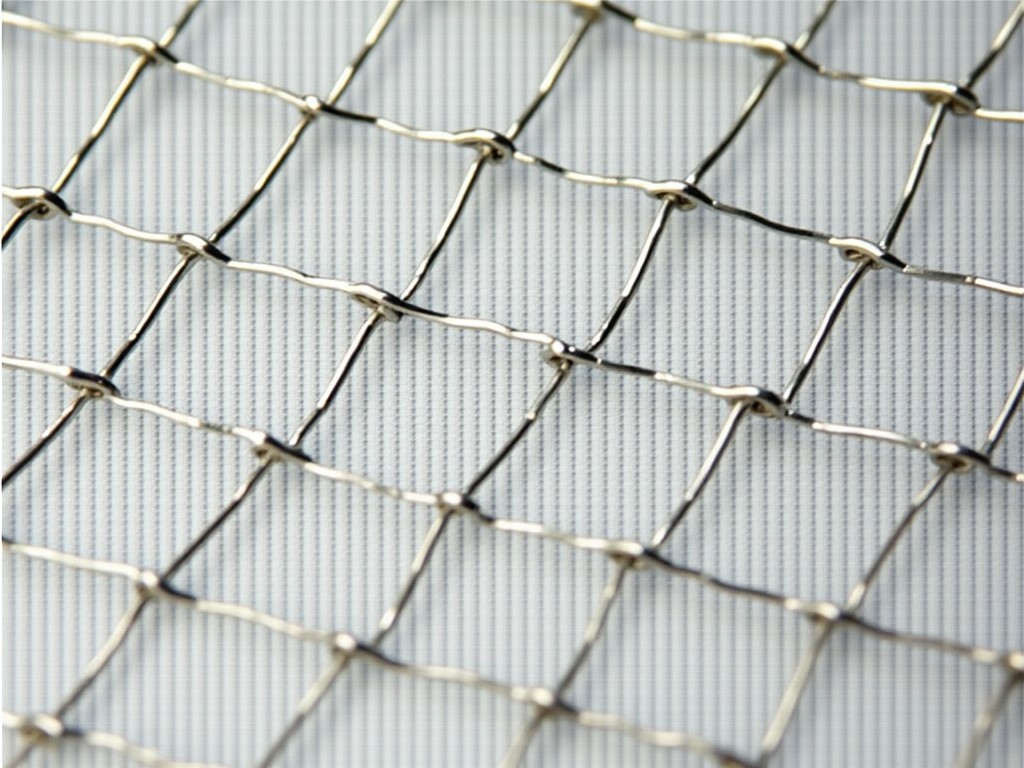
China Stainless Steel Net Mesh Netting
Stainless Steel Net Mesh Netting
Material Composition and Corrosion Resistance
The base material consists of austenitic stainless steel grades, primarily 304 and 316L, selected for their chromium-nickel microstructure. Grade 304 contains 18% chromium and 8% nickel, providing resistance to oxidation and mild corrosives up to 400°C. Grade 316L adds 2-3% molybdenum, significantly enhancing resistance to chlorides and acidic environments, making it suitable for marine, chemical processing, and food-grade applications where pitting corrosion is a concern.
Wire diameter typically ranges from 0.1 mm to 3.0 mm, with tensile strength between 500–1000 MPa depending on grade and temper. The alloy’s passive chromium oxide layer self-repairs when damaged, ensuring long-term surface stability without coating degradation. This intrinsic corrosion resistance eliminates the need for secondary treatments that could delaminate or contaminate filtered media.
Weave Patterns and Opening Characteristics
The mesh geometry is defined by weave pattern, wire diameter, and aperture size, which collectively determine flow dynamics and particle retention. Plain weave offers symmetrical flow resistance and is standard for general filtration. Twill weave allows heavier wires to be used with finer openings, increasing load-bearing capacity while maintaining equivalent filtration ratings. Dutch weave variations—particularly reverse Dutch—achieve high dirt-holding capacity by creating a dense surface layer over a more open subsurface structure.
Aperture precision is controlled during weaving to maintain tolerances within ±5% of nominal size. For example, a 100-mesh specification (approximately 150 µm openings) ensures consistent particle cutoff in pharmaceutical or powder processing. Open area percentage, calculated from wire diameter and spacing, directly impacts pressure drop; a 40% open area mesh will exhibit lower resistance than a 25% equivalent under identical flow conditions.
Typical Industrial Applications
In chemical processing, stainless steel mesh netting serves as catalyst support beds, where its open structure allows uniform gas distribution while retaining solid particles under high-temperature reflux conditions. The material’s resistance to sulfidation and carburization makes it preferable to carbon steel in hydrotreating units. Unlike polymeric meshes, it does not swell or leach plasticizers when exposed to aromatic hydrocarbons or ketones.
Food and beverage manufacturers use 316L mesh for inline filtration of liquids, syrups, and slurries where hygiene and cleanability are critical. The smooth, non-porous surface prevents biofilm accumulation and withstands repeated CIP (clean-in-place) cycles with caustic soda and nitric acid at concentrations up to 2%. Its use in brewing for grain filtration or in dairy for whey separation is justified by compliance with FDA 21 CFR §177.1520 and EU 1935/2004 food contact regulations.
Environmental engineering applications include membrane pre-filtration in reverse osmosis systems, where the mesh removes particulates that could foul delicate polymer membranes. By capturing particles >10 µm upstream, it extends membrane life and reduces chemical cleaning frequency. In wastewater treatment, it functions as a coarse screen in headworks to protect pumps and centrifuges from rags, plastics, and grit without corroding in fluctuating pH conditions.
Customization Parameters
Mesh specifications are tailored to process requirements through independent control of wire diameter, opening size, weave type, and panel dimensions. Wire diameter selection balances mechanical strength against flow efficiency—thicker wires increase burst resistance but reduce open area. Aperture size is chosen based on the target particle cutoff, with standard mesh counts ranging from 4 mesh (4.75 mm openings) to 500 mesh (25 µm openings) achievable through precision weaving.
Panel dimensions are fabricated to fit specific housings, with edge treatments including welded frames, folded hems, or adhesive-backed strips for seamless integration. Widths up to 3 meters are achievable in continuous rolls, while custom lengths accommodate large-diameter drum filters or cylindrical strainers. For high-vibration environments, crimped or interlocking edge profiles prevent wire displacement without compromising flow characteristics.
Surface finishes can be specified post-weaving: annealed for stress relief and improved ductility, or electropolished to reduce surface roughness to <0.4 µm Ra for sanitary applications. Annealing eliminates work-hardening from weaving, restoring uniform grain structure and preventing premature cracking under cyclic loading. Electropolishing also enhances passivation, improving resistance to crevice corrosion in tight-spaced assemblies.
Quality Control and Testing
Dimensional verification begins with optical microscopy or laser scanning to measure wire diameter and aperture uniformity across the panel. Tensile testing of wire samples confirms compliance with ASTM A313 or EN 10270-3 specifications for stainless spring steel. Burst strength is assessed via hydrostatic or pneumatic pressure tests on sealed mesh coupons, typically requiring resistance to >1.0 MPa without tearing or permanent deformation.
Corrosion resistance is validated through salt spray (ASTM B117) or cyclic corrosion testing, with 316L grades expected to show <5 µm penetration after 1000 hours. For food-contact applications, surface cleanliness is verified via swab testing for residual particulates or oils, ensuring compliance with GMP requirements. All test reports are traceable to raw material mill certificates and include lot-specific data for audit purposes.
Visual inspection under 10x magnification detects weaving defects such as missing wires, double picks, or distorted openings that could affect filtration consistency. Panels are rejected if defect density exceeds 0.5 per square decimeter. Final packaging includes desiccant and corrosion-inhibiting vapor emitters to prevent oxidation during transit and storage, particularly for long-term inventory holding.
Comparison: 304 vs 316L Stainless Steel Mesh
| Property | 304 Stainless Steel | 316L Stainless Steel |
|---|---|---|
| Chromium Content | 18% | 16-18% |
| Nickel Content | 8-10.5% | 10-14% |
| Molybdenum Content | None | 2-3% |
| Max Service Temp (Oxidizing) | 870°C | 925°C |
| Chloride Resistance | Moderate (risk of pitting) | High (suitable for marine/saline) |
| Typical Use Case | General industrial, HVAC, food prep | Chemical, pharmaceutical, marine, medical |
| Relative Cost | Baseline (1.0x) | +15-25% |
For technical consultation, specification validation, or sample requests regarding stainless steel net mesh netting for your filtration, screening, or separation process, contact our engineering team. Provide details on operating temperature, chemical exposure, particle size distribution, and required dimensions to receive a tailored recommendation.
Request Technical Specification or Sample