


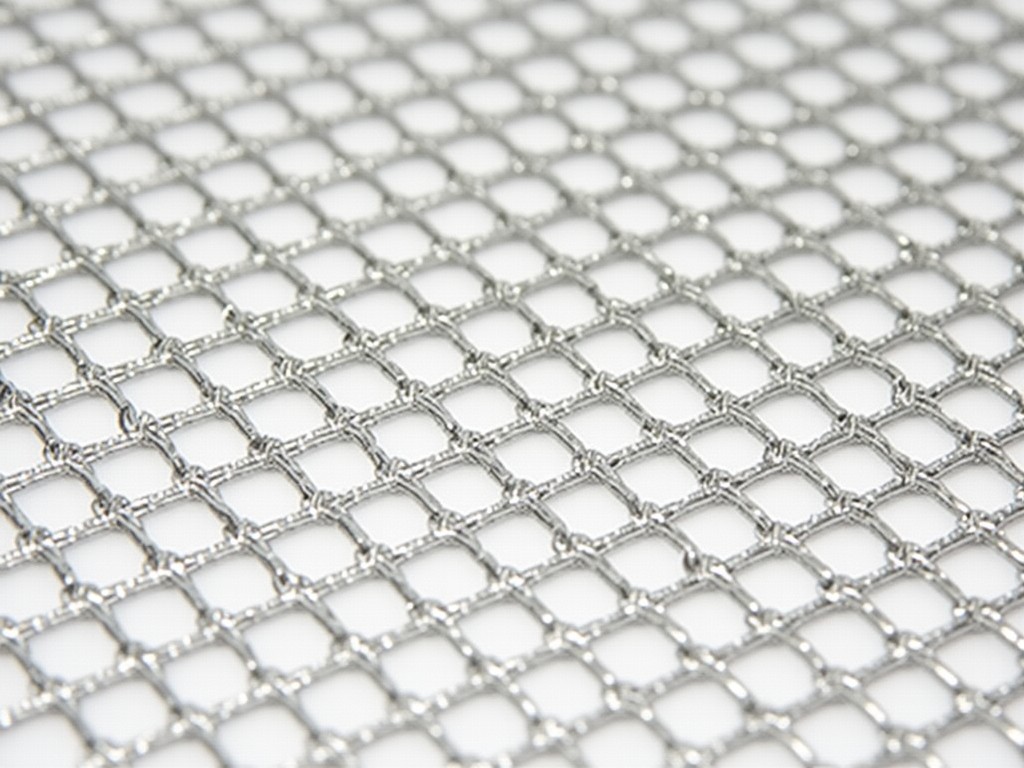
China Wire Mesh Stainless Steel 316
China Wire Mesh Stainless Steel 316
Stainless steel 316 wire mesh is a corrosion-resistant filtration and screening material engineered for demanding industrial environments. Its molybdenum-enhanced austenitic structure provides superior resistance to chlorides and acidic compounds compared to 304 grade, making it suitable for marine, chemical processing, and food-grade applications where long-term durability is critical. This page details the technical specifications, manufacturing considerations, and application logic for 316 stainless steel wire mesh sourced from certified Chinese manufacturers.
Material Composition and Mechanical Properties
Stainless steel 316 contains approximately 16-18% chromium, 10-14% nickel, and 2-3% molybdenum, with carbon limited to 0.08% maximum. The molybdenum addition significantly improves pitting and crevice corrosion resistance in halide-rich environments, particularly where sodium chloride or sulfur compounds are present. Mechanical properties typically include a tensile strength of 515-690 MPa and yield strength of 205 MPa (annealed condition), with elongation exceeding 40%—enabling effective wire drawing and weaving without brittleness.
Unlike 304 stainless steel, 316 maintains structural integrity at temperatures up to 870°C (intermittent) and 925°C (continuous) in oxidizing atmospheres. Its non-magnetic nature in the annealed state facilitates use in electronic shielding and MRI-compatible equipment. Cold working increases strength slightly but may induce mild magnetism, which is reversible through stress-relief annealing at 1050-1120°C followed by rapid cooling.
Weave Patterns and Aperture Control
Wire mesh specifications are defined by three interdependent parameters: wire diameter, aperture size, and weave pattern. Common weave types include plain square (each wire alternates over/under adjacent wires), twill (each wire passes over two then under two), and Dutch weave (warp wires finer than shute, creating a dense, filter-grade surface). Aperture tolerance is typically ±5% for woven mesh, with tighter control achievable through precision looms and post-weaving calibration.
For filtration applications, Dutch weave offers superior particle retention due to its tapered flow channels and higher mesh count in the shute direction. Plain weave provides balanced flow and strength for general screening, while twill weave supports heavier loads with improved drape over irregular surfaces. Wire diameters range from 0.025mm (for micron-level filtration) to 8.0mm (for heavy-duty security fencing), with aperture sizes scalable from 10µm to 150mm.
Surface Finish and Post-Processing Options
As-produced 316 wire mesh exhibits a matte, slightly oxidized surface from annealing. For applications requiring enhanced cleanliness or reflectivity, electropolishing removes surface iron and impurities, improving corrosion resistance and facilitating sanitation in pharmaceutical or semiconductor environments. Passivation using nitric or citric acid baths further stabilizes the passive oxide layer without altering dimensions.
Alternative finishes include brushed (unidirectional satin), mirror polish (Ra < 0.1µm), and black oxide coating for light absorption in optical systems. Coatings such as PTFE or nylon are available upon request for non-stick or electrically insulating properties, though these add thickness and may affect aperture consistency. All finishes are applied post-weaving to preserve dimensional accuracy.
Industrial Applications: Why 316 Wire Mesh Fits Specific Environments
In chemical processing plants, 316 mesh is used in catalyst retention baskets and acid evaporation trays where exposure to hot chlorides, sulfates, and organic acids would degrade 304-grade alternatives within months. Its resistance to stress corrosion cracking in sulfide-containing environments makes it suitable for offshore oil and gas separators and seawater intake filters.
Food and beverage manufacturers specify 316 mesh for dairy filtration, wine clarification, and meat processing screens due to its compliance with FDA 21 CFR §177.2600 and ease of CIP (clean-in-place) sterilization. The non-porous surface prevents bacterial harborage, and smooth finishes reduce product adhesion during sieving operations.
Architectural applications include balustrades, facade cladding, and sunshades in coastal developments where salt spray accelerates corrosion of carbon steel or aluminum. The material’s aesthetic longevity—maintaining appearance for 20+ years with minimal maintenance—reduces lifecycle costs despite higher initial investment.
Manufacturing Tolerances and Quality Control
Wire diameter is controlled during drawing using laser micrometers, with tolerances typically ±0.002mm for fine meshes and ±0.05mm for heavy gauges. Aperture width is measured optically across multiple samples per roll, with acceptance criteria based on ISO 9044:2021 (test sieves) or customer-specific GPS (geometrical product specification) standards. Tensile strength of raw wire is verified per ASTM A370 before weaving.
Post-weaving inspection includes visual defect screening (broken wires, skips, double picks) under 10x magnification, dimensional verification of roll width and length, and flatness assessment. For critical applications, bubble point testing confirms pore throat size distribution in filtration meshes, while airflow resistance measurements validate performance in HVAC or pneumatic systems.
Certifications commonly available include ISO 9001:2015 (quality management), ISO 14001:2015 (environmental), and EN 10204 3.1 material traceability. Mill test reports (MTRs) documenting chemical composition and mechanical properties are provided upon request. Surface roughness (Ra) and passivation efficacy can be validated via third-party labs using ASTM A967 or A380 standards.
Customization Logic and Ordering Considerations
Customization begins with defining the operational environment: temperature range, chemical exposure (including concentration and pH), mechanical load, and required filtration precision. Wire diameter and weave pattern are selected based on burst pressure calculations or particle retention targets, not off-the-shelf catalog values. For example, a 200µm aperture in plain weave may suffice for coarse filtration, but a twill Dutch weave with 0.1mm warp and 0.05mm shute wires achieves equivalent retention with lower pressure drop.
Roll width is limited by loom capacity—typically 1000mm to 3000mm for standard machines, with wider formats available via shuttleless rapier or air-jet looms at higher cost. Length is constrained by handling logistics; rolls exceeding 50kg often require split winding or palletized spools. Edge finishes (selvage, hemmed, or welded) are specified to prevent fraying and facilitate integration into frames or housings.
Lead times depend on alloy availability, loom scheduling, and post-processing complexity. Standard 316L wire in common diameters (0.2–1.5mm) usually ships within 2–4 weeks; custom alloys, ultra-fine meshes (<50µm), or specialized finishes may extend lead time to 6–8 weeks. Minimum order quantities vary by specification but often start at 5–10 square meters for non-stock items.
Packaging and Export Protection
Wire mesh is wound onto corrugated cores or plastic spools to prevent deformation during transit. Inner wrapping uses polyethylene film to block moisture and contaminants, while outer layers consist of kraft paper or corrugated cardboard secured with polyester strapping. For ocean freight, desiccant packs and vapor corrosion inhibitors (VCIs) are included to mitigate chloride-induced staining during prolonged humidity exposure.
Palletized shipments use heat-treated wooden pallets compliant with ISPM 15, with corner protectors and stretch film to stabilize loads. Custom crating is available for fragile or precision-grade meshes (e.g., electropolished microfluidic screens). All packages include clearly labeled handling instructions, roll dimensions, weight, and material certification references.
| Property | Typical Value or Range | Notes |
|---|---|---|
| Chromium (Cr) | 16.0–18.0% | Primary corrosion resistance agent |
| Nickel (Ni) | 10.0–14.0% | Stabilizes austenitic structure |
| Molybdenum (Mo) | 2.0–3.0% | Enhances chloride resistance |
| Carbon (C) | ≤0.08% | Limited to prevent carbide precipitation |
| Tensile Strength | 515–690 MPa | Annealed condition |
| Yield Strength | 205 MPa | 0.2% offset |
| Elongation | ≥40% | In 50mm gauge length |
| Maximum Use Temp (Oxidizing) | 925°C | Continuous service |
| Magnetism (Annealed) | Non-magnetic | May become slightly magnetic after cold work |
| Density | 7.99 g/cm³ | For weight calculations |