


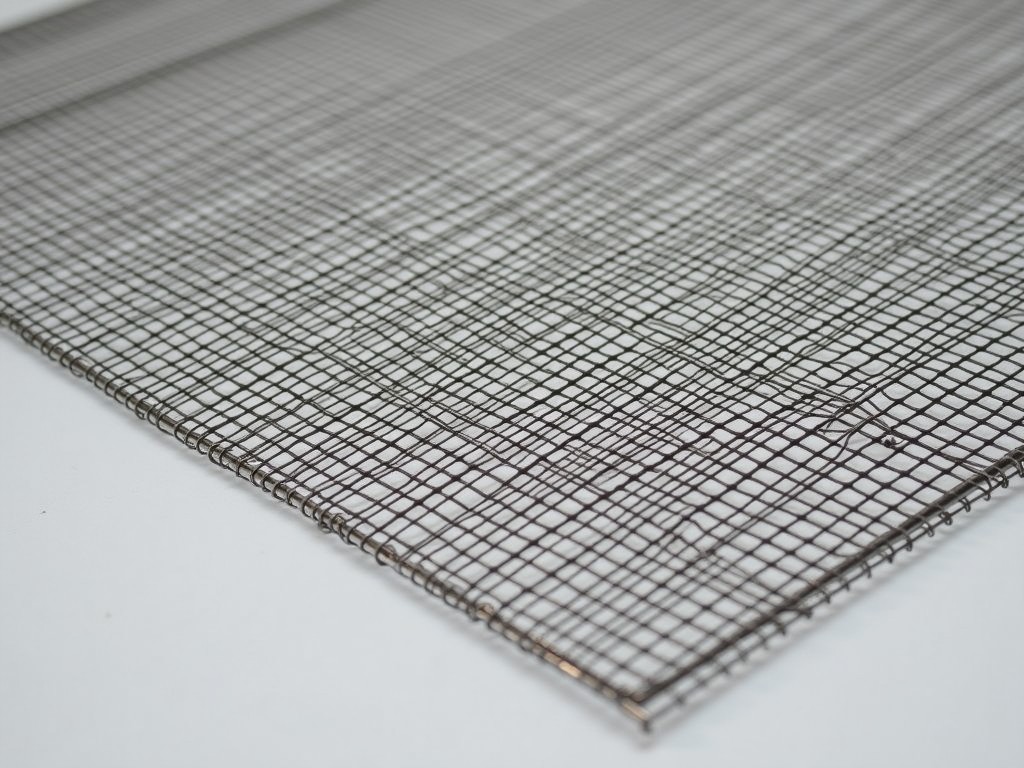
Corrosion Resistant 316 Stainless Steel Screen Mesh
Corrosion Resistant 316 Stainless Steel Screen Mesh
316 stainless steel screen mesh is engineered for environments where chloride exposure, moisture, and chemical agents compromise standard materials. Its molybdenum-enhanced alloy structure provides superior resistance to pitting and crevice corrosion compared to 304 grade, making it suitable for marine, chemical processing, and wastewater applications where long-term dimensional stability and filtration integrity are critical.
Material Composition and Corrosion Performance
The base alloy contains approximately 16-18% chromium, 10-14% nickel, and 2-3% molybdenum. This composition forms a stable passive oxide layer that self-repairs in oxidizing environments. Chloride-induced pitting resistance is quantified by the PREN (Pitting Resistance Equivalent Number) formula: PREN = %Cr + 3.3×%Mo + 16×%N. For standard 316L, PREN typically ranges from 24 to 26, offering measurable improvement over 304 (PREN ~18-20) in saline or acidic conditions.
In continuous service below 800°C, 316L maintains austenitic structure without sensitization when low-carbon variants are used. This avoids chromium carbide precipitation at grain boundaries, preserving corrosion resistance in welded or heat-affected zones. For applications involving fluctuating temperatures or cyclic wet/dry exposure, stress corrosion cracking resistance is enhanced through controlled microstructure and surface finish.
Mesh Specifications and Customization Options
Screen mesh is defined by three interdependent parameters: wire diameter, aperture size, and weave pattern. These determine open area percentage, flow resistance, particle retention threshold, and mechanical strength. Industrial buyers specify these based on process requirements — filtration precision in chemical reactors, debris exclusion in cooling towers, or solids separation in sludge dewatering.
| Parameter | Typical Range | Units |
|---|---|---|
| Wire Diameter | 0.10 – 2.00 | mm |
| Aperture Size | 0.20 – 50.00 | mm |
| Open Area | 10 – 70 | % |
| Weave Patterns | Plain, Twill, Dutch, Reverse Dutch | – |
Plain weave offers symmetrical flow and uniform particle capture, preferred in laboratory filtration and inline strainers. Twill weave provides higher tensile strength and finer aperture control with larger wire diameters, suitable for vibratory screening under load. Dutch weaves concentrate finer wires in one direction, achieving sub-micron retention with reduced pressure drop — critical in catalyst recovery or pharmaceutical intermediate processing.
Industrial Applications and Environmental Suitability
In marine environments, 316 mesh resists biofouling acceleration and chloride creep better than unalloyed steels, extending service life in seawater intake filters, desalination pre-filtration, and offshore platform drainage systems. The alloy’s resistance to sulfides and chlorides also makes it viable in pulp and paper digesters where black liquor exposure combines heat, alkalinity, and erosive particulates.
Chemical processing plants use 316 mesh in catalyst baskets, reactor outlet filters, and corrosion-resistant housings for aggressive media like ferric chloride, cupric sulfate, or mixed acid pickling baths. Unlike coated or plated alternatives, the homogeneous alloy structure prevents delamination or localized failure when scratched or deformed during installation or cleaning cycles.
Wastewater treatment facilities specify 316 mesh for fine bar screens, membrane bioreactor pre-filters, and sludge dewatering belts where constant wet/dry cycling and abrasive solids accelerate wear in lower-grade materials. Its non-magnetic nature (in annealed condition) also allows use in electromagnetic flow meters or sensor housings where magnetic interference must be avoided.
Manufacturing Considerations and Quality Assurance
Mesh is produced from cold-drawn 316L wire, ensuring consistent tensile strength (typically 500–750 MPa) and elongation (>40%) for reliable weaving without wire breakage. Post-weaving, stress relief annealing at 425–475°C may be applied to reduce residual stresses from drawing and weaving, minimizing distortion during subsequent welding or forming.
Surface finish is controlled to Ra ≤ 0.8 μm for sanitary or high-purity applications, achievable through electropolishing or precision brushing. For non-sanitary industrial uses, a standard mill finish suffices, maintaining corrosion resistance while reducing cost. Edge treatment options include hemmed, welded, or adhesive-sealed borders to prevent fraying and ensure safe handling.
Dimensional verification includes aperture measurement via optical comparators or laser gauging, wire diameter confirmation with micrometers, and tensile testing of wire samples per ASTM A370. Visual inspection under 10x magnification checks for weave defects, broken wires, or contamination. Mill test reports confirming chemical composition (EN 10204 3.1) are available upon request.
Comparison with Alternative Materials
| Material | PREN (Typical) | Max Service Temp (°C) | Chloride Resistance |
|---|---|---|---|
| 304 Stainless Steel | 18–20 | 870 | Moderate |
| 316L Stainless Steel | 24–26 | 925 | High |
| 904L Stainless Steel | >30 | 950 | Very High |
| Duplex 2205 | >35 | 315 | Very High |
While 904L and duplex alloys offer higher PREN, their cost premium and reduced formability limit use to extreme environments like offshore sour service or high-temperature acid recovery. 316L provides the optimal balance of corrosion resistance, fabricability, and lifecycle cost for most industrial screening, filtration, and separation applications where long-term exposure to chlorides, acids, or cyclic wet/dry conditions is expected.
Coated carbon steel or polymer meshes may offer lower initial cost but degrade rapidly under UV, thermal cycling, or chemical exposure, leading to frequent replacement, process downtime, and contamination risks. 316 stainless steel eliminates these failure modes through inherent material stability.
Ordering Information and Technical Support
To receive a quotation, provide the following: mesh specification (wire diameter × aperture), weave pattern, width and length requirements, edge treatment, quantity, and delivery destination. For replacement parts, include a sample or detailed sketch with nominal dimensions. Application details (fluid type, temperature, pressure, particulate size) help recommend optimal open area and wire diameter to balance flow rate and capture efficiency.
Technical engineers are available to review compatibility with existing housings, validate pressure drop calculations, or suggest alternative weaves for improved cleaning efficiency. Samples of standard configurations are available for evaluation upon request.