


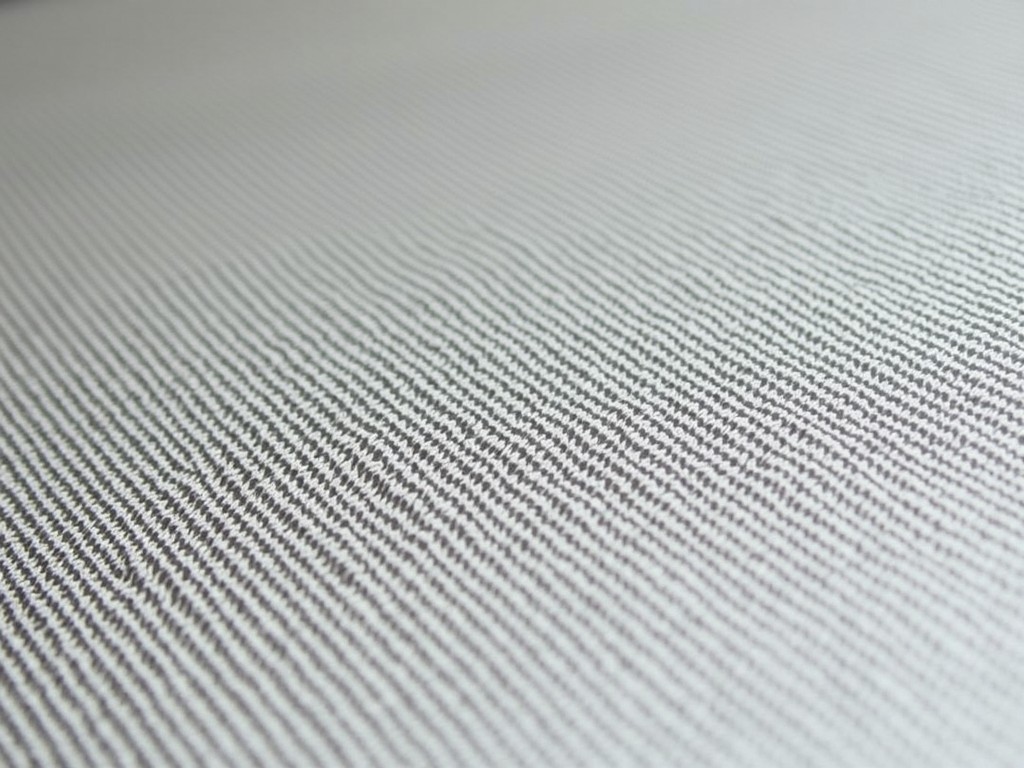
Custom Size 304 Epoxy Coated Stainless Steel Wire Mesh
Custom Size 304 Epoxy Coated Stainless Steel Wire Mesh
Custom size 304 epoxy coated stainless steel wire mesh combines the corrosion resistance of austenitic stainless steel with a protective polymer barrier, engineered for applications requiring both mechanical durability and chemical isolation. This product is manufactured to exact customer specifications, allowing precise control over opening size, wire diameter, roll dimensions, and coating thickness to meet unique process requirements.
Material Composition and Coating System
The base material is AISI 304 stainless steel, containing approximately 18% chromium and 8% nickel, which forms a passive chromium oxide layer that resists oxidation in mildly corrosive environments. The epoxy coating is applied via electrostatic spray or dip coating, typically achieving a uniform thickness of 80–120 micrometers, providing a dielectric barrier that prevents direct contact between the metal substrate and aggressive chemicals, moisture, or abrasive particles.
Coating adhesion is critical; proper surface preparation including degreasing, phosphating, and priming ensures bond strength exceeding 5 MPa, reducing risk of delamination under thermal cycling or mechanical stress. The coating is formulated to withstand continuous exposure to temperatures up to 120°C, with short-term excursions to 150°C, making it suitable for many industrial process lines.
Customization Parameters
Every dimension of the mesh is tailored to the application: wire diameter ranges from 0.2 mm to 3.0 mm, opening size (clear space between wires) from 0.5 mm to 50 mm, and roll width from 100 mm to 2000 mm. Length is custom-cut to minimize splices, with standard rolls up to 50 linear meters available upon request.
Coating color options include standard RAL shades such as 7035 (light gray), 9005 (black), or custom-matched hues for identification or UV stability. Edge treatment—such as hemmed, folded, or welded borders—can be specified to prevent fraying and improve handling safety during installation.
Performance Characteristics
| Property | Typical Value / Range | Test Standard |
|---|---|---|
| Tensile Strength (Wire) | 500–700 MPa | ASTM A370 |
| Coating Adhesion | >5 MPa | ASTM D4541 |
| Operating Temperature (Continuous) | -40°C to 120°C | Internal |
| Chemical Resistance | Resists dilute acids, alkalis, salts | ASTM D1308 |
| Open Area Percentage | 30%–80% (depends on weave) | Calculated |
The epoxy layer adds minimal weight—typically 100–150 g/m²—while significantly extending service life in wet or chemically active environments compared to bare 304 mesh. Open area percentage directly impacts flow rates in filtration or ventilation applications; engineers specify this parameter based on required throughput and particle retention efficiency.
Industrial Applications
In food processing, this mesh is used in drying tunnels and conveyor belts where exposure to water, steam, and food-grade cleaning agents requires non-toxic, non-flaking surfaces that comply with FDA 21 CFR §175.300 for indirect food contact. The smooth epoxy finish reduces bacterial harborage points compared to bare stainless steel.
Chemical plants utilize it as a separator or support medium in catalyst beds, where the coating prevents metal leaching into sensitive reactions while maintaining structural integrity under vibration. In wastewater treatment, it serves as a coarse screen in grit chambers, resisting abrasion from sand and corrosion from sulfides and chlorides present in influent streams.
Automotive manufacturers apply it in paint booth filtration systems, where the coating withstands overspray from solvents and polyurethanes, and the uniform surface ensures consistent airflow dynamics. Architectural applications include protective screening for HVAC intakes in coastal areas, where salt-laden air would rapidly degrade uncoated metal.
Weaving Options and Structural Variants
Available weave patterns include plain square (simplest, highest open area), twill lock (enhanced stability for fine wires), and Dutch weave (asymmetric wire gradation for precision filtration). Plain weave is most common for general use due to cost-effectiveness and ease of cleaning.
Twill lock weave provides greater resistance to wire displacement under load, making it suitable for conveyor applications where lateral forces are present. Dutch weave, with finer warp wires and heavier shute wires, achieves sub-micron particle retention while maintaining high flow capacity—ideal for liquid clarification or gas diffusion.
Wire diameter and opening size are inversely related; reducing opening size requires finer wire, which increases susceptibility to coating defects if not processed under controlled conditions. Our manufacturing process adjusts coating viscosity and cure parameters based on wire geometry to ensure uniform coverage without bridging or pooling.
Quality Assurance and Testing
Each roll undergoes dimensional verification using laser gauges to confirm wire diameter, pitch, and roll width within ±5% tolerance. Coating thickness is measured via magnetic induction or ultrasonic methods at multiple points across the width and length, with acceptance criteria based on minimum average thickness and maximum allowable variance.
Adhesion testing is performed on sacrificial samples using pull-off gauges; flexibility is assessed via mandrel bend testing per ASTM D522 to ensure coating does not crack when the mesh is bent over a 10 mm radius. Visual inspection under 10x magnification checks for pinholes, thin spots, or foreign inclusions that could compromise barrier integrity.
Chemical resistance is validated through immersion testing in representative solutions (e.g., 5% NaOH, 3% H₂SO₄, saline) for 72 hours at 40°C, followed by visual and mechanical re-evaluation. All test records are retained and available for customer audit upon request.
Packaging and Logistics
Mesh is wound onto corrosion-resistant cores (plastic or coated steel) with inner diameter matched to customer handling equipment. Outer wrapping uses UV-stabilized polyethylene film with desiccant packs to prevent moisture ingress during transit. Ends are secured with non-adhesive tape or heat-shrink labels to avoid coating damage.
For widths exceeding 1000 mm, mesh is shipped in flat panels or on specialized spools to prevent edge deformation. Palletized shipments include corner protectors and stretch wrap; export crates are fumigated and marked with handling symbols. Custom labeling—including barcodes, part numbers, and QR codes linking to test certificates—is available.
Lead time typically ranges from 10 to 25 business days after drawing approval, depending on complexity and current capacity. Samples of 300 mm × 300 mm are provided free of charge for evaluation; full-scale trial rolls can be arranged for production line validation.
Ready to specify your custom 304 epoxy coated stainless steel wire mesh?
Submit your dimensional requirements, operating environment, and quantity needs for a detailed quotation and lead time confirmation. Our engineering team will review your application to ensure optimal material and coating selection.
Request Technical Quotation