


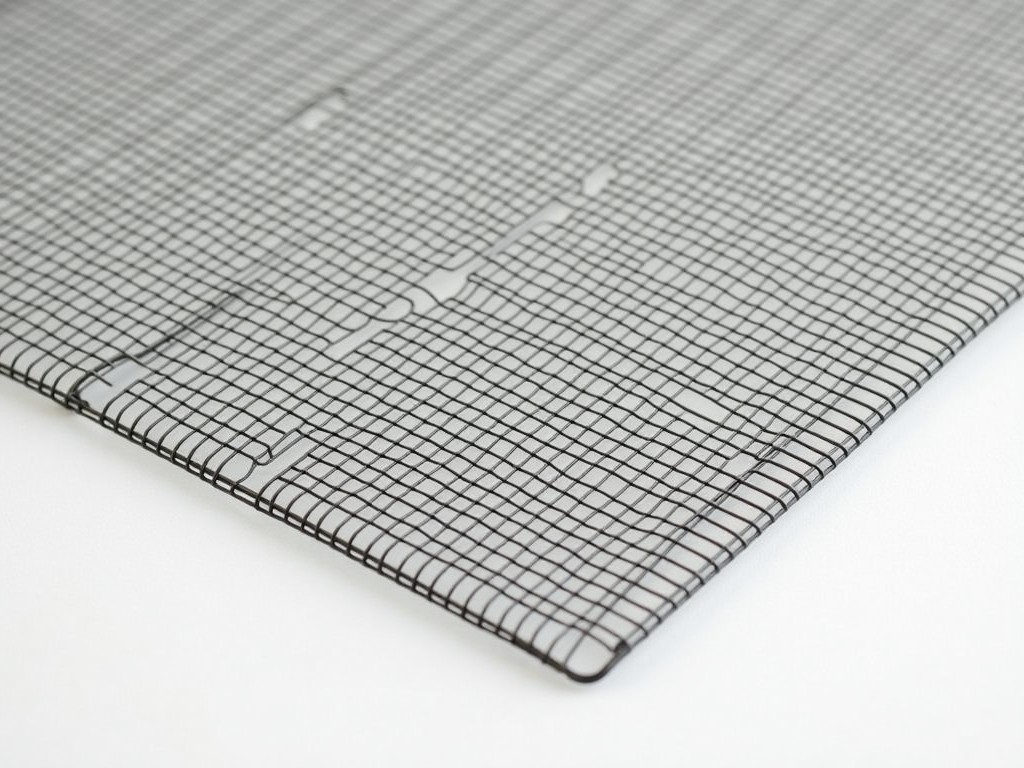
Epoxy Coated Stainless Steel Wire Mesh Manufacturers
Epoxy Coated Stainless Steel Wire Mesh: Technical Specifications and Applications
This page provides engineering details for epoxy coated stainless steel wire mesh, focusing on material behavior, coating performance, and industrial suitability. Information is presented to support procurement decisions based on technical requirements rather than promotional claims.
Material Composition and Base Wire Properties
The base wire is typically austenitic stainless steel, most commonly grades 304 or 316L, selected for their corrosion resistance and mechanical properties. Wire diameter ranges from 0.5 mm to 6.0 mm, depending on the mesh opening and load requirements. Tensile strength of the base wire generally falls between 500 MPa and 1000 MPa, influenced by cold working during drawing. Elongation at break typically ranges from 10% to 35%, providing ductility for forming and installation without cracking.
Epoxy Coating Characteristics
The epoxy coating is applied via electrostatic spray or dip coating, followed by thermal curing at temperatures between 180°C and 220°C. Coating thickness typically ranges from 80 μm to 200 μm, measured using magnetic or eddy current gauges. The coating exhibits a Shore D hardness of 70–85, providing resistance to abrasion and impact. Adhesion to the stainless steel substrate is validated via cross-hatch testing (ASTM D3359), with typical results of 5B (no peeling or flaking). The coating is non-conductive, with volume resistivity exceeding 10¹⁴ Ω·cm, making it suitable for electrical insulation applications.
Performance in Corrosive Environments
The epoxy coating acts as a barrier to moisture, chlorides, and chemical agents, significantly extending service life in harsh environments. In salt spray testing (ASTM B117), coated mesh typically shows no red rust or coating failure for 1,000 to 3,000 hours, depending on coating quality and thickness. Underlying stainless steel provides secondary protection if the coating is locally damaged, due to its inherent passivation layer. In concrete environments, the coating prevents alkali-silica reaction and chloride-induced corrosion of reinforcement, making it suitable for façade support and seismic restraint systems.
Mechanical Performance After Coating
The epoxy coating does not significantly alter the tensile strength of the base wire, as it is a non-structural layer. However, the coating may reduce fatigue life under cyclic loading due to stress concentration at coating defects or edges. For dynamic applications, such as vibrating screens or conveyor belts, finite element analysis is recommended to assess stress distribution. The coating remains flexible up to a bend radius of 5x the wire diameter without cracking, as determined by mandrel bend testing (ASTM D522). Impact resistance is maintained, with no delamination observed in Gardner impact tests at 1–2 J.
Typical Industrial Applications
Epoxy coated stainless steel wire mesh is used where corrosion resistance, durability, and non-contamination are critical. In food processing, it serves as conveyor belts, sieves, and drying trays, where the coating prevents metal contact with food products and withstands frequent washdowns with alkaline cleaners. In pharmaceutical manufacturing, it is used in filter housings and drying systems, meeting hygiene standards due to its smooth, non-porous surface. In architectural applications, it functions as infill panels for balconies, façades, and sunshades, where the coating maintains appearance over decades despite UV exposure and pollution. In chemical plants, it is employed as catalyst supports and filter media in reactors handling acids, solvents, and alkaline solutions.
Customization Options
Mesh opening size, wire diameter, and weave pattern (plain Dutch, twill, or welded) can be tailored to specific filtration, strength, or flow requirements. Coating color is customizable, with standard options including white, gray, black, and blue; custom colors are available upon request using RAL or Pantone references. Edge finishing options include folded, welded, or fringed ends, depending on installation method. Panels can be fabricated to custom dimensions, with tolerances typically held to ±3 mm for length and width. For applications requiring grounding or conductivity, selective masking can leave specific areas uncoated.
Quality Control and Testing
Quality assurance includes incoming wire inspection for diameter, tensile strength, and surface finish. Coating thickness is verified at multiple points per square meter using non-destructive gauges. Adhesion is tested via cross-hatch and pull-off methods (ASTM D4541). Visual inspection checks for pinholes, bubbles, or uneven coverage using 10x magnification. Salt spray resistance is sampled per batch, with test panels exposed for 1,000 hours. Dimensions and squareness of fabricated panels are verified using calipers and right-angle gauges. All test records are retained for traceability.
Packaging and Handling
Flat panels are stacked with protective interleaving sheets (polyethylene or paper) to prevent surface abrasion during transit. Rolls are wound on cores with inner diameter of 76 mm or 152 mm, wrapped in stretch film, and placed in corrugated cartons or wooden crates. Edge protectors are applied to vulnerable corners. For export shipments, moisture-barrier bags and desiccant packs are included to prevent condensation. Handling instructions advise against dragging mesh across rough surfaces and recommend using gloves to avoid coating damage from oils or particulates.
| Property | Typical Range or Value | Test Method / Reference |
|---|---|---|
| Base Wire Material | SS 304, SS 316L | ASTM A240 / AISI |
| Wire Diameter | 0.5 mm – 6.0 mm | Caliper / Micrometer |
| Tensile Strength (Base Wire) | 500 – 1000 MPa | ASTM A370 |
| Epoxy Coating Thickness | 80 – 200 μm | ASTM D7091 |
| Coating Hardness (Shore D) | 70 – 85 | ASTM D2240 |
| Adhesion (Cross-Hatch) | 5B (ASTM D3359) | ASTM D3359 |
| Salt Spray Resistance | 1,000 – 3,000 hrs (no red rust) | ASTM B117 |
| Volume Resistivity | >10¹⁴ Ω·cm | ASTM D257 |
| Bend Flexibility | No cracking at 5x wire diameter | ASTM D522 |
For technical inquiries, custom specifications, or sample requests, contact our engineering team to discuss your application requirements. Provide details on operating environment, load conditions, mesh dimensions, and any regulatory standards applicable to your industry.
Request Technical Consultation