


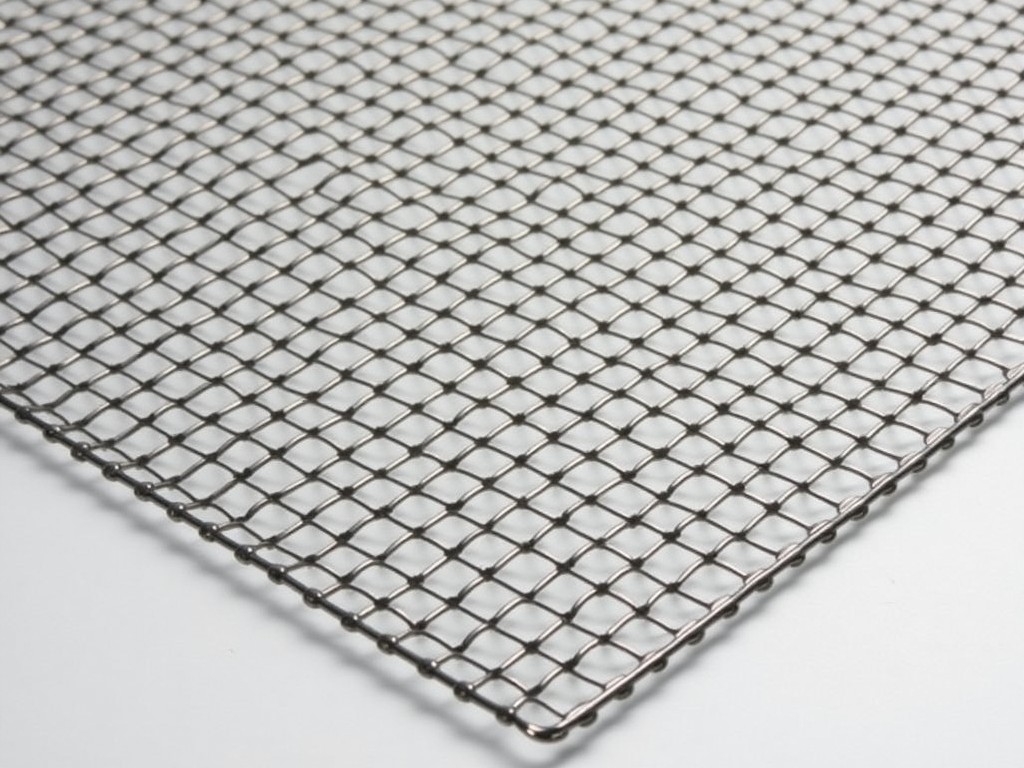
Factory Price Stainless Steel Wire Mesh
Factory Price Stainless Steel Wire Mesh
Stainless steel wire mesh is a precision-engineered material formed by weaving or welding corrosion-resistant alloy wires into a uniform grid structure. Its performance in industrial environments depends on alloy composition, wire diameter, aperture size, and weaving pattern—factors that directly influence tensile strength, chemical resistance, and open area ratio. Understanding these parameters allows buyers to select configurations that balance filtration efficiency, structural integrity, and lifecycle cost for specific process demands.
Material Composition and Corrosion Resistance
The most common grades used in wire mesh production are 304 and 316L stainless steel. Grade 304 contains approximately 18% chromium and 8% nickel, providing good resistance to atmospheric corrosion and many organic chemicals. Grade 316L adds 2–3% molybdenum, significantly enhancing resistance to chlorides and reducing acids, making it suitable for marine environments, chemical processing, and food-grade applications where pitting corrosion is a concern. Wire is typically annealed to relieve drawing stresses, ensuring consistent mechanical properties across the mesh surface.
Weaving Patterns and Structural Characteristics
Plain weave (1:1 over-under) offers balanced strength and filtration precision, commonly used in screening and sifting applications. Twill weave (2:2 over-under) allows for heavier wire diameters with maintained flexibility, increasing load-bearing capacity while reducing pressure drop in fluid filtration. Dutch weave features finer warp wires and heavier shute wires, creating a tight surface ideal for micron-level filtration where surface retention is critical. Welded mesh, produced by resistance welding at intersections, provides rigid panels for machine guards, security barriers, and structural supports where deformation under load must be minimized.
Key Technical Parameters for Selection
Aperture size, wire diameter, and open area percentage are interdependent variables that define mesh performance. For example, a 2 mm aperture with 0.5 mm wire yields approximately 64% open area, suitable for high-flow filtration, while the same aperture with 1.0 mm wire reduces open area to 36%, increasing strength but restricting flow. Tensile strength of the wire itself—typically 500–800 MPa for annealed stainless—combined with weave pattern determines burst resistance and fatigue life under cyclic loading. These values are not marketing claims but measurable specifications verified through tensile testing and pore analysis.
Typical Industrial Applications
In chemical processing, stainless steel wire mesh serves as catalyst supports, filter media for corrosive liquids, and flame arrestors in vent lines due to its thermal stability and resistance to oxidation. In food and beverage production, 316L mesh is used in juice filtration, cheese molding, and powder sieving where hygiene and cleanability are regulated by FDA and 3-A standards. Mining operations deploy coarse mesh for ore screening and slurry dewatering, while automotive manufacturers use fine mesh in radiator guards and battery separator vents to block particulates without impeding airflow or gas exchange.
Customization and Manufacturing Considerations
Wire mesh can be produced in roll form for continuous processing or cut-to-size panels for direct installation. Edge treatments include hemmed, fringed, or welded borders to prevent fraying and facilitate mounting. Surface finishes range from standard mill finish to electropolished for enhanced cleanliness in pharmaceutical contexts. Custom dimensions are achievable within practical limits—wire diameter from 0.1 mm to 6.0 mm, aperture from 0.05 mm to 100 mm—subject to weaving equipment constraints and tension control during fabrication. Tolerances on aperture and wire diameter typically adhere to ISO 9044 or equivalent industrial standards.
Quality Assurance and Testing
Reliable manufacturers verify mesh integrity through dimensional inspection using optical comparators or laser measurement systems to confirm aperture accuracy and wire diameter consistency. Tensile testing of raw wire ensures material meets grade specifications before weaving. For critical applications, bubble point testing or air permeability assessments may be conducted to validate filtration performance. Visual inspection under standardized lighting identifies weaving defects such as skipped wires, double picks, or irregular tension. Documentation including material certificates and test reports is available upon request to support buyer qualification processes.
| Parameter | Typical Range | Notes |
|---|---|---|
| Wire Diameter | 0.1 mm – 6.0 mm | Dependent on grade and weaving equipment |
| Aperture Size | 0.05 mm – 100 mm | Limited by wire diameter and weave tightness |
| Open Area | 10% – 70% | Inversely related to wire diameter for fixed aperture |
| Tensile Strength (Wire) | 500 – 800 MPa | Annealed condition; higher for cold-drawn |
| Standard Widths | 0.5 m – 3.0 m | Custom widths available via slitting or splicing |
Supply Chain and Procurement Considerations
Factory pricing reflects direct manufacturing costs without intermediary markups, but buyers should evaluate total value by assessing lead times, minimum order quantities, and packaging suitability for transport. Mesh is typically shipped in water-resistant paper or plastic wrapping, with rolls secured on pallets and panels crated to prevent bending or surface damage. Export compliance documentation, including material origin declarations and cleanliness statements, can be provided to meet international procurement requirements. Lead times vary based on alloy availability and customization complexity, commonly ranging from 2 to 6 weeks for standard specifications.