


Heavy Duty Stainless Steel Wire Mesh Manufacturer
Heavy Duty Stainless Steel Wire Mesh Manufacturer
Material Composition and Corrosion Resistance
Heavy duty stainless steel wire mesh is manufactured from austenitic grades such as 304, 316, and 316L, selected based on environmental exposure and mechanical demands. Grade 304 provides adequate resistance to atmospheric corrosion and mild chemical exposure, suitable for indoor industrial settings. Grade 316 incorporates molybdenum, enhancing resistance to chlorides and acids, making it preferable for marine environments, chemical processing, and coastal applications. The low-carbon variant 316L minimizes carbide precipitation during welding, preserving corrosion resistance in heat-affected zones. Wire diameter typically ranges from 2.0 mm to 6.0 mm for heavy duty classifications, directly influencing tensile strength and impact resistance.
Weave Patterns and Structural Performance
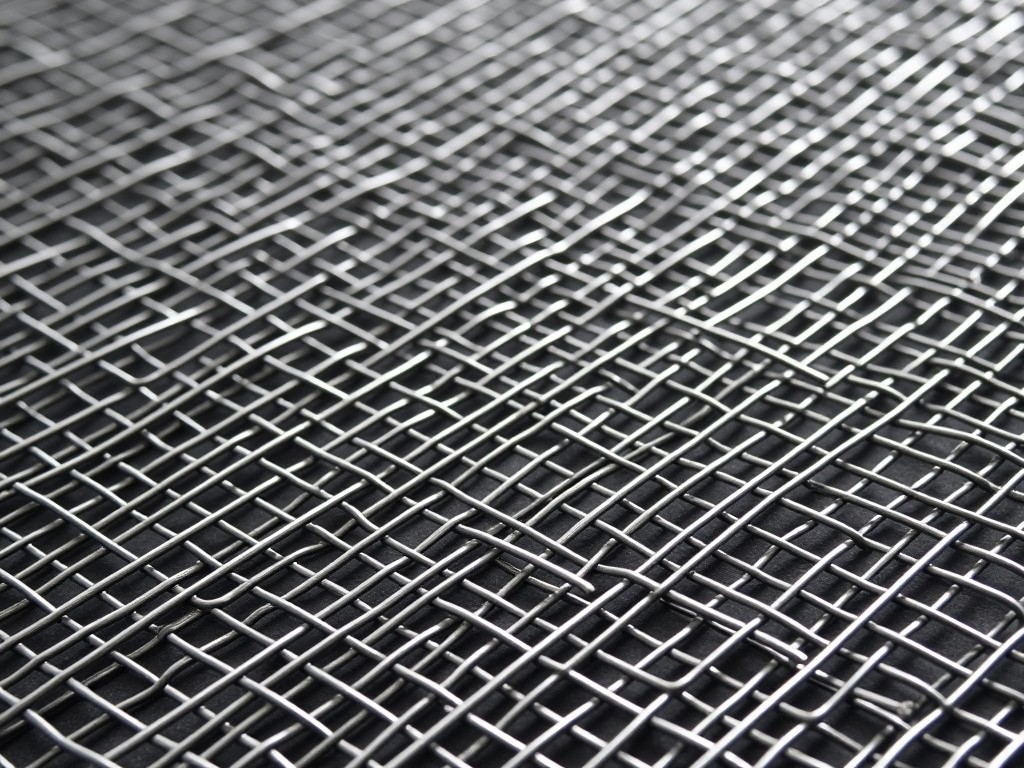
The weave pattern determines load distribution, open area, and mechanical behavior under stress. Plain weave offers balanced strength in both directions with 50% theoretical open area, commonly used where bidirectional load symmetry is required. Twill weave, where each wire passes over two and under two adjacent wires, provides higher tensile strength and better draping characteristics for conforming to irregular surfaces. Dutch weave features finer weft wires packed tightly between heavier warp wires, achieving high mechanical strength with reduced open area—ideal for filtration under high pressure differentials. Crimped styles, including lock crimp and intercrimp, stabilize wire positions under vibration, preventing mesh deformation in dynamic environments such as screening equipment or conveyor guards.
Opening Size and Flow Characteristics
Opening size, defined as the clear distance between adjacent wires, directly affects flow rate, particle retention, and pressure drop in filtration and screening applications. For heavy duty mesh, opening sizes typically range from 6 mm to 50 mm, balancing structural integrity with functional throughput. Larger openings reduce pressure drop in air or liquid flow systems but decrease retention efficiency for fine particulates. The ratio of wire diameter to opening size influences clogging resistance; a higher ratio improves self-cleaning action in vibratory screens. Open area percentage, calculated from wire diameter and pitch, predicts volumetric flow capacity—critical in designing hoppers, vents, and protective barriers where both strength and permeability are essential.
Customization and Fabrication Options
Manufacturers tailor heavy duty stainless steel wire mesh to specific project requirements through dimensional cutting, edge treatment, and secondary fabrication. Standard roll widths range from 0.5 m to 2.5 m, with lengths customized to minimize seams in large installations. Edges can be left raw, folded, or welded with stainless steel filler wire to prevent fraying and facilitate handling. For framed applications, mesh is welded or clamped into angular, rectangular, or circular frames using TIG or spot welding techniques that preserve corrosion resistance. Post-fabrication passivation removes surface contaminants and restores the passive oxide layer, essential after welding or mechanical deformation to maintain long-term durability in corrosive environments.
Quality Control and Testing Protocols
Quality assurance begins with raw material verification using mill test certificates to confirm chemical composition and mechanical properties. During production, wire diameter is monitored via laser micrometers at 100 mm intervals to ensure tolerance compliance, typically ±0.05 mm for heavy duty grades. Opening size is verified using calibrated gauges or optical comparators across multiple sample points per roll. Tensile strength is assessed per ASTM A370 on wire samples, with values expected to exceed 500 MPa for 316 stainless steel at 2.0 mm diameter. Visual inspection under 10x magnification identifies defects such as skips, doubles, or broken wires. Final validation includes burst pressure testing for filtration meshes and drop-weight impact tests for barrier applications, ensuring performance under anticipated service loads.
Industrial Applications and Functional Rationale
In mining and aggregate processing, heavy duty mesh serves as screen media in vibratory separators where resistance to abrasion from quartz and granite is critical; the combination of 316L wire and twill weave extends service life by reducing wire fatigue and elongation. For machine guarding in stamping presses or robotic cells, the mesh provides visibility and airflow while containing fragments—opening sizes below 13 mm meet ISO 13857 safety standards for upper limb protection. In architectural applications such as facade cladding or balustrades, the mesh offers wind load resistance and aesthetic permeability; 316 grade with polished finish withstands salt spray exposure for over 25 years with minimal maintenance. Chemical plants use Dutch weave mesh in catalyst retention systems where high dirt-holding capacity and resistance to thermal cycling are required.
Comparison of Standard Specifications
| Parameter | Typical Range (Heavy Duty) | Notes |
|---|---|---|
| Wire Diameter | 2.0 – 6.0 mm | Selected based on load and impact requirements |
| Opening Size | 6 – 50 mm | Affects flow rate and particle retention |
| Wire Grade | 304, 316, 316L | 316L preferred for welded assemblies |
| Weave Pattern | Plain, Twill, Dutch, Lock Crimp | Determines strength and flexibility |
| Tensile Strength (Wire) | ≥500 MPa (316) | ASTM A370 test standard |
| Open Area % | 30 – 70 | Calculated from wire diameter and pitch |
Engineering Considerations for Selection
Selecting appropriate heavy duty stainless steel wire mesh requires evaluating mechanical load, environmental exposure, and functional lifecycle. For static loads such as fixed guards or partitions, deflection limits dictate minimum wire diameter and support spacing—typically L/150 for architectural applications. In dynamic environments like conveyor screens, natural frequency analysis prevents resonance-induced fatigue; increasing wire diameter or changing weave pattern alters stiffness accordingly. Thermal expansion must be accommodated in restrained installations; 316 stainless steel expands approximately 16 µm/m·°C, requiring expansion gaps or sliding supports in long runs. Electromagnetic interference considerations may favor non-magnetic 316L over slightly magnetic 304 in sensitive equipment enclosures.
Inquiry and Technical Support
To initiate a quotation, provide application details including operating environment (temperature, chemical exposure, UV), mechanical loads (static, impact, cyclic), required dimensions, opening size, wire diameter, and preferred grade. Drawings or sketches assist in interpreting complex geometries or fabrication needs. For replacement parts, specify existing mesh characteristics or equipment model. Technical support includes material recommendation based on ISO 9223 corrosion categories, finite element analysis for custom frames, and compliance documentation for safety or hygiene standards. Lead times typically range from 3 to 6 weeks depending on complexity and raw material availability.