


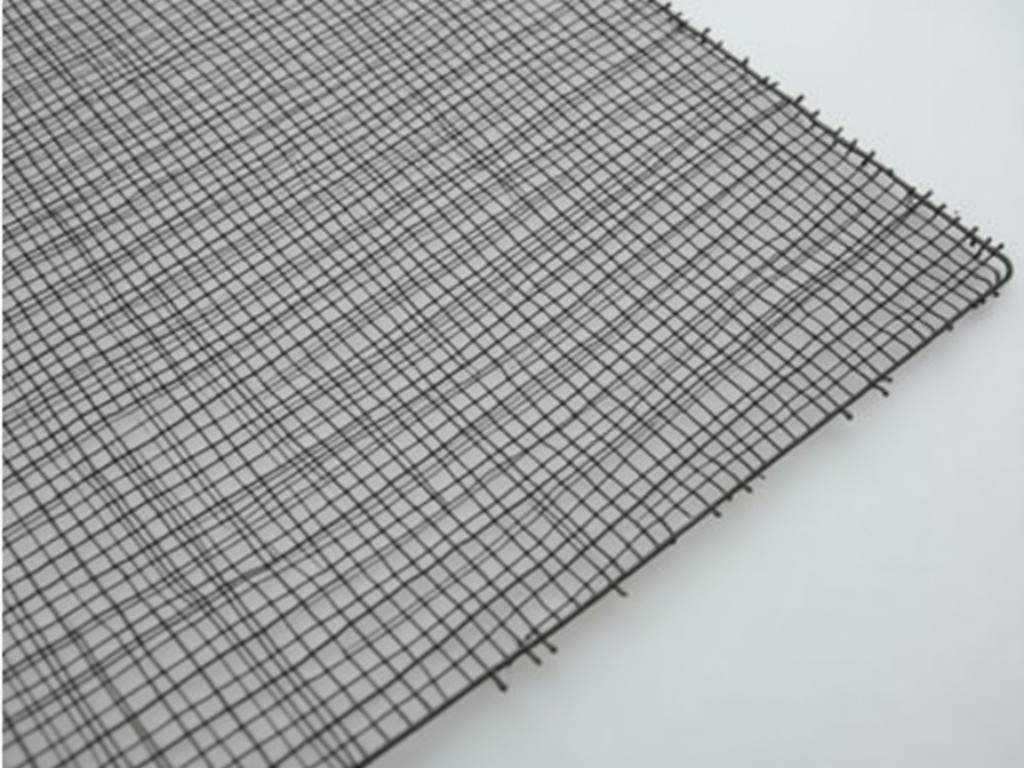
High Precision Dutch Weave Stainless Steel Mesh
High Precision Dutch Weave Stainless Steel Mesh
Dutch weave mesh is a specialized filtration medium engineered for applications requiring precise particle retention and high dirt-holding capacity. Unlike standard square weave, its asymmetric wire arrangement creates a tortuous path that enhances filtration efficiency while maintaining structural integrity under pressure. This page explains the technical characteristics, material options, and performance considerations that inform selection for industrial processes.
Weave Structure and Filtration Mechanics
In Dutch weave, warp wires (running lengthwise) are typically heavier and spaced farther apart than shute wires (running widthwise), which are finer and densely packed. This configuration forms a flow path where larger particles are captured near the surface by the warp wires, while finer particles are trapped in the narrowing channels created by the shute wires. The result is a gradient filtration effect that can retain particles smaller than the nominal pore size suggests.
The retention rating is not defined by a single opening dimension but by the complex interaction of wire diameters, weave density, and flow dynamics. For example, a mesh with 100 warp wires per inch and 300 shute wires per inch using 0.1mm warp and 0.05mm shute wire may retain particles in the 5–15 micron range depending on fluid viscosity and pressure drop. Actual performance must be validated under process conditions.
Material Selection and Corrosion Resistance
Stainless steel grades are selected based on chemical exposure, temperature, and required lifespan. Type 304 offers good general corrosion resistance in ambient water and mild chemicals but is susceptible to chlorides. Type 316L adds molybdenum for improved resistance to pitting and crevice corrosion in saline or acidic environments, making it common in chemical processing and marine applications. For high-temperature oxidizing atmospheres up to 900°C, Type 310 or 310S may be specified due to higher chromium and nickel content.
Wire diameter directly impacts both filtration precision and mechanical strength. Finer shute wires increase retention capability but reduce burst pressure tolerance. Conversely, heavier warp wires improve tensile strength and resistance to deformation under differential pressure. The optimal balance depends on whether the mesh functions as a primary filter, a support layer, or a combination of both in a multi-stage system.
Typical Specifications and Customization Parameters
| Parameter | Typical Range | Customizable? |
|---|---|---|
| Warp Wire Diameter | 0.08mm – 0.50mm | Yes |
| Shute Wire Diameter | 0.03mm – 0.20mm | Yes |
| Warp Count (per inch) | 20 – 200 | Yes |
| Shute Count (per inch) | 50 – 800 | Yes |
| Nominal Retention Range | 1 – 50 microns | Application-dependent |
| Standard Width | 500mm – 2000mm | Slit to width |
| Length per Roll | 10m – 50m | Yes |
Customization extends beyond wire dimensions to include edge treatments such as hemming, framing, or welding to perforated sheets for cartridge assembly. Backing layers of coarser mesh can be laminated to improve durability in high-flow scenarios without sacrificing surface filtration performance. All modifications are evaluated for their impact on flow distribution and pressure drop.
Industrial Applications and Process Fit
In catalyst recovery systems, Dutch weave mesh retains fine catalyst particles while allowing cleaned solvent or reactant to pass, reducing loss and enabling reuse. The gradient structure prevents rapid blinding compared to uniform screens, extending service life between cleaning cycles. Similarly, in pigment filtration for paints and coatings, it separates agglomerates and oversize particles that would cause defects in final product appearance or nozzle clogging in spray systems.
The mesh is also used in hydraulic fluid conditioning where removal of micron-scale wear particles protects precision components like servo valves and injectors. Its ability to hold significant contaminant mass before pressure drop increases makes it suitable for inline filters in continuous operations. In food and beverage processing, polished 316L Dutch weave screens separate yeast, haze-forming proteins, or fruit solids while meeting sanitary design requirements for clean-in-place (CIP) systems.
Quality Assurance and Inspection Criteria
Each roll undergoes dimensional verification of wire counts and diameters using optical comparators or laser scanning to ensure conformance to the specified weave pattern. Visual inspection under controlled lighting identifies defects such as broken wires, skipped picks, or uneven tension that could create leak paths. For critical filtration duties, bubble point testing or particle challenge tests with standardized suspensions (e.g., ISO 12103-1 A2 fine dust) validate actual retention performance.
Material traceability is maintained through mill certificates linking the raw wire to its chemical composition and mechanical properties. Post-weaving, passivation treatments are applied to stainless steel to enhance the chromium oxide layer, particularly after welding or mechanical alteration. Packaging in polyethylene sleeves with end caps prevents contamination during transport and storage until point of use.