


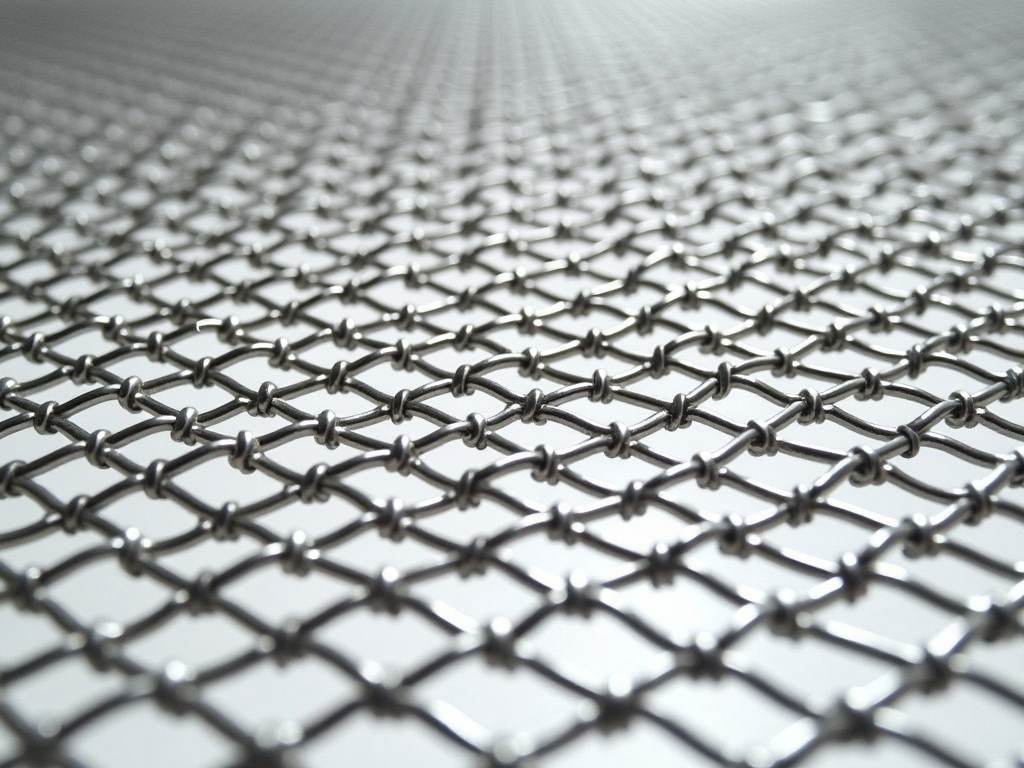
High Quality Stainless Steel Window Screen Factory
High Quality Stainless Steel Window Screen Factory
Stainless steel window screens provide durable protection against insects, debris, and environmental exposure while maintaining airflow and visibility. Unlike aluminum or fiberglass alternatives, stainless steel resists corrosion in coastal, industrial, and high-humidity environments, making it suitable for long-term architectural and industrial applications where material degradation must be minimized.
Manufacturing precision directly affects screen performance: wire diameter, mesh count, and frame integration determine structural integrity, optical clarity, and resistance to sagging or deformation under wind load. This page outlines the technical specifications, production capabilities, and quality considerations for sourcing stainless steel window screens from a dedicated factory specializing in engineered mesh solutions.
Material Specifications and Alloy Selection
The most commonly used alloys for window screen mesh are AISI 304 and 316 stainless steel. 304 offers good corrosion resistance in urban and suburban environments at a lower cost, while 316 contains molybdenum for enhanced resistance to chlorides and acids, making it preferable for coastal zones, chemical processing facilities, or areas with frequent salt spray exposure.
Wire diameter typically ranges from 0.25mm to 0.50mm, balancing tensile strength with flexibility and visibility. Thicker wires increase rigidity and impact resistance but reduce open area and light transmission. Mesh count—measured in wires per inch—commonly falls between 16x16 and 20x20, where higher counts improve insect exclusion but increase pressure drop across the screen in HVAC or ventilation applications.
Surface finish options include mill finish (as-produced), brushed, or electropolished. Electropolishing removes surface contaminants and micro-defects, improving corrosion resistance and ease of cleaning—particularly valuable in food processing, pharmaceutical, or cleanroom-adjacent environments where hygiene is critical.
Manufacturing Process and Tolerance Control
Production begins with precision drawing of stainless steel wire to exact diameters, followed by weaving on high-speed looms calibrated to maintain consistent mesh alignment and tension. Deviations in wire spacing or weave tightness can create weak points or reduce screening efficiency, so inline tension monitoring and automatic shuttle control are standard in modern weaving lines.
After weaving, the mesh undergoes edge treatment—typically hemming, fringing, or welding into frames—to prevent unraveling and facilitate installation. Hemming folds the wire over itself to create a smooth, safe edge; welding provides a permanent bond for structural frames; fringing leaves raw edges for integration into flexible gaskets or rubber seals.
Dimensional tolerances are held to ±0.05mm for wire diameter and ±2% for mesh count across production batches. Roll widths are available from 300mm to 2000mm, with standard lengths of 30m or 50m per roll. Custom slit widths and lengths are available upon request to minimize material waste in downstream fabrication.
Frame Integration and Assembly Options
Window screens are rarely used as standalone mesh; they are typically integrated into frames made of aluminum, stainless steel, or PVC. The attachment method affects long-term performance: spline grooves (using rubber or vinyl cord) allow for replacement and adjustment, while screw-mounted or welded frames provide permanent fixation but complicate maintenance.
For industrial enclosures or machinery guards, frames may be designed with flanges for bolting to equipment, or with sliding tracks for access panels. In architectural applications, screens are often fixed within curtain wall systems or operable window sashes, requiring precise dimensional matching to prevent rattling, wind noise, or water infiltration.
Factory assembly includes tensioning the mesh within the frame to eliminate sag—a critical step since even slight looseness can amplify vibration and accelerate fatigue failure. Tension is verified using deflection gauges or optical moiré methods to ensure uniformity across the entire surface.
Quality Control and Testing Protocols
Quality assurance begins with raw material verification: mill test certificates confirm alloy composition, and incoming wire is sampled for diameter, tensile strength, and elongation. During weaving, cameras or laser sensors monitor mesh regularity, detecting missing wires, double picks, or tension variations that could compromise integrity.
Finished mesh is tested for tensile strength using ASTM E8 methods, with typical values exceeding 500 MPa for 304 and 550 MPa for 316 wire. Open area percentage is calculated from mesh count and wire diameter—for example, 18x16 mesh with 0.30mm wire yields approximately 70% open area, directly affecting airflow and visibility.
Corrosion resistance is validated through salt spray testing (ASTM B117) or cyclic corrosion testing, with 316 mesh typically showing no red rust after 1000+ hours. Visual inspection under standardized lighting checks for surface defects, discoloration, or contamination. All test results are documented and available upon request for project validation.
Applications in Industrial and Architectural Settings
In food and beverage processing facilities, stainless steel screens prevent insect ingress into production zones while withstanding frequent washdowns with caustic cleaners and high-temperature steam. The non-porous surface does not harbor bacteria, and electropolished finishes meet FDA and USDA hygiene requirements for indirect food contact zones.
Pharmaceutical cleanrooms use stainless steel mesh in HVAC intake and exhaust screens to maintain particulate control without shedding fibers—unlike fiberglass, which can degrade and contaminate sterile environments. The mesh’s dimensional stability ensures consistent airflow rates critical for maintaining positive pressure differentials.
Marine and offshore installations rely on 316 stainless steel screens to protect ventilation intakes, equipment enclosures, and living quarters from salt-laden air and debris. Unlike coated steels that may chip or peel, stainless steel forms a self-healing passive oxide layer, ensuring long-term performance without recoating or replacement cycles.
Customization Capabilities and Engineering Support
Custom mesh specifications are available for non-standard requirements: tighter weaves for micron-level filtration, heavier wires for impact resistance, or specialized patterns like Dutch twill for increased strength in one direction. Width slitting to exact dimensions reduces scrap in fabrication, and custom roll lengths accommodate large-format installations without splicing.
Frame materials can be matched to the mesh alloy—304 or 316 stainless steel frames eliminate galvanic corrosion risks when used with dissimilar metals. Surface treatments such as passivation or powder coating (on aluminum frames) are available to meet specific environmental or aesthetic requirements.
Engineering support includes providing airflow calculations based on open area and mesh characteristics, deflection analysis under wind load, and corrosion rate estimates for specific environments. Technical datasheets with mesh properties, tolerances, and test data are available upon request to support specification writing and design validation.
Typical Specifications Table
| Parameter | Typical Range / Value | Notes |
|---|---|---|
| Alloy Options | AISI 304, 316 | 316 preferred for chloride exposure |
| Wire Diameter | 0.25mm – 0.50mm | Affects strength and open area |
| Mesh Count | 16x16 to 20x20 wires/inch | Higher counts improve filtration |
| Open Area | 60% – 75% | Calculated from mesh and wire |
| Tensile Strength (Wire) | 500 – 550 MPa | ASTM E8, varies by alloy |
| Roll Width | 300mm – 2000mm | Custom slit widths available |
| Roll Length | 30m or 50m standard | Custom lengths per request |
| Corrosion Resistance | >1000 hrs salt spray (316) | ASTM B117, no red rust |
For technical inquiries, specification requests, or to discuss custom stainless steel window screen solutions for your project, contact our engineering team. Provide details on environmental conditions, required dimensions, mesh specifications, and frame preferences to receive a detailed response with lead times, pricing, and material test reports.
Contact Technical Team