


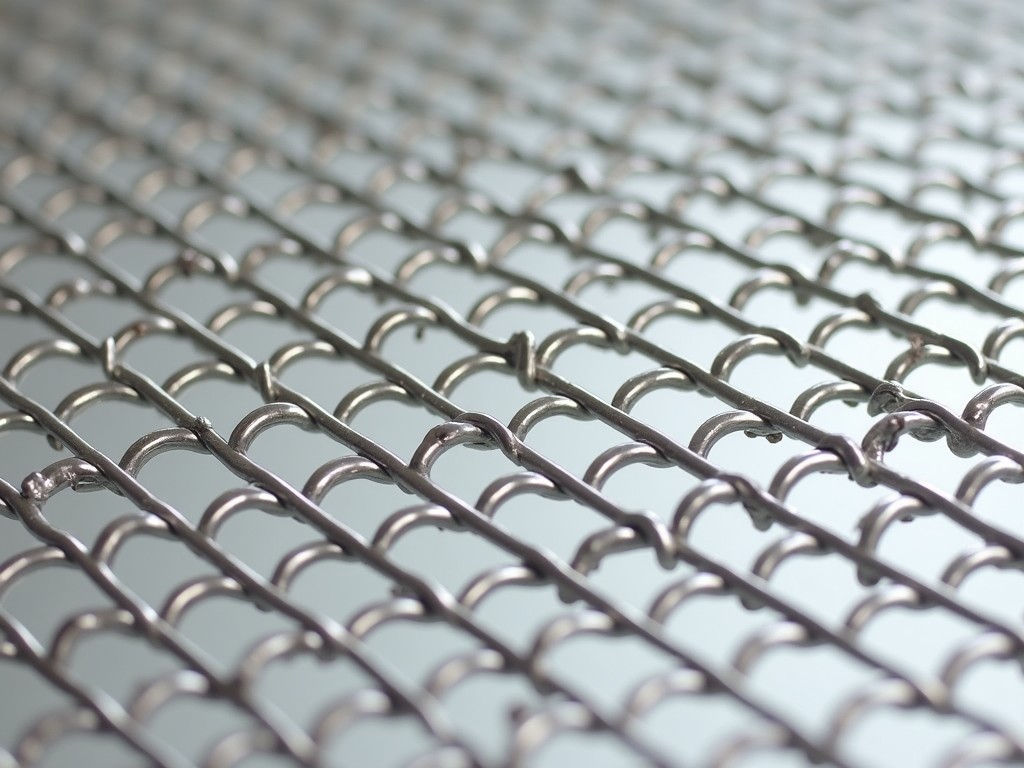
Industrial 304 Epoxy Coated Stainless Steel Wire Mesh
Industrial 304 Epoxy Coated Stainless Steel Wire Mesh
This product combines the corrosion resistance of AISI 304 stainless steel with a protective epoxy coating to extend service life in aggressive environments. The base mesh is manufactured from cold-drawn 304 stainless steel wire, woven into precise square or rectangular openings. After weaving, the mesh undergoes a dip-coating process where a thermosetting epoxy resin is applied uniformly to both sides, then cured at controlled temperatures to form a continuous, adherent film. The coating adds a barrier against chemical exposure, abrasion, and UV degradation while maintaining the underlying mesh’s mechanical properties. Typical coating thickness ranges from 80 to 150 microns, depending on application requirements. This dual-layer approach addresses limitations of bare stainless steel in environments with chlorides, sulfides, or prolonged moisture exposure.
Material and Construction Specifications
The base wire is certified to ASTM A240/A240M for 304 stainless steel, with a typical tensile strength of 515–750 MPa and yield strength of 205 MPa. Wire diameters commonly range from 0.5 mm to 3.0 mm, selected based on required open area and load-bearing capacity. Weave patterns include plain square, twill, and Dutch weave, each affecting flow dynamics and particle retention. The epoxy coating is typically a bisphenol-A based formulation, chosen for its adhesion to stainless steel, resistance to alkaline and acidic solutions, and flexibility under thermal cycling. Coating adhesion is validated via ASTM D3359 tape test, with typical results showing 5B rating (no peeling or flaking). The coating does not significantly alter the mesh’s open area; dimensional change is usually less than 2% after coating.
| Parameter | Typical Range | Notes |
|---|---|---|
| Wire Diameter | 0.5 – 3.0 mm | Custom diameters available per drawing |
| Opening Size | 1 mm – 50 mm | Square or rectangular; tolerance ±0.1 mm |
| Coating Thickness | 80 – 150 μm | Measured via magnetic induction gauge |
| Operating Temperature | -40°C to 120°C | Epoxy limits upper range; stainless steel core usable higher |
| Open Area Percentage | 30% – 70% | Dependent on wire diameter and weave pattern |
Performance Characteristics in Service Environments
In coastal or marine settings, uncoated 304 stainless steel may experience pitting corrosion due to chloride ingress, particularly at weld points or crevices. The epoxy coating acts as a physical barrier, reducing chloride diffusion rates by over 90% based on accelerated salt fog testing (ASTM B117). In chemical processing, the coating resists splash exposure to sodium hydroxide (up to 20%), sulfuric acid (up to 10%), and common solvents like isopropyl alcohol and mineral spirits. However, prolonged immersion in strong oxidizing agents or aromatic hydrocarbons may degrade the epoxy over time; compatibility charts are available upon request. The coating also reduces friction in dynamic applications, lowering wear on mating surfaces in conveyor or screening systems. Electrical insulation is improved, with surface resistivity typically exceeding 10¹² Ω/sq, useful in electrostatic discharge-sensitive environments.
Unlike painted or powder-coated alternatives, the dip-coating method ensures complete coverage of complex geometries, including wire intersections and knuckles, without thinning or pooling. This uniformity prevents premature failure at stress points. The coating remains flexible enough to withstand minor bending during installation without cracking, validated by mandrel bend tests per ASTM D522. However, the epoxy layer is not structural; load-bearing capacity remains governed by the stainless steel core. For applications requiring higher temperature resistance (>120°C), alternative coatings such as PTFE or ceramic-based systems may be more suitable, though they involve different trade-offs in cost and adhesion.
Typical Industrial Applications
In food processing, this mesh is used in drying belts, washing screens, and separation sieves where frequent cleaning with alkaline detergents and hot water occurs. The epoxy coating prevents corrosion that could contaminate product and meets FDA 21 CFR §175.300 requirements for indirect food contact when formulated with compliant resins. In pharmaceutical manufacturing, it supports fluid bed drying and filtration processes where exposure to ethanol-based sanitizers and steam-in-place (SIP) cycles demands both corrosion resistance and non-shedding surfaces. The smooth coating minimizes particle entrapment, simplifying validation for clean-in-place (CIP) procedures.
Wastewater treatment facilities deploy this mesh in bar screens, grit chambers, and aeration tank diffusers. Here, resistance to hydrogen sulfide, varying pH levels, and abrasive solids is critical. The coating extends service life compared to bare stainless steel in anaerobic zones where microbial-induced corrosion is prevalent. In mining and mineral processing, it serves as screening media for wet classification of ores, where slurry abrasion and chemical leachants (e.g., cyanide, sulfuric acid) would rapidly degrade uncoated mesh. The epoxy layer reduces blinding and pegging, improving throughput consistency. Architectural applications include infill panels for balconies and facades in coastal buildings, where the coating preserves appearance and structural integrity despite salt spray exposure.
Customization and Ordering Information
Mesh specifications are defined by wire diameter, opening size, weave pattern, roll width, and length. Standard roll widths range from 0.5 m to 2.0 m, with lengths up to 50 m depending on wire diameter and coating equipment constraints. Custom dimensions are available; customers should provide detailed drawings or schematics specifying tolerance requirements. Coating color is typically gray or black, but other RAL colors can be formulated upon request for identification or aesthetic purposes. Edge finishing options include plain cut, folded hem, or welded frame for direct installation. Packaging is usually in polyethylene-wrapped rolls on wooden pallets, with moisture-desiccant packs included for export shipments to prevent condensation during transit.
To request a quotation, supply the following: intended application, environmental conditions (chemicals, temperature, pH), required mechanical properties (tensile load, impact resistance), dimensional tolerances, and any regulatory compliance needs (e.g., FDA, CE, NSF). Lead time is typically 3–4 weeks for standard configurations, extending to 6–8 weeks for custom weaves or special coating formulations. Samples are available for evaluation; customers cover shipping costs. Quality assurance includes dimensional verification, coating thickness measurement, adhesion testing, and visual inspection per ISO 9001-inspired procedures. Mill test reports for the base stainless steel wire are provided with each shipment.