


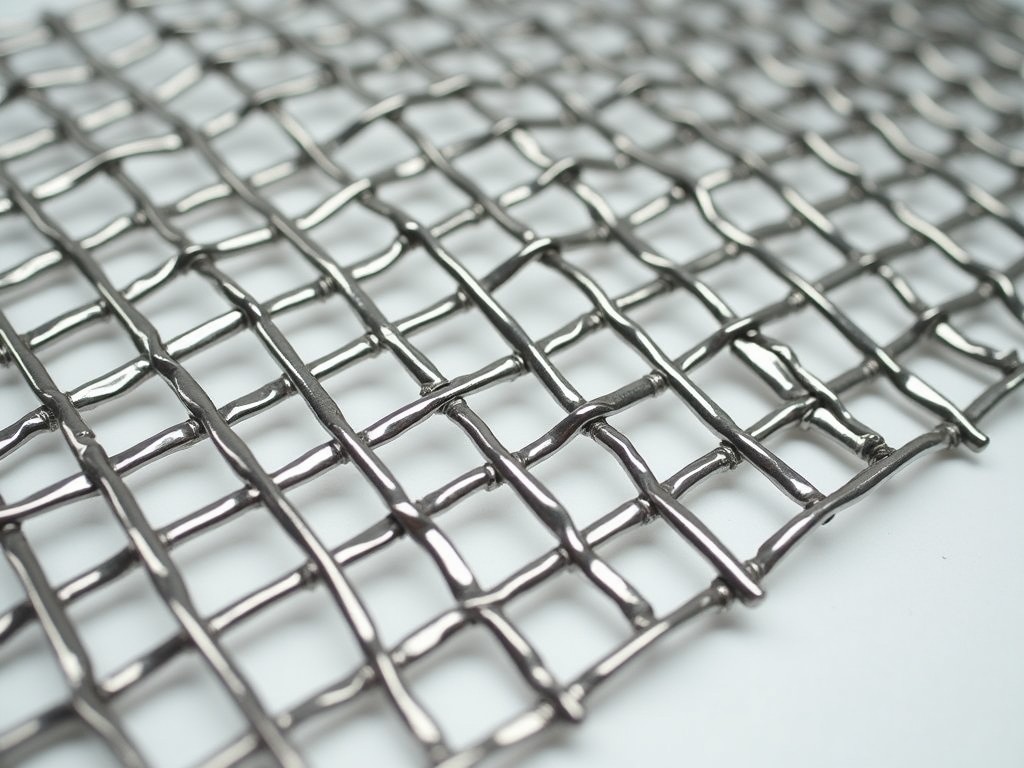
Industrial 316 Epoxy Coated Stainless Steel Wire Mesh
Industrial 316 Epoxy Coated Stainless Steel Wire Mesh
This product combines the corrosion resistance of 316 stainless steel with a protective epoxy coating to extend service life in aggressive environments. The base material is austenitic stainless steel containing 16-18% chromium, 10-14% nickel, and 2-3% molybdenum, which provides inherent resistance to chlorides and acidic compounds. The epoxy coating adds a barrier layer that isolates the metal substrate from direct contact with corrosive agents, reducing pitting and crevice corrosion risks. Together, these layers create a synergistic system where the coating handles surface exposure while the alloy maintains structural integrity beneath.
Material Composition and Coating Specifications
The wire mesh is manufactured from ASTM A240 Type 316 stainless steel wire, with typical chemical composition limits of max 0.08% carbon, max 2.0% manganese, max 0.045% phosphorus, max 0.03% sulfur, 16.0-18.0% chromium, 10.0-14.0% nickel, and 2.0-3.0% molybdenum. The epoxy coating is applied via electrostatic spray or dip-coating processes, forming a uniform film thickness of 80-120 microns after curing. Coating adhesion is tested per ASTM D4541, with minimum pull-off strength of 3.5 MPa ensuring durability under mechanical stress. The coating system is formulated for resistance to UV degradation, thermal cycling up to 120°C continuous exposure, and common industrial chemicals including sodium hydroxide, sulfuric acid (up to 20% concentration), and seawater spray.
Mechanical and Physical Properties
The base 316 stainless steel wire exhibits a tensile strength range of 520-720 MPa depending on wire diameter and temper, with elongation at break typically between 30-50% for annealed conditions. After epoxy coating, the composite system maintains the underlying metal’s mechanical properties since the coating is non-structural and does not significantly alter wire diameter or cross-sectional area. Open area percentage varies with mesh count and wire diameter; for example, a 4 mesh x 4 mm wire delivers approximately 51% open area, while a 20 mesh x 0.8 mm wire yields around 36% open area. These values are critical for applications involving fluid flow, filtration efficiency, or heat transfer where pressure drop and throughput must be calculated.
| Mesh Count (per inch) | Wire Diameter (mm) | Open Area (%) | Typical Use Case |
|---|---|---|---|
| 4 | 4.0 | 51 | Heavy-duty screening, aggregate separation |
| 10 | 1.6 | 40 | Chemical reactor supports, catalyst beds |
| 20 | 0.8 | 36 | Fine filtration, laboratory sieving |
| 40 | 0.4 | 25 | Precision filtration, inkjet printer screens |
Environmental and Chemical Resistance Performance
The epoxy coating provides primary defense against chloride-induced pitting, a common failure mode for uncoated 316 stainless in marine or de-icing salt environments. Immersion testing in 3.5% NaCl solution shows no base metal corrosion after 1,000 hours when coating integrity is maintained, whereas uncoated wire exhibits visible pitting within 200 hours under identical conditions. In sulfuric acid environments, the coating resists degradation at concentrations up to 20% and temperatures up to 60°C; beyond this, substrate exposure may occur if coating is damaged. The system also resists aliphatic hydrocarbons, ketone solvents, and aqueous alkaline solutions up to 30% NaOH at ambient temperatures. Thermal cycling between -20°C and 120°C does not cause coating delamination when applied per specification, due to matched thermal expansion coefficients between epoxy and stainless steel.
Industrial Applications and Functional Advantages
In chemical processing plants, this mesh is used as a support medium for fixed-bed catalysts where exposure to acidic feeds and cyclic temperature changes would rapidly degrade unprotected metals. The epoxy layer prevents corrosion-induced wire breakage that could lead to catalyst bed collapse or downstream contamination. In wastewater treatment facilities, it serves as a screen medium in grit chambers and bar screens, resisting corrosion from hydrogen sulfide, organic acids, and chloride-laden effluents while maintaining hydraulic efficiency over extended service intervals. Marine applications include intake pre-filters for desalination plants and cooling water systems, where the coating mitigates biofouling-related under-deposit corrosion by smoothing the surface and reducing microbial adhesion points. Food and pharmaceutical processing lines utilize it in drying trays and containment guards where FDA-compliant epoxy formulations are required, combining corrosion resistance with cleanability and non-toxicity.
Customization Options and Manufacturing Considerations
Wire diameter can be customized from 0.3 mm to 6.0 mm to suit specific load-bearing or filtration requirements, with corresponding adjustments to mesh count to maintain desired open area or structural stiffness. Coating color is available in standard gray, white, or black pigments, with custom colors possible upon request for identification or aesthetic purposes in visible installations. Edge treatments include welded, folded, or fringed finishes depending on handling safety and installation method — welded edges are preferred for high-vibration environments to prevent unraveling. Roll widths range from 0.5 m to 2.5 m, with lengths up to 50 m per roll, though custom lengths are available for specialized equipment integration. All customization is subject to minimum order quantities and tooling constraints, which vary by wire diameter and mesh pattern.
Quality Assurance and Testing Protocols
Raw wire is certified to ASTM A240 with mill test reports verifying chemical composition and mechanical properties before weaving. Post-weaving, the mesh undergoes visual inspection for coating continuity using UV fluorescence or holiday detection at 67.5 V DC to identify pinholes or thin spots exceeding 20 microns in depth. Adhesion testing is performed on random samples per batch using ASTM D4541, with acceptance criteria of ≥3.5 MPa. Salt spray resistance is validated per ASTM B117, with acceptance based on no base metal corrosion after 500 hours for standard grades and 1,000 hours for enhanced formulations. Dimensional stability is checked by measuring roll width and length tolerance, typically held to ±2% of nominal values. All test records are retained for traceability and available for customer review upon request.
To request a quotation or discuss specific application requirements, including custom dimensions, coating specifications, or packaging options, please contact our technical sales team. Provide details on operating environment, expected service life, mechanical loads, and any regulatory compliance needs to ensure accurate solution matching.
Contact Technical Sales