


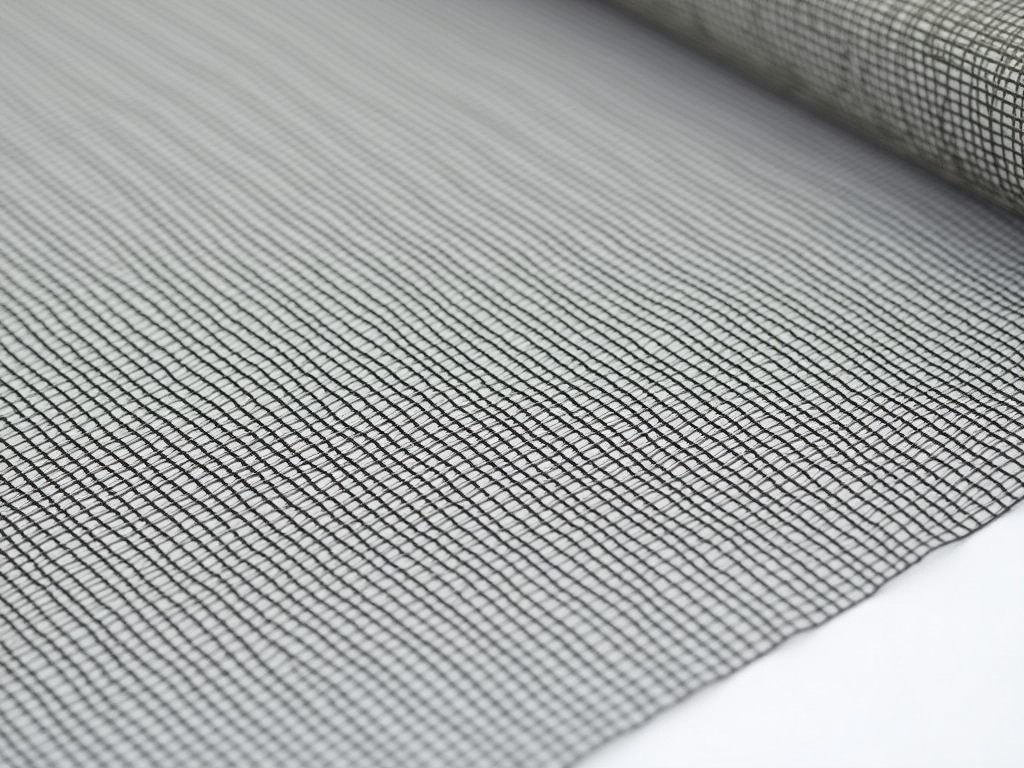
Low Carbon 304L Stainless Steel Mesh Factory
Low Carbon 304L Stainless Steel Mesh: Factory Specifications and Industrial Applications
Low carbon 304L stainless steel mesh is engineered for applications requiring corrosion resistance in welded or fabricated assemblies where sensitization must be avoided. The reduced carbon content (maximum 0.03%) minimizes carbide precipitation during welding, preserving the chromium-rich passive layer essential for corrosion resistance in acidic and chloride-exposed environments. This material variant maintains the same nickel and chromium composition as standard 304 (18% Cr, 8% Ni) but with stricter carbon control to ensure weld integrity without post-weld annealing.
Industrial buyers specify 304L mesh for continuous operation in temperatures up to 870°C (1600°F) in oxidizing atmospheres and intermittent exposure to 925°C (1700°F). The austenitic structure provides non-magnetic properties in the annealed condition and excellent formability for deep drawing or weaving into fine mesh configurations. Unlike higher-carbon grades, 304L avoids intergranular corrosion in the heat-affected zone of welds, making it suitable for chemical processing equipment, food handling systems, and architectural components where welding is unavoidable.
Mesh specifications are defined by wire diameter, opening size, and weave pattern, all of which influence flow dynamics, filtration efficiency, and mechanical strength. Common weave types include plain square, twill, and Dutch weave, each offering distinct trade-offs between open area, pressure drop, and particle retention. For example, a 200 micron opening with 0.1mm wire diameter in plain weave achieves approximately 36% open area, while a Dutch weave with the same nominal opening can achieve finer filtration at the cost of reduced flow capacity.
Material Properties and Performance Characteristics
The mechanical properties of low carbon 304L stainless steel wire used in mesh production are standardized under ASTM A240 and AMS 5513. Typical tensile strength ranges from 515 to 750 MPa (75 to 109 ksi) with 0.2% yield strength between 205 and 515 MPa (30 to 75 ksi), depending on cold work from wire drawing. Elongation at break averages 40-60% in the annealed condition, indicating high ductility suitable for weaving without wire fracture.
Corrosion resistance is equivalent to standard 304 in most environments due to identical chromium and nickel content. In oxidizing acids like nitric acid, 304L performs well up to 20% concentration at boiling temperature. In reducing acids such as sulfuric or hydrochloric, resistance is limited and highly dependent on temperature and concentration—pitting and crevice corrosion become significant risks above 40°C in chloride-containing solutions. Passivation treatments (typically nitric acid or citric acid based) are recommended after fabrication to enhance surface chromium oxide stability.
Thermal expansion coefficient is 16.0 µm/m·°C (8.9 µin/in·°F) between 20-100°C, and thermal conductivity is approximately 16.2 W/m·K at 100°C. These values affect dimensional stability in thermal cycling applications and heat transfer efficiency in exchanger or heater mesh components. Electrical resistivity is about 72 µΩ·cm, making 304L unsuitable for electrical conduction but appropriate for resistive heating elements when designed accordingly.
Weave Patterns and Mesh Geometry
The weave pattern directly determines the mesh’s functional behavior in filtration, screening, and shielding applications. Plain square weave features alternating over-one-under-one wire intersection, providing symmetrical flow characteristics and ease of cleaning. Twill weave (over-two-under-two) allows for heavier wire diameters in a given mesh count, increasing strength and wear resistance while maintaining reasonable open area. Dutch weave uses varying wire diameters in warp and fill directions to create a tortuous path for fine particle retention, often used in critical filtration where standard weaves cannot achieve required beta ratios.
Mesh count (wires per linear inch) and micron rating are inversely related but not linearly interchangeable due to wire diameter influence. For instance, a 100 mesh count with 0.15mm wire yields approximately 140 micron openings, while the same count with 0.10mm wire gives ~180 microns. Open area percentage is calculated as (opening size / (opening size + wire diameter))² × 100 for plain weave, a critical parameter for pressure drop calculations in fluid systems.
Custom mesh geometries are available upon request, including rectangular openings, tapered slots, and multi-layer laminations. These configurations address specific process challenges such as directional flow control, anti-clogging surfaces, or hybrid filtration stages. Engineers should consult with manufacturers early in design to validate weave feasibility, as extreme aspect ratios or minimal wire diameters may exceed drawing or weaving tolerances.
Industrial Applications and Use Case Rationale
In chemical processing, 304L mesh serves as catalyst supports, filter media in corrosive liquid streams, and flame arrestors in vent systems. The low carbon variant is preferred when mesh panels are welded into frames or housings, as it eliminates the need for post-weld heat treatment to prevent intergranular attack. For example, in nitric acid recovery units, welded 304L mesh baskets maintain structural integrity over years of exposure to oxidizing conditions without sensitization-related failure.
Food and beverage industries utilize 304L mesh for sieving, straining, and conveyor belts where hygiene and weldability are critical. The material complies with FDA 21 CFR 177.1550 for food contact surfaces when properly finished and passivated. Applications include syrup filtration, cheese whey separation, and bakery product sizing—environments where frequent cleaning-in-place (CIP) cycles with alkaline and acidic solutions demand corrosion resistance without degradation of weld zones.
Architectural and decorative applications leverage the aesthetic durability of 304L mesh in facade panels, sunshades, and interior partitions. Welded mesh assemblies exposed to urban atmospheres or coastal environments benefit from the reduced carbon content, which minimizes rust staining at weld points over time. Unlike painted or coated alternatives, the inherent corrosion resistance eliminates maintenance recoating cycles, providing long-term value in hard-to-access installations.
Additional uses include electromagnetic interference (EMI) shielding in enclosures, where the mesh’s conductivity and aperture size attenuate radio frequency interference; battery electrode substrates in lithium-ion manufacturing; and heat treatment baskets for annealing or sintering processes where dimensional stability at elevated temperatures is required. Each application succeeds not because the mesh is “high quality,” but because its material and geometric properties align with specific failure mode avoidance.
Customization Options and Manufacturing Considerations
Wire diameter selection balances mechanical strength, open area, and clogging resistance. Thicker wires increase burst strength and abrasion resistance but reduce open area and increase pressure drop. For filtration applications, engineers often optimize for the largest practical wire diameter that still achieves the required particle retention, extending service life in abrasive or high-solids environments. Typical wire diameters range from 0.05mm for fine filtration to 2.0mm for heavy-duty screening.
Mesh dimensions are customizable to fit specific equipment housings or process frames. Standard roll widths range from 500mm to 2000mm, with lengths limited by handling constraints—typically under 50 linear meters for manual handling. Custom cutting, edging (hemmed, selvaged, or welded), and framing options are available to match installation requirements. Tolerances on opening size and wire diameter are typically ±10% for commercial grades, with tighter tolerances (±5%) available upon request for precision applications.
Surface treatments enhance performance in specific environments. Passivation (ASTM A967) removes free iron and enriches the chromium oxide layer. Electropolishing improves surface finish for hygienic applications, reducing bacterial adhesion and improving cleanability. For high-temperature service, light scaling may occur but does not compromise structural integrity below 900°C. Coatings such as PTFE or silicone are generally avoided on 304L mesh unless required for non-stick properties, as they can degrade under thermal cycling and complicate recycling.
Quality control includes dimensional verification via optical microscopy or laser scanning, wire diameter measurement with micrometers, and tensile testing of raw wire stock. Mesh integrity is assessed through bubble point testing for filtration grades or air permeability testing for uniform flow applications. Visual inspection ensures no broken wires, skipped weaves, or contamination. Mill test reports (MTRs) confirming chemical composition (particularly carbon content ≤0.03%) and mechanical properties are available for each production lot.
Typical Specifications Table
| Property | Typical Value or Range | Notes |
|---|---|---|
| Carbon Content (max) | 0.03% | Per ASTM A240 for 304L |
| Chromium Content | 18.0–20.0% | Balances corrosion resistance and formability |
| Nickel Content | 8.0–12.0% | Stabilizes austenitic structure |
| Tensile Strength | 515–750 MPa | Dependent on cold work level |
| Yield Strength (0.2%) | 205–515 MPa | Increases with wire drawing reduction |
| Elongation at Break | 40–60% | Measured in annealed wire condition |
| Maximum Service Temp (Oxidizing) | 925°C intermittent | Limited by oxidation scaling above this point |
| Open Area (Plain Weave Example) | 36% (200µm opening, 0.1mm wire) | Varies with mesh count and wire diameter |
Quality Assurance and Testing Protocols
Material traceability begins with certified wire rod conforming to ASTM A240 or EN 10088-2 specifications. Each heat lot is accompanied by a mill test report verifying chemical composition, with particular attention to carbon content to ensure it remains below the 0.03% threshold for 304L designation. Incoming wire undergoes spectrometric verification (typically OES or XRF) to confirm alloy consistency before drawing.
During manufacturing, in-process controls monitor wire diameter consistency and tension to prevent uneven weave or wire breakage. Finished mesh is inspected under magnification (10x–20x) for weave integrity, ensuring no double picks, missing wires, or distorted openings. For filtration-grade mesh, bubble point testing confirms the largest pore throat size, while air permeability tests validate uniformity across the sheet—critical for applications requiring consistent flow distribution.
Final verification includes dimensional checks of roll width and length, edge condition assessment, and surface cleanliness evaluation. Packaging is designed to prevent contamination and mechanical damage during transit—typically using polyethylene wrapping, corrugated cardboard cores, and wooden or steel pallets with strapping. For export shipments, desiccant packs and vapor corrosion inhibitors (VCIs) may be included upon request to mitigate moisture-related surface staining during long-term storage or ocean freight.
All test results and inspection data are retained for a minimum of three years and made available to customers as part of the documentation package. This approach supports audit readiness for industries requiring material traceability, such as pharmaceuticals, aerospace, or nuclear-related fabrication. Buyers are encouraged to specify required test standards (e.g., ASTM E11 for mesh classification, ISO 9045 for corrosion testing) during quotation to ensure alignment with project acceptance criteria.
For technical consultation, custom specifications, or quotation requests regarding low carbon 304L stainless steel mesh, please contact our engineering team. Provide details on required mesh count, wire diameter, weave pattern, dimensions, and intended application to receive accurate lead times and pricing.
Request Technical Specification or Quotation