


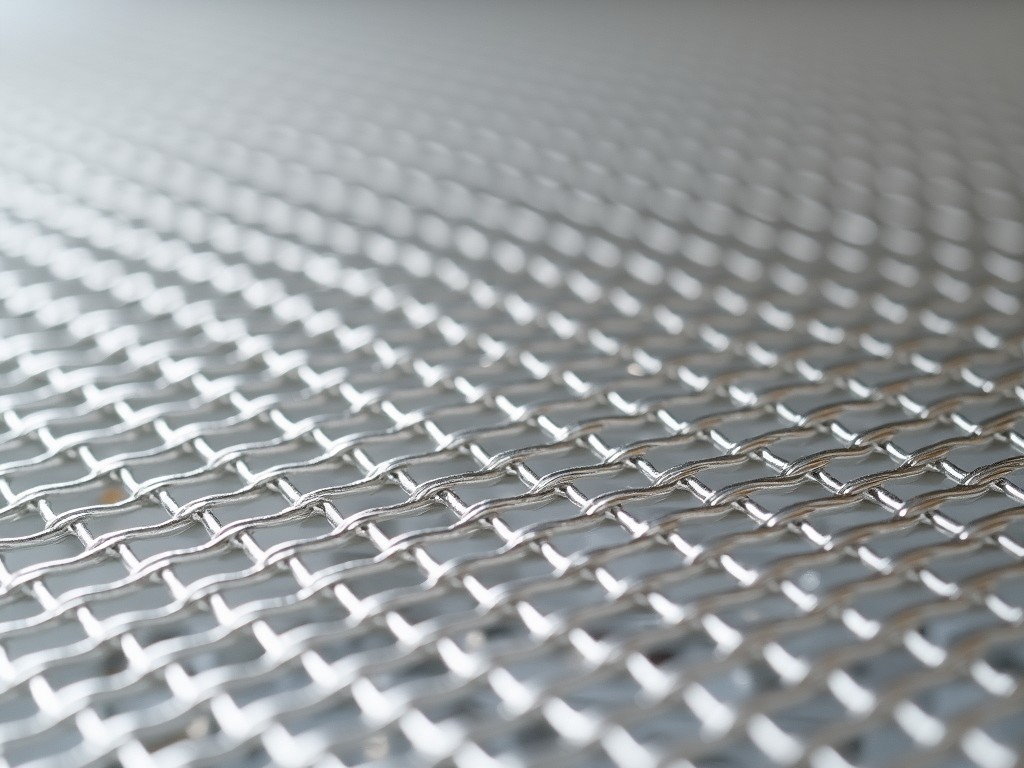
Marine Grade 316 Stainless Steel Mesh
Marine Grade 316 Stainless Steel Mesh
Marine grade 316 stainless steel mesh is engineered for environments where chloride exposure, humidity, and mechanical stress combine to accelerate corrosion. Unlike standard austenitic grades, 316 contains molybdenum (typically 2-3%), which significantly enhances resistance to pitting and crevice corrosion in saline conditions. This makes it suitable for prolonged immersion, splash zones, and coastal atmospheres where 304 stainless steel would degrade prematurely.
Material Composition and Corrosion Performance
The base alloy follows ASTM A240 Type 316 specification, with nominal composition of 16-18% chromium, 10-14% nickel, and 2-3% molybdenum. Carbon content is limited to 0.08% max to maintain weldability and intergranular corrosion resistance after heating. The molybdenum addition forms a stable passive film that resists breakdown in chloride-rich environments, reducing corrosion rates by up to 90% compared to 304 in equivalent conditions.
Mechanical properties are maintained across temperature ranges from cryogenic to 800°F (427°C), with typical tensile strength of 75-85 ksi and yield strength of 30-40 ksi in the annealed condition. Elongation exceeds 40%, ensuring ductility during forming and impact resistance. These properties remain stable after welding when proper filler metals (e.g., ER316L) are used.
Mesh Specifications and Weave Patterns
Marine grade 316 mesh is produced in standard weave patterns including plain Dutch, twill Dutch, and plain square, each selected based on filtration efficiency, flow dynamics, and mechanical load requirements. Wire diameters range from 0.010" to 0.125", with opening sizes from 5 microns to 1 inch. Mesh count varies from 2x2 to 635x635 threads per inch, allowing precise control over particle retention and open area percentage.
Plain Dutch weave offers high strength and fine filtration in one direction, ideal for pressure filtration applications. Twill Dutch provides greater flexibility and dirt holding capacity for viscous fluids. Plain square mesh delivers uniform flow and is preferred for screening, shielding, and architectural uses where aesthetics and consistent open area matter.
Typical Applications in Marine and Industrial Settings
In seawater intake systems, 316 mesh functions as strainer media to protect pumps and heat exchangers from debris, biofouling, and sediment. Its corrosion resistance ensures multi-year service life without frequent replacement, reducing maintenance downtime in desalination plants and offshore platforms. The material withstands intermittent exposure to chlorine-based disinfectants used in ballast water treatment.
Architectural applications include balustrades, facades, and safety barriers in coastal developments where salt spray and UV exposure are constant. The mesh provides fall protection while allowing visibility and airflow, with surface finish options ranging from mill finish to electropolished for enhanced appearance and cleanability. It is also used in marine aviaries and aquaculture pens where non-toxicity and durability are critical.
Industrial filtration uses include chemical processing, food and beverage production, and pharmaceutical manufacturing where product purity and equipment sanitation are mandated. The mesh resists caustic cleaning agents and steam sterilization cycles, maintaining integrity over repeated CIP (clean-in-place) procedures. Its non-reactive nature prevents contamination of sensitive fluids.
Comparison with Alternative Materials
| Property | 316 Stainless Steel | 304 Stainless Steel | Epoxy-Coated Steel |
|---|---|---|---|
| Chloride Resistance | High (Mo-containing) | Moderate | Dependent on coating integrity |
| Max Service Temp. | 800°F (427°C) | 800°F (427°C) | 250°F (121°C) |
| Typical Lifespan (Splash Zone) | 15-25+ years | 5-10 years | 2-5 years (if coating intact) |
| Initial Cost Factor | 1.0 (baseline) | 0.8-0.9 | 0.6-0.7 |
| Lifecycle Cost (10 yrs) | Lowest | Moderate | Highest |
While 304 stainless steel offers lower upfront cost, its susceptibility to chloride-induced pitting leads to premature failure in marine environments, increasing long-term expenses through replacement and downtime. Epoxy-coated carbon steel may appear economical initially but risks catastrophic failure if the coating is damaged during installation or service, exposing the substrate to rapid corrosion. 316 stainless steel mesh provides predictable performance with minimal maintenance, making it the most cost-effective solution over the asset lifecycle.
Customization Options and Manufacturing Considerations
Mesh specifications are tailored to project requirements including wire diameter, opening size, weave pattern, roll width, and length. Standard roll widths range from 3" to 120", with custom slitting available to meet exact dimensional needs. Lengths are typically supplied in 50-100 ft rolls but can be cut to length or fabricated into custom shapes such as discs, cylinders, or convoluted elements.
Surface treatments include passivation (to enhance corrosion resistance), electropolishing (for smoothness and cleanability), and PVC or polyethylene coating (for additional abrasion resistance or color coding). Edge finishing options range from raw cut to hemmed or welded edges for safety and durability in handling. All customizations are discussed during quotation to ensure compatibility with installation methods and operational conditions.
Quality Assurance and Traceability
Raw material is sourced with mill test reports (MTRs) verifying chemical composition and mechanical properties per ASTM A240. Incoming wire undergoes diameter and tensile testing before weaving. Finished mesh is inspected for open area consistency, wire integrity, and visual defects using standardized lighting and magnification. Roll measurements are verified for width, length, and squareness.
Each roll is labeled with heat number, specification, dimensions, and production date for full traceability. Optional third-party certification (e.g., ABS, DNV, or ISO 9001) is available upon request. Packaging uses water-resistant wraps and core plugs to prevent damage during transit and storage. Custom inspection protocols can be developed for critical applications requiring additional validation.
Environmental and Safety Compliance
316 stainless steel is fully recyclable at end of life, supporting circular economy principles in marine infrastructure projects. The material contains no substances restricted under RoHS, REACH, or FDA regulations for food contact when properly finished. It does not off-gas or leach metals under normal use conditions, making it safe for potable water systems and aquaculture.
Fire performance meets non-combustible classifications, and the mesh retains structural integrity at elevated temperatures. Unlike polymeric alternatives, it does not degrade under UV exposure or emit toxic fumes when heated. These properties contribute to compliance with marine safety standards such as SOLAS and IMO guidelines for construction materials.