


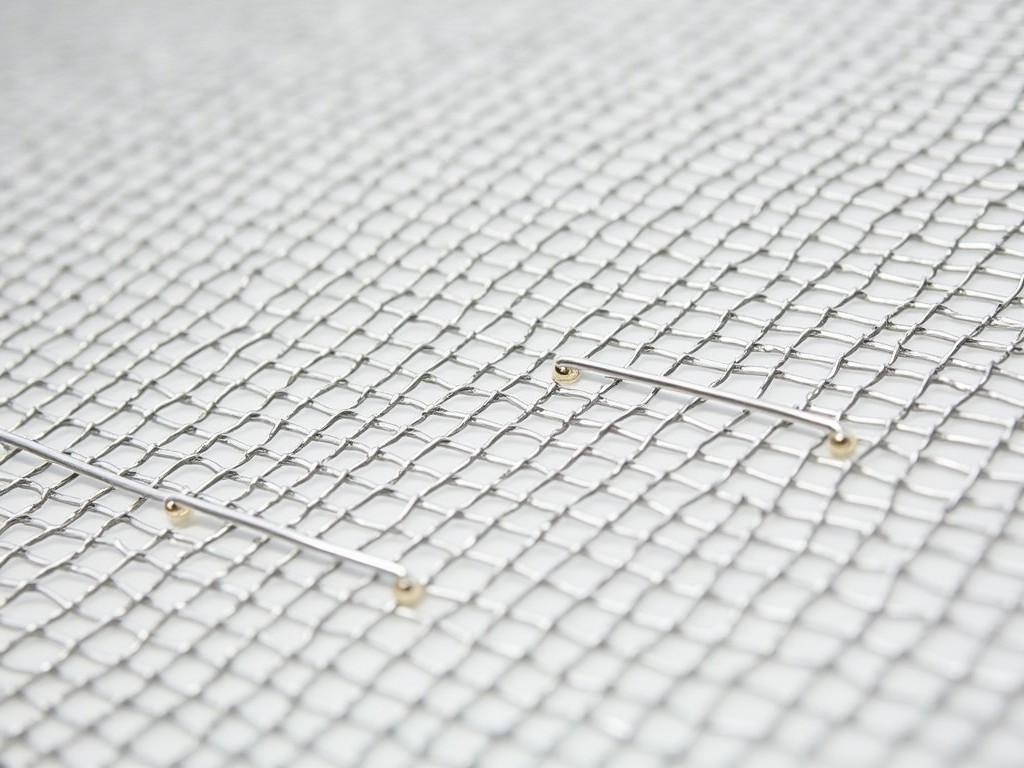
Oem Decorative Stainless Steel Wire Mesh
OEM Decorative Stainless Steel Wire Mesh
Decorative stainless steel wire mesh is engineered for applications where both visual appeal and structural performance are required. Unlike standard industrial meshes, decorative variants prioritize surface finish, pattern consistency, and light interaction while maintaining corrosion resistance and tensile integrity. These products are commonly specified by architects, interior designers, and equipment manufacturers seeking a balance between aesthetic refinement and long-term durability in exposed environments.
Material Composition and Corrosion Resistance
The base material is typically austenitic stainless steel, most commonly grades 304 or 316, selected for their chromium-nickel content that forms a passive oxide layer resistant to rust and staining. Grade 304 offers sufficient protection for indoor and mildly exposed outdoor settings, while grade 316, with added molybdenum, is preferred in coastal, high-humidity, or chemically aggressive environments where pitting resistance is critical. Wire diameter and mesh opening are precisely controlled during drawing and weaving to ensure dimensional stability and uniform appearance.
Weave Patterns and Surface Characteristics
Decorative wire mesh is available in several standard weave patterns, each influencing visual texture, openness, and mechanical behavior. Plain weave provides a balanced, symmetrical appearance with equal warp and weft coverage, often used where subtlety is desired. Twill weave creates a diagonal texture that enhances light reflection and hides minor surface variations, suitable for feature walls or ceiling panels. Dutch weave, with finer weft wires, achieves a smoother surface and tighter filtration capacity while maintaining decorative appeal. The choice of pattern affects not only aesthetics but also airflow, light transmission, and ease of cleaning.
Finishing Options and Surface Treatments
Surface finish significantly impacts the perceived quality and longevity of decorative mesh. Common finishes include mill finish (as-produced, slightly dull), brushed (unidirectional satin texture), mirror polish (high-reflectivity, Ra < 0.1 µm), and bead blasted (uniform matte, diffuse reflection). Brushed and mirror finishes are frequently selected for architectural applications due to their resistance to fingerprint visibility and ease of maintenance. Passivation or electropolishing may be applied post-weaving to enhance corrosion resistance and surface smoothness, particularly in hygienic or high-exposure settings.
Typical Dimensions and Customization Parameters
Standard mesh openings range from 2 mm to 50 mm, with wire diameters from 0.3 mm to 2.0 mm, allowing flexibility in transparency and structural rigidity. Custom dimensions, including non-standard opening shapes (e.g., hexagonal, tapered) and roll widths up to 1500 mm, are available upon request. Edge treatments such as hemmed, fringed, or welded borders can be added to prevent fraying and facilitate installation. Tolerances are typically held to ±0.1 mm for wire diameter and ±0.5 mm for opening size, ensuring consistency across large batches.
Applications in Architectural and Industrial Design
In interior architecture, decorative stainless steel wire mesh is used for room dividers, ceiling baffles, wall cladding, and elevator cab linings, where it provides visual separation without obstructing light or airflow. Its reflective properties can enhance spatial perception in compact environments. In exterior applications, such as facade screening or solar shading, the mesh reduces glare and heat gain while maintaining visibility—functions that solid materials cannot replicate. Equipment manufacturers integrate it into machinery guards, ventilation panels, and display enclosures where both protection and product visibility are required.
Quality Control and Inspection Criteria
Inspection focuses on surface uniformity, wire alignment, and freedom from defects such as knots, breaks, or discoloration. Visual inspection under standardized lighting ensures consistent pattern and finish across the entire roll. Dimensional checks are performed using calibrated gauges to verify wire diameter and opening size at multiple points. Tensile testing of wire samples confirms compliance with material specifications. For polished finishes, roughness average (Ra) is measured to validate surface smoothness. All inspections follow documented procedures to ensure traceability and repeatability.
| Parameter | Typical Range | Notes |
|---|---|---|
| Stainless Steel Grade | 304, 316 | 316 preferred for corrosive environments |
| Wire Diameter | 0.3 mm – 2.0 mm | Affects openness and rigidity |
| Mesh Opening | 2 mm – 50 mm | Custom shapes available |
| Finish | Brushed, Mirror, Bead Blast, Mill | Impacts reflectivity and maintenance |
| Maximum Roll Width | 1500 mm | Wider widths via splicing |
Ordering and Customization Process
OEM procurement begins with submission of technical requirements: material grade, weave pattern, wire diameter, opening size, finish, dimensions, and edge treatment. Providing CAD drawings or physical samples accelerates quoting and reduces misinterpretation. Tooling costs may apply for non-standard patterns or widths, though these are often amortized over larger orders. Lead times typically range from 3 to 6 weeks, depending on complexity and current capacity. Samples are available upon request to validate finish, drape, and visual effect under intended lighting conditions.