


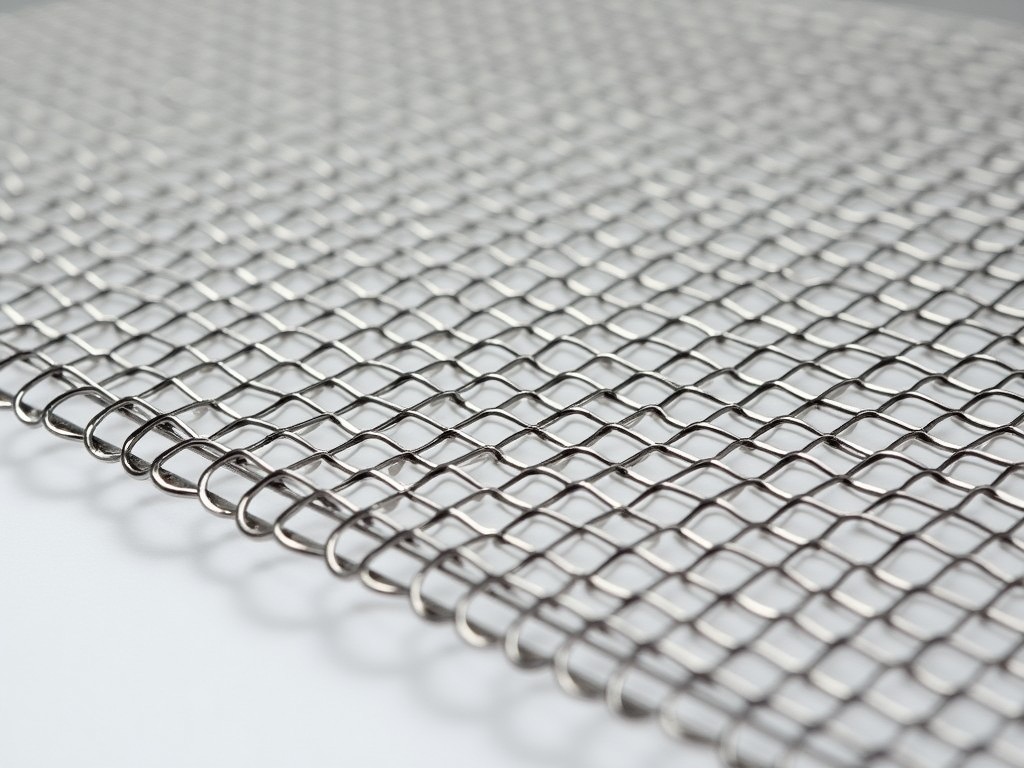
Oem Round Stainless Steel Mesh
OEM Round Stainless Steel Mesh
Round stainless steel mesh is a precision-engineered filtration and separation component fabricated from corrosion-resistant alloys, formed into a continuous circular geometry with uniform aperture distribution. It serves critical functions in fluid control, particle retention, and structural reinforcement across process industries where dimensional stability and material integrity are non-negotiable.
Material Composition and Grade Selection
The base material for OEM round stainless steel mesh is selected from austenitic, ferritic, or duplex stainless steel grades based on environmental exposure, mechanical stress, and thermal cycling requirements. Grade 304 (UNS S30400) offers balanced corrosion resistance in mild chemical and aqueous environments up to 400°C intermittent exposure. Grade 316L (UNS S31603) provides enhanced resistance to chlorides and acidic media due to molybdenum addition, suitable for marine, pharmaceutical, and chemical processing applications. Duplex grades like 2205 deliver higher yield strength and stress corrosion cracking resistance where mechanical loads coincide with aggressive media.
Material thickness typically ranges from 0.10 mm to 3.00 mm wire diameter, directly influencing open area percentage, pressure drop, and mechanical robustness. Mesh count (openings per linear inch) and micron rating are inversely related; higher mesh counts yield finer filtration but increase susceptibility to blinding under high solids loading. Engineers specify wire diameter and mesh count together to achieve target retention efficiency while maintaining adequate flow capacity for the intended process.
Manufacturing Process and Dimensional Control
Round mesh is produced through precision weaving or welding of stainless steel wire on circular looms or forming equipment, ensuring consistent aperture alignment and minimal distortion at the periphery. The circular blank is cut from rolled mesh stock using laser or waterjet cutting to avoid mechanical burring or work hardening at the edge. Post-cutting, the ring undergoes stress-relief annealing at 1050–1150°C for austenitic grades to restore ductility and eliminate residual stresses introduced during cutting and handling.
Diameter tolerances are held to ±0.5 mm for standard OEM specifications, with tighter tolerances (±0.1 mm) available for precision sealing or alignment-critical applications. Flatness is maintained within 0.3 mm deviation across the plane to ensure uniform sealing contact in gasket or screen applications. Edge conditioning options include deburring, beading, or overmolding with elastomers to prevent abrasion and improve sealing integrity in dynamic assemblies.
Performance Characteristics and Design Considerations
Open area percentage, calculated as the ratio of aperture area to total surface area, directly impacts volumetric flow rate and pressure loss. A 50 micron mesh with 0.2 mm wire diameter typically achieves 30–35% open area, while a 200 micron mesh with the same wire diameter exceeds 50%. Pressure drop across the mesh follows the Darcy-Weisbach principle, increasing with flow velocity, fluid viscosity, and solids loading — critical for pump protection and nozzle screening applications.
Mechanical strength is governed by wire tensile strength and joint integrity (in welded meshes). Tensile strength of cold-drawn 316L wire ranges from 800–1000 MPa, enabling the mesh to withstand transient pressure spikes without permanent deformation. For cyclic loading environments, fatigue resistance is evaluated based on wire diameter-to-aperture ratio; finer wires with larger openings are more prone to vibrational fatigue and require additional support structures or backing plates.
Thermal expansion must be accounted for in assemblies exposed to temperature gradients. Austenitic stainless steel exhibits a coefficient of thermal expansion of approximately 16 µm/m·°C, meaning a 500 mm diameter ring will expand or contract by ~0.8 mm over a 100°C temperature change. Designers incorporate slip fits, expansion gaps, or floating mounts to prevent stress buildup and maintain sealing integrity under thermal cycling.
Typical Industrial Applications
In chemical processing, round stainless steel mesh functions as a catalyst support medium in fixed-bed reactors, where uniform flow distribution and resistance to catalyst attrition are essential. The circular geometry ensures even pressure drop across the bed, minimizing channeling and hot spots that reduce reaction efficiency or catalyst lifespan.
In food and beverage production, it serves as a sanitary screening element in liquid filling lines, removing particulates down to 25 microns without harboring bacteria due to its smooth, crevice-free surface and compatibility with CIP/SIP cleaning protocols. The non-reactive nature of 316L ensures no leaching into acidic products like fruit juices or dairy-based liquids.
In automotive manufacturing, round mesh is integrated into fuel tank vent filters and emission control systems, where it retains fuel particulates and prevents contaminant migration into sensitive valves and sensors. Its resistance to ethanol-blended fuels and under-hood temperature cycling (up to 150°C continuous) makes it suitable for long-term under-the-hood deployment.
In water treatment and desalination pre-filtration, it acts as a coarse barrier protecting reverse osmosis membranes from large debris, sand, and biofouling precursors. The circular form allows easy installation in cartridge housings or pipeline strainers, with options for epoxy coating or passivation to enhance biofouling resistance in seawater environments.
Customization Options and Engineering Support
OEM round stainless steel mesh is fully customizable to match specific process envelopes. Diameter can be manufactured from 10 mm to over 2000 mm, constrained only by material handling and annealing furnace capabilities. Wire diameter, mesh count, and weave pattern (plain, twill, Dutch, or welded) are selected based on filtration efficiency, mechanical load, and cleaning method compatibility.
Surface treatments include electropolishing for ultra-smooth finish in hygienic industries, passivation to enhance chromium oxide layer formation, or PVD coating for specialized wear or chemical resistance. Integration features such as molded gaskets, flange adapters, or peripheral stiffening rings can be incorporated during fabrication to simplify assembly and improve sealing performance.
Engineering support includes flow simulation consultation, pressure drop estimation, and material compatibility review based on fluid chemistry, temperature, and pressure profiles. Prototypes are available for validation testing under actual process conditions before full-scale production commitment.
Quality Assurance and Inspection Protocol
Each batch undergoes dimensional verification using calibrated optical comparators or CMM to confirm diameter, flatness, and edge condition against drawing tolerances. Aperture integrity is assessed via microscope inspection at 10–20x magnification to detect wire deformation, missing welds, or weaving defects that could compromise retention efficiency.
Material traceability is maintained through mill test reports (MTRs) confirming chemical composition and mechanical properties of the raw wire. Surface cleanliness is validated via water break test or non-volatile residue (NVR) analysis for applications requiring hydrophilic or ultraclean surfaces. For critical applications, helium leak testing or bubble point validation may be performed to verify sealing integrity or filtration rating.
Packaging is designed to prevent deformation and contamination during transit. Mesh rings are placed in individual polyethylene bags, then packed in rigid corrugated dividers or custom foam trays within crush-resistant cartons. Humidity indicators and desiccant packs are included for moisture-sensitive applications, particularly when electropolished or coated finishes are specified.
| Parameter | Typical Range / Options | Notes |
|---|---|---|
| Outer Diameter | 10 mm – 2000+ mm | Tolerances: ±0.5 mm standard; ±0.1 mm available |
| Wire Diameter | 0.10 mm – 3.00 mm | Directly affects strength, open area, and pressure drop |
| Mesh Count | 10 – 400 mesh/inch | Corresponds to 2500 – 25 micron nominal aperture |
| Material Grade | 304, 304L, 316, 316L, 321, 2205 Duplex | Selected based on corrosion, temperature, and mechanical needs |
| Weave Type | Plain, Twill, Dutch, Welded | Welded preferred for high-pressure or vibratory environments |
| Surface Finish | Mill, Pickled, Passivated, Electropolished, PVD Coated | Electropolishing reduces Ra to <0.2 µm for hygienic use |
| Edge Treatment | Deburred, Beaded, Overmolded, Flanged | Prevents abrasion and improves sealing in dynamic assemblies |
For technical consultation, material selection guidance, or to request a quote for custom OEM round stainless steel mesh, contact our engineering team. Provide your application parameters — including operating temperature, pressure, fluid chemistry, required filtration rating, and dimensional constraints — to receive a manufacturable solution tailored to your process.