


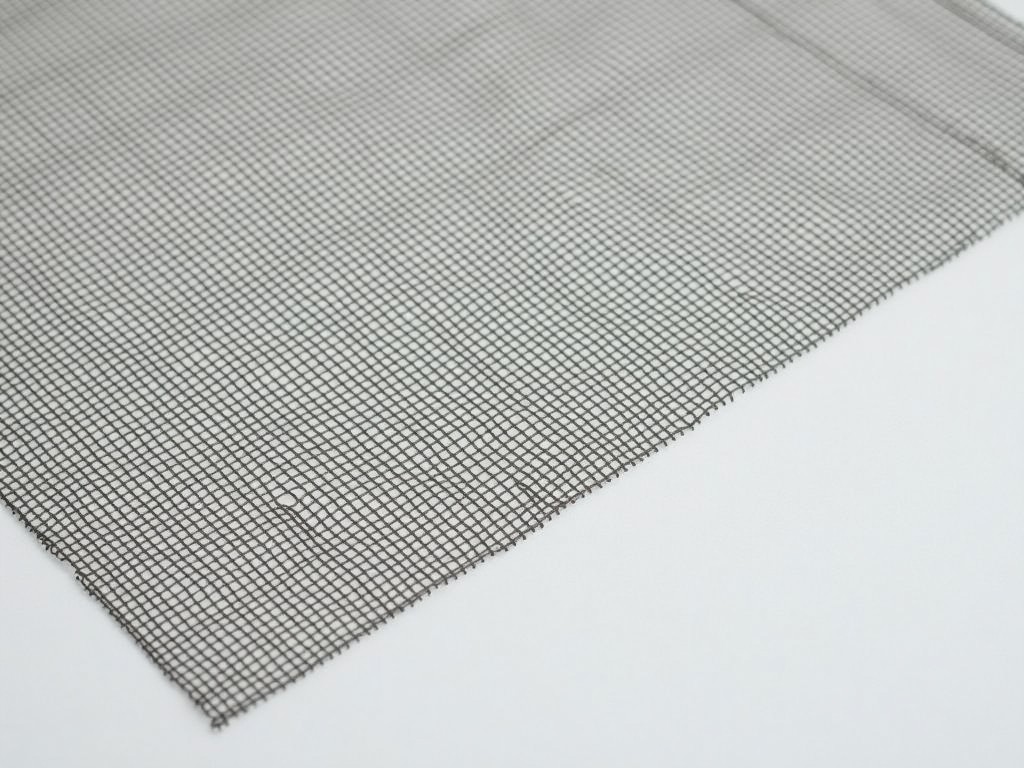
Oem Stainless Steel Hardware Cloth Mesh
OEM Stainless Steel Hardware Cloth Mesh
Hardware cloth mesh is a woven or welded grid of metal strands used for screening, filtering, guarding, and structural reinforcement in industrial environments. When manufactured from stainless steel, it combines mechanical strength with corrosion resistance, making it suitable for applications where exposure to moisture, chemicals, or elevated temperatures is expected. OEM-grade hardware cloth is produced to exact dimensional and material specifications required by equipment manufacturers for integration into final assemblies.
Material Selection and Alloy Characteristics
Stainless steel hardware cloth is typically fabricated from austenitic alloys such as 304 or 316 due to their balance of formability, weldability, and environmental resistance. Grade 304 contains approximately 18% chromium and 8% nickel, providing adequate resistance to atmospheric corrosion and many organic chemicals. Grade 316 includes 2-3% molybdenum, significantly enhancing resistance to chlorides and acidic environments, making it preferable for marine, chemical processing, or food-grade applications. The choice between alloys depends on the specific corrosive agents present in the operating environment.
Weave Patterns and Structural Performance
Hardware cloth is available in several weave configurations, each influencing open area, flow dynamics, and mechanical stability. Plain weave (also called square mesh) features wires crossing at 90-degree intervals, offering uniform opening size and bidirectional strength. Twill weave allows for finer wire diameters with higher structural integrity by staggering the over-under pattern. Welded mesh, where intersecting wires are fused at contact points, provides superior rigidity and resistance to deformation under load compared to woven variants. The selection of weave type affects pressure drop, particle retention, and long-term dimensional stability.
Wire Diameter and Opening Size Specifications
Two primary dimensions define hardware cloth performance: wire diameter and opening size (clear opening between adjacent wires). Wire diameter ranges from 0.2 mm for fine filtration to 2.0 mm or more for heavy-duty guarding. Opening size is measured as the distance between inner edges of opposing wires and can vary from sub-millimeter scales for sieving to over 25 mm for ventilation or animal exclusion. The ratio of wire diameter to opening size determines the mesh’s open area percentage, which directly impacts airflow, liquid flow, and screening efficiency. These parameters are customized based on the functional requirements of the OEM application.
Surface Finish and Edge Treatments
Surface condition influences both performance and safety. Standard stainless steel hardware cloth retains a mill finish, which is adequate for most industrial uses. For applications requiring reduced friction or enhanced cleanability—such as in food processing or pharmaceutical equipment—a passivated or electropolished finish may be specified to remove surface contaminants and improve corrosion resistance. Edges can be left raw, folded over (selvaged), or framed with metal or polymer borders to prevent fraying, facilitate handling, and eliminate sharp protrusions that could pose injury risks during installation or maintenance.
Comparison of Common Specifications
| Parameter | Typical Range | Notes |
|---|---|---|
| Wire Diameter | 0.2 mm – 2.0 mm | Selected based on load and wear requirements |
| Opening Size | 0.5 mm – 25 mm | Determines filtration or exclusion capability |
| Open Area % | 30% – 70% | Depends on wire diameter and weave pattern |
| Alloy Options | 304, 316, 316L | 316L preferred for welded assemblies due to lower carbon content |
| Weave Types | Plain, Twill, Welded | Welded offers highest rigidity; plain weave most common |
Industrial Applications and Functional Justification
In food processing equipment, stainless steel hardware cloth is used as a guard over moving parts or as a support screen for drying belts, where its smooth, non-toxic surface complies with hygiene standards and resists washdown chemicals. In HVAC systems, it serves as a debris screen in air intakes and exhaust vents, preventing blockages while maintaining adequate airflow due to optimized open area. In chemical processing plants, it functions as a catalyst support or filter medium in corrosive streams, where alloy selection (e.g., 316L) ensures longevity despite exposure to acids or chlorides. Each application leverages the mesh’s combination of permeability, strength, and environmental resistance to fulfill a specific mechanical or process role.
Customization and OEM Integration Considerations
OEM buyers typically specify hardware cloth based on functional performance rather than generic dimensions. Key customization parameters include alloy type, wire diameter, opening size, weave pattern, sheet dimensions, edge treatment, and surface finish. Manufacturers require detailed application data—such as expected mechanical load, flow rate, particle size to be retained, and environmental exposure—to recommend optimal specifications. Prototyping and sample evaluation are common steps to validate performance before full-scale integration. Tolerances on opening size and wire diameter are controlled to ensure consistency across batches, which is critical for automated assembly processes.
Quality Control and Manufacturing Consistency
Dimensional accuracy is verified using optical comparators or laser measurement systems to confirm wire diameter and opening size conform to tolerances, typically ±0.02 mm for fine meshes and ±0.1 mm for heavier gauges. Visual inspection identifies defects such as broken wires, uneven weave, or weld inconsistencies. Material certification (e.g., mill test reports) confirms alloy composition and mechanical properties. For applications in regulated industries, traceability of raw material lots and adherence to standards such as ASTM E2016 (for welded wire mesh) or ISO 9044 (for woven wire cloth) may be provided. These controls ensure that the mesh performs predictably in its intended function.
Packaging and Logistics for Industrial Delivery
Hardware cloth is commonly supplied in flat rolls or cut-to-size sheets, depending on order volume and handling requirements. Rolls are wrapped in protective polyethylene film and secured on rigid cores to prevent deformation during transit. Sheets are stacked with interleaving layers of paper or plastic to avoid surface abrasion and edge damage. For export or long-distance shipping, additional crating or palletizing with moisture barriers may be used. Labeling includes part number, alloy grade, dimensions, wire specification, and heat number for traceability. Proper packaging ensures the product arrives without kinks, corrosion, or mechanical damage that could compromise usability.