


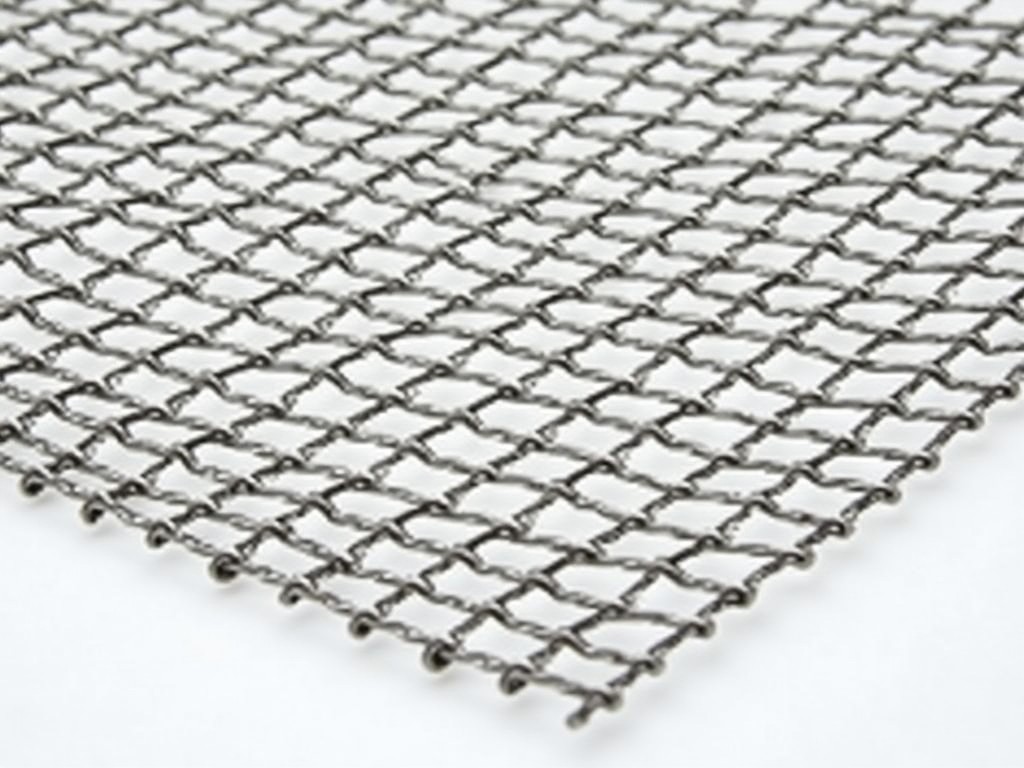
Oem Stainless Steel Reinforcing Mesh Sheet
OEM Stainless Steel Reinforcing Mesh Sheet
Reinforcing mesh sheets made from stainless steel provide structural integrity in concrete applications where corrosion resistance and long-term durability are critical. Unlike carbon steel alternatives, stainless steel mesh maintains tensile strength in aggressive environments, reducing lifecycle costs associated with repair and replacement.
Material Composition and Grade Selection
The base material for OEM reinforcing mesh is typically austenitic stainless steel, selected for its combination of strength, formability, and resistance to chloride-induced pitting. Grade 304 (UNS S30400) offers adequate protection in mildly corrosive conditions, while Grade 316 (UNS S31600) with 2-3% molybdenum is preferred for marine, chemical, or de-icing salt exposure where pitting resistance equivalent numbers (PREN) above 24 are required.
Wire diameter directly influences both flexural strength and concrete bond characteristics. Common diameters range from 2.0 mm to 5.0 mm, with tensile strength values typically between 500-700 MPa for cold-drawn austenitic grades. The mesh aperture size—defined as the center-to-center distance between wires—affects concrete aggregate passage and crack control efficiency; standard configurations include 50x50 mm, 100x100 mm, and 150x150 mm squares.
Manufacturing Process and Dimensional Tolerances
Production begins with precision drawing of stainless steel wire to specified diameters, followed by automated welding at wire intersections using resistance butt welding. This process creates a homogeneous joint without filler material, preserving the corrosion-resistant properties of the base metal at each node. Post-welding, the mesh undergoes stress-relief annealing to minimize residual stresses that could distort during handling or concrete placement.
Dimensional accuracy is critical for proper concrete cover and structural performance. Standard tolerances adhere to ASTM A1064/A1064M for welded wire reinforcement: wire diameter ±0.05 mm, aperture spacing ±5 mm, and overall sheet dimensions ±6 mm. Flatness is controlled to ensure maximum deviation does not exceed 10 mm over a 1-meter length, preventing bridging or void formation during pouring.
Mechanical Performance Characteristics
The reinforcing function depends on the mesh’s ability to transfer tensile forces between concrete and steel. Yield strength—typically 350-450 MPa for annealed 304/316 stainless—determines the onset of permanent deformation, while ultimate tensile strength indicates failure capacity. Bond strength with concrete is enhanced by surface deformations on the wire (such as ribs or indentations), which increase mechanical interlock; plain round wire relies primarily on chemical adhesion and friction, resulting in lower bond efficiency.
Fatigue resistance is a key consideration in dynamic loading scenarios (e.g., bridge decks, industrial floors). Stainless steel exhibits superior fatigue life compared to carbon steel in corrosive environments due to the absence of rust-induced stress concentrators. For cyclic load applications, design should reference the S-N curves specific to the selected grade and wire diameter, accounting for surface finish and weld quality.
Corrosion Resistance and Lifecycle Considerations
In environments where chloride penetration threatens reinforced concrete, stainless steel mesh mitigates the risk of rebar corrosion initiation. The passive chromium oxide layer on austenitic grades self-repairs in the presence of oxygen, providing ongoing protection even if superficially damaged. Unlike galvanized or epoxy-coated carbon steel, there is no coating to degrade or delaminate, eliminating a common failure mode in harsh conditions.
Life cycle cost analysis often favors stainless steel reinforcement despite higher initial material cost. Factors include extended service life (50+ years in many applications), reduced inspection frequency, and avoidance of spalling-related repair work. For structures designed for 100-year service lives—such as marine infrastructure or wastewater treatment plants—the long-term value proposition becomes particularly compelling when maintenance access is difficult or costly.
Customization Options for OEM Applications
OEM production allows tailoring of mesh specifications to match specific structural designs and pouring practices. Wire diameter, grade, aperture size, and sheet dimensions can be adjusted to optimize material usage and placement efficiency. Edge configurations—such as flush wires, overhangs, or bent tabs—facilitate lapping and tying adjacent sheets, while custom cutouts accommodate penetrations for conduits or structural elements.
Surface treatments beyond the base metal are generally unnecessary for corrosion resistance but may be specified for handling or bonding purposes. A light passivation treatment removes free iron contaminants from welding, enhancing the stability of the passive layer. For applications requiring improved bond, deformed wire profiles can be incorporated during drawing, though this increases tooling complexity and minimum order quantities.
Quality Assurance and Testing Protocols
Verification begins with raw material certification, confirming chemical composition meets ASTM A240/A240M for the specified grade. Incoming wire undergoes diameter and tensile testing before processing. During production, weld integrity is monitored via non-destructive methods such as ultrasonic or eddy current scanning at key intersections to detect lack of fusion or cracks.
Finished mesh sheets are subject to dimensional inspection, weld shear strength testing (per ASTM A1064), and visual examination for defects. Chemical spot checks may be performed to ensure no contamination occurred during fabrication. Test reports and mill certificates are available upon request, providing traceability from raw coil to final product for project documentation and audit purposes.
Packaging, Handling, and Storage
Mesh sheets are typically stacked flat on pallets and secured with stretch wrap or banding to prevent shifting during transit. For longer sheets or high-volume orders, custom wooden or steel frames provide additional rigidity. Protective corner guards and edge covers minimize deformation from forklift handling or strapping pressure.
Storage should occur in a dry, covered area to prevent accumulation of dirt, debris, or standing water that could harbor chlorides. While stainless steel resists atmospheric corrosion, prolonged exposure to contaminated surfaces may lead to surface staining or crevice corrosion initiation under deposits. Sheets should be stored off the ground on dunnage and separated from carbon steel materials to avoid cross-contamination.
Applications in Industrial and Infrastructure Sectors
In wastewater treatment structures, stainless steel mesh resists degradation from hydrogen sulfide, chlorides, and varying pH levels found in tanks and channels. The material’s compatibility with potable water standards (e.g., NSF/ANSI 61) allows use in clearwells and contact tanks without risk of leaching contaminants. For underground utility vaults and manholes exposed to road salts, the mesh provides crack control without requiring costly cathodic protection systems.
Marine applications such as seawalls, pile caps, and splash zones benefit from the alloy’s resistance to saltwater immersion and tidal cycling. Airport pavements and de-icing zones use stainless reinforcement to counteract the accelerated corrosion caused by calcium magnesium acetate or sodium chloride-based agents. Industrial flooring in chemical plants or food processing facilities selects stainless steel where washdowns, spills, or cleaning agents would compromise carbon steel over time.
Comparison with Alternative Reinforcement Materials
| Characteristic | Stainless Steel Mesh (316) | Epoxy-Coated Rebar | Galvanized Mesh |
|---|---|---|---|
| Chloride Resistance (ASTM G108) | Excellent (no cracking after 2000+ hrs) | Good (coating damage leads to localized corrosion) | Moderate (zinc depletion over time) |
| UV Resistance | Inherent | Coating degrades | Inherent |
| Impact Resistance | High (ductile) | Moderate (brittle coating) | Moderate |
| Fire Performance | Maintains strength to 800°C | Coating burns at ~300°C | Zn vaporization >400°C |
| Typical Service Life (years) | 50-100+ | 15-30 (coating dependent) | 20-40 |
The table above illustrates performance distinctions relevant to specification decisions. Stainless steel mesh maintains consistent properties across temperature extremes and environmental cycles, whereas coated alternatives depend on barrier integrity that can be compromised during handling, placement, or long-term exposure. Selection should align with the project’s design life, maintenance accessibility, and environmental classification per ISO 9223 or equivalent standards.
Ordering Information and Lead Times
To initiate an OEM quotation, provide the following technical details: wire diameter (mm), stainless steel grade (304/316/other), aperture size (mm), sheet width and length (mm), edge configuration, and required quantity. Additional information such as drawings, reference standards (ASTM, EN, JIS), or special testing requirements enables accurate pricing and production planning.
Standard lead times range from 3-6 weeks for stock-grade materials with common dimensions. Custom grades, non-standard apertures, or special packaging may extend delivery to 8-12 weeks. Sample sections are available for validation prior to full production run, allowing verification of dimensions, weld quality, and surface finish against project specifications.
Minimum order quantities vary based on material availability and setup requirements. For standard 304/316 wire in common diameters, MOQs typically start at 500 kg. Special alloys or custom wire drawings may require higher volumes to justify tooling and changeover costs. All pricing is quoted ex-works, with packaging and shipping arranged per incoterms agreed upon at order confirmation.