


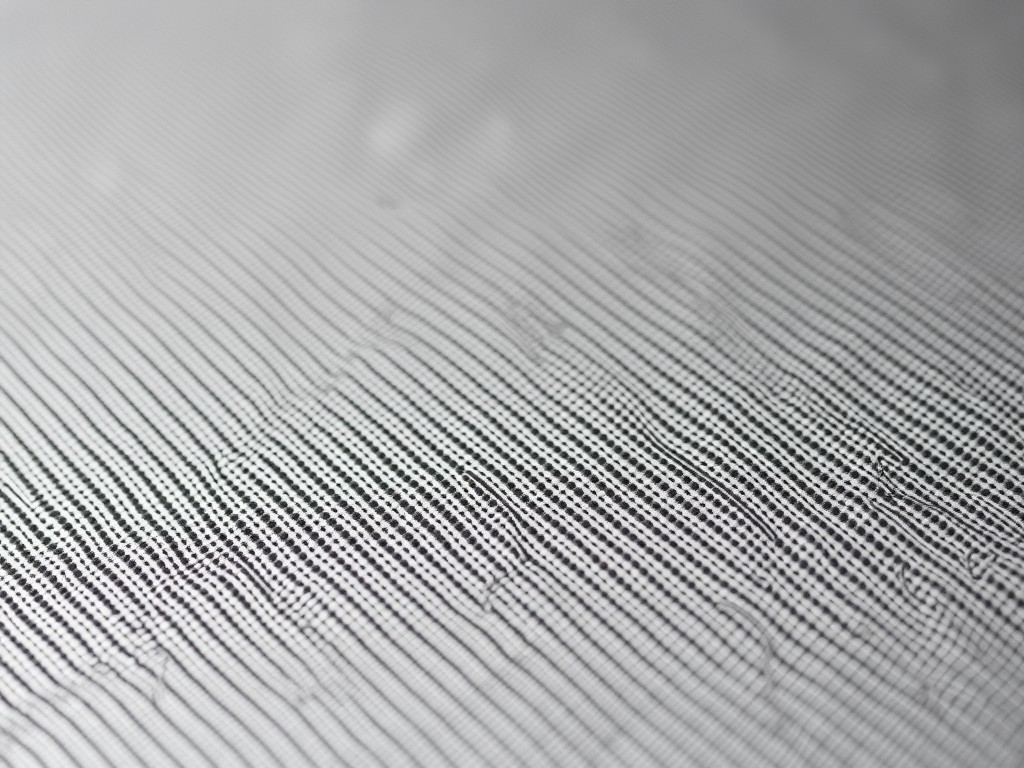
Oem Stainless Steel Wire Cloth Mesh
OEM Stainless Steel Wire Cloth Mesh
Engineered for precise filtration, separation, and structural reinforcement. Available in 304, 316, 316L, and specialty alloys with custom weave patterns, aperture sizes, and edge treatments. Manufactured to ASTM E11, ISO 9044, and project-specific tolerances.
Material Selection & Metallurgical Considerations
Alloy choice determines corrosion resistance, mechanical strength, and service temperature limits. Type 304 (UNS S30400) serves as the baseline for general industrial filtration where chloride exposure remains low. Type 316 (UNS S31600) adds 2–3 % molybdenum, raising pitting resistance equivalent number (PREN) from roughly 18 to 24, making it the default for marine, chemical, and food-contact environments. For welded assemblies or sensitized heat-affected zones, 316L (UNS S31603) with 0.03 % max carbon prevents intergranular attack without post-weld annealing.
High-temperature applications above 550 °C often specify 310S (25 Cr–20 Ni) or 330 (35 Ni–19 Cr) to resist sigma-phase embrittlement and maintain creep strength. When chloride stress-corrosion cracking is the primary failure mode—common in seawater cooling intakes or flue-gas desulfurization—duplex 2205 (UNS S32205) or super-austenitic 904L (UNS N08904) offer PREN values above 35. Each heat is traceable to mill certificates per EN 10204 3.1, with chemical and mechanical properties verified before wire drawing.
Weave Architecture & Aperture Control
Plain weave—alternating over-under interlacement—delivers the highest mesh count stability and uniform square apertures, making it the standard for precision sieving down to 20 µm (635 mesh). Twill weave shifts each wire over two, under two, allowing heavier wire diameters at a given mesh count; this increases flow capacity and mechanical ruggedness, favored in hydraulic filter elements and catalyst support grids. Dutch weaves (plain Dutch, twill Dutch, reverse Dutch) use coarse warp wires and fine weft wires to create tapered, slit-like pores that retain particles finer than the measured aperture while sustaining high differential pressures.
Aperture tolerance follows ISO 9044 or ASTM E11 Class 1–3 depending on criticality. For critical filtration, we hold ±3 % on nominal opening; for architectural infill or guarding, ±5 % is typical. Wire diameter tolerance is ±2.5 % per ASTM A580. Mesh count is verified by optical comparators calibrated to NIST-traceable standards. Custom crimp styles—intermediate crimp for vibration resistance, lock crimp for zero-movement assurance—are engineered during tooling design.
Dimensional Capabilities & Custom Fabrication
Roll stock ships in standard widths of 1000 mm, 1220 mm, and 1500 mm with lengths up to 30 m. Slitting to narrower coils reduces scrap for stamping houses. Cut-to-size panels are sheared, laser-cut, or waterjet-cut to ±0.15 mm edge tolerance. Edge treatments include selvage (woven self-edge), hemmed borders, welded frame integration, or polyurethane potting for seal-ready filter elements.
Secondary operations cover resistance welding of seams, spot-welded discs, deep-drawn cups, and CNC-formed three-dimensional baskets. For pleated cartridge cores, we supply expanded-metal-backed mesh laminates calibrated to pleat pitch and collapse pressure. All fabricated parts undergo dimensional inspection per ASME Y14.5 GD&T callouts when drawings specify true-position or profile tolerances.
Typical Specification Ranges
| Parameter | Standard Range | Customization Notes |
|---|---|---|
| Mesh count | 2 × 2 to 635 × 635 | Intermediate counts available |
| Wire diameter | 0.025 mm – 3.0 mm | Tighter tolerance ±0.005 mm on request |
| Nominal aperture | 20 µm – 12.7 mm | Calibrated to ISO 9044 Class 1–3 |
| Roll width | Up to 1500 mm | Wider widths by welded seam |
| Panel size | Custom, max 3000 × 6000 mm | Laser/waterjet cut, deburred |
| Surface finish | Mill, electropolished, passivated | Ra < 0.4 µm electropolish optional |
Application Engineering by Industry
In chemical processing, 316L twill Dutch mesh serves as catalyst support in fixed-bed reactors; the tapered pores retain 50 µm catalyst beads while maintaining ΔP below 0.15 bar at design flow. Food and pharmaceutical lines specify electropolished 316L plain weave (Ra ≤ 0.4 µm) for clean-in-place compatibility and ASME BPE compliance. Aerospace hydraulic filters use 304 lock-crimp mesh at 200 × 200 count to achieve 10 µm absolute ratings with burst pressures exceeding 200 bar.
Architectural facades employ 316 intermediate-crimp panels in 12 mm aperture for fall-protection infill; the crimp locks wires against wind-induced vibration fatigue. In mining dewatering screens, 316L reverse Dutch cloth withstands abrasive slurries at 70 °C because the coarse warp wires carry tensile load while fine weft wires control aperture. Each application review includes flow modeling, particle-size distribution analysis, and fatigue-life estimation to match weave geometry to duty cycle.
Quality Assurance & Inspection Protocols
Incoming wire rod undergoes tensile testing (yield, ultimate, elongation), chemical verification via OES, and surface defect eddy-current scanning. During weaving, online optical sensors monitor mesh count and wire position at 100 % coverage. Finished rolls receive aperture measurement per ISO 9044 Method A (optical) or Method B (glass-bead), weight-per-area verification, and visual inspection for broken wires, oil residue, or weaving defects.
Fabricated parts follow an inspection and test plan (ITP) agreed at order entry. Typical hold points: first-article dimensional report, weld penetrant testing per ASTM E165, hydrostatic proof test at 1.5× design pressure, and final dimensional layout. Certificates of Conformance reference purchase order, heat numbers, and applicable standards (ASTM A580, A240, E11; ISO 9044, 9444, 9445). Third-party inspection (SGS, BV, TÜV) is coordinated upon request.
Packaging, Marking & Export Logistics
Rolls are wound on 75 mm or 150 mm ID cardboard cores, wrapped in VCI paper, sealed in polyethylene, and crated in ISPM-15 compliant wooden cases. Panels ship flat on pallets with corrugated separators and edge protectors; formed parts nest in custom foam inserts. Each package carries a waterproof label showing PO number, heat lot, mesh specification, dimensions, gross/net weight, and QR code linking to digital mill certificates.
Container loading plans maximize 20 ft or 40 ft HC utilization while respecting axle-weight limits. Desiccant units (clay or silica gel) are calculated per DIN 55474 based on shipment duration and climate zones. For JIT programs, we maintain consignment stock at forward warehouses in Rotterdam, Houston, and Singapore with kanban replenishment triggered by your ERP.
Frequently Asked Questions
What information is needed for an accurate quotation?
Alloy grade, weave type, mesh count or aperture, wire diameter, roll/panel dimensions, quantity, surface finish, edge treatment, and any testing or certification requirements. A marked-up drawing or sketch accelerates the process for fabricated parts.
Can aperture size and wire diameter be optimized for a specific pressure drop?
Yes. Provide flow rate, fluid viscosity, operating temperature, and target ΔP. Our application engineers run CFD-backed permeability models to recommend the most efficient weave geometry.
What is the typical production lead time?
Standard roll stock: 2–3 weeks. Custom weaves or fabricated panels: 4–6 weeks after drawing approval. Expedited schedules are evaluated case by case.
How are samples handled?
A4-size samples from existing tooling ship at no charge; freight collect. Custom-weave prototypes require a tooling deposit, refundable against the first production order.
What quality documentation ships with the order?
Mill certificates (EN 10204 3.1), Certificate of Conformance, dimensional inspection report, and any project-specified test reports (PMI, ferrite content, hydrostatic). Digital packs are standard; hard copies on request.
Request a Technical Quotation
Share your specifications and our application engineers will revert within one business day with a detailed proposal including material certification, lead time, and logistics options.
Submit Inquiry