


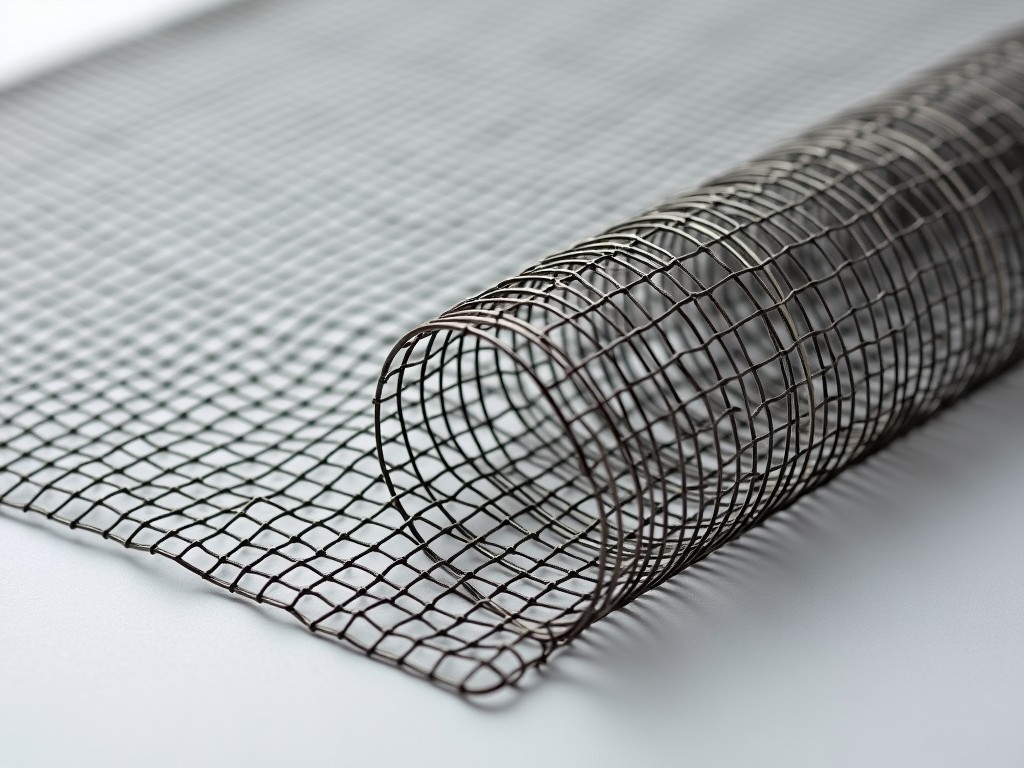
Oem Stainless Steel Wire Mesh Manufacturer
OEM Stainless Steel Wire Mesh Manufacturer
Stainless steel wire mesh serves as a critical component in industrial processes where material integrity, corrosion resistance, and precise opening dimensions directly affect operational efficiency and safety. As an OEM manufacturer, we produce woven and welded mesh to exact specifications, supporting applications ranging from filtration and separation to structural reinforcement and architectural detailing. This page outlines the technical considerations, material options, and manufacturing capabilities that define our approach to custom wire mesh production.
Material Selection and Properties
The performance of stainless steel wire mesh begins with alloy selection. Common grades include 304, 316L, and 310, each offering distinct resistance to corrosion, heat, and chemical exposure. Grade 304 provides adequate protection in mildly corrosive environments and is frequently used in food processing and general industrial filtration. Grade 316L, with added molybdenum, resists pitting and crevice corrosion in chloride-rich settings such as marine equipment or chemical processing. For high-temperature applications exceeding 800°C, grade 310 maintains oxidation resistance where standard alloys may scale or weaken.
Wire diameter and tensile strength are directly influenced by the chosen alloy and cold-working history. Typical tensile strength for annealed 304 wire ranges from 500–700 MPa, while full-hard temper can exceed 1400 MPa. These values affect mesh stability under load, resistance to deformation during installation, and longevity in vibratory or high-pressure environments. Buyers should specify both alloy and temper to ensure mechanical properties align with service conditions.
Weave Types and Structural Characteristics
The weave pattern determines open area, flow dynamics, particle retention, and mechanical behavior. Plain weave, the most common configuration, features alternating over-under intersections, delivering balanced strength and uniform opening size. Twill weave, where each wire passes over two and under two adjacent wires, allows for heavier wire diameters in finer meshes, increasing load-bearing capacity without reducing porosity. Dutch weave, characterized by a tighter warp and looser shute, creates a dense, filter-grade surface ideal for micron-level separation.
Welded mesh, produced by resistance welding at each intersection, eliminates wire movement and maintains precise opening dimensions under mechanical stress. This structure is preferred in applications requiring rigidity, such as machine guards, conveyor belts, or structural panels. Welded construction also facilitates easier cutting and shaping without unraveling, reducing installation time and field modification needs.
Customization and Dimensional Control
OEM production hinges on the ability to translate functional requirements into precise mesh specifications. Key parameters include wire diameter (typically 0.025 mm to 6.0 mm), opening size (from 5 microns to 100 mm), mesh count (1 to 1000+ openings per linear inch), and panel dimensions. Tolerances on opening size are generally held to ±5% for standard weaves, with tighter control available upon request for precision filtration or screening applications.
Customization extends beyond geometry to include edge treatments, surface finishes, and secondary processes. Options such as hemming, framing, or adhesive backing improve handling and integration into assemblies. Surface passivation or electropolishing enhances corrosion resistance and cleanliness for hygienic industries. All specifications are reviewed against end-use conditions—including temperature, pressure, chemical exposure, and mechanical load—to validate suitability before production.
Quality Assurance and Inspection Protocol
Quality control begins with raw material verification, including mill test reports for chemical composition and mechanical properties. Incoming wire undergoes diameter and tensile testing to confirm conformance to order specifications. During weaving or welding, real-time monitoring ensures consistent tension and alignment, minimizing variations in opening size or wire placement.
Finished mesh is inspected using calibrated optical comparators, laser gauges, or image analysis systems to verify opening dimensions, wire diameter, and weave integrity. For filtration-grade mesh, bubble point or air permeability testing may be performed to validate performance. All inspection data is retained and traceable to the production lot, supporting audit requirements in regulated industries such as pharmaceuticals, aerospace, or semiconductor manufacturing.
Typical Applications Across Industries
Stainless steel wire mesh is selected when process reliability depends on consistent performance under challenging conditions. In chemical processing, 316L mesh is used in catalyst retention systems where resistance to acidic washouts and thermal cycling prevents premature failure. In food and beverage production, electropolished 304 mesh facilitates sanitary cleaning and prevents product contamination in sieving and straining operations.
In oil and gas, woven mesh screens control sand influx in well completions, with design parameters tailored to formation characteristics and flow rates. Architectural applications leverage the aesthetic and functional properties of welded mesh for facades, balustrades, and sun shading, where durability and low maintenance reduce lifecycle costs. Each application reflects a deliberate match between material properties, weave structure, and environmental demands.
| Parameter | Typical Range | Notes |
|---|---|---|
| Wire Diameter | 0.025 mm – 6.0 mm | Dependent on alloy and temper | Opening Size | 5 microns – 100 mm | Customizable per application |
| Mesh Count | 1 – 1000+ openings/inch | Higher counts require finer wire |
| Alloy Options | 304, 316L, 310, 321, 904L | Others available upon request |
| Weave Types | Plain, Twill, Dutch, Welded | Hybrid weaves possible |
| Width | Up to 4000 mm | Seamless widths available |
| Length | Continuous or cut-to-length | Coils, rolls, or flat panels |
Engineering Support and Collaboration
Technical engagement starts with a detailed review of process conditions, including temperature ranges, chemical exposure, flow rates, mechanical loads, and regulatory requirements. Our engineers evaluate whether a standard specification meets the need or if custom development is warranted—such as modifying wire diameter to balance pressure drop and particle retention, or selecting a specific weave to minimize blinding in viscous filtration.
We provide dimensioned drawings, material certificates, and performance data to support design validation and procurement approvals. For complex projects, prototyping services allow physical testing under simulated or actual service conditions before full-scale production. This collaborative approach reduces the risk of specification mismatch and ensures the final product performs as intended in the field.
Packaging and Logistics
Mesh is packaged to prevent deformation, contamination, and damage during transit. Common methods include rolling on rigid cores, flat packing in corrugated cartons with interleaving paper, or securing in wooden crates for large panels. Protective coatings or vapor inhibitors may be applied for long-term storage or humid environments. All packages are labeled with part numbers, alloy grade, dimensions, and heat numbers for traceability.
For international shipments, compliance with ISPM 15 for wood packaging and accurate customs documentation is standard. Lead times vary based on complexity, material availability, and order volume, typically ranging from 2 to 6 weeks for standard specifications. Expedited options are available for critical projects, subject to production capacity.
For technical consultation, specification review, or to request a quote, provide your application details including operating conditions, required dimensions, material preferences, and any relevant standards.
Submit Inquiry