


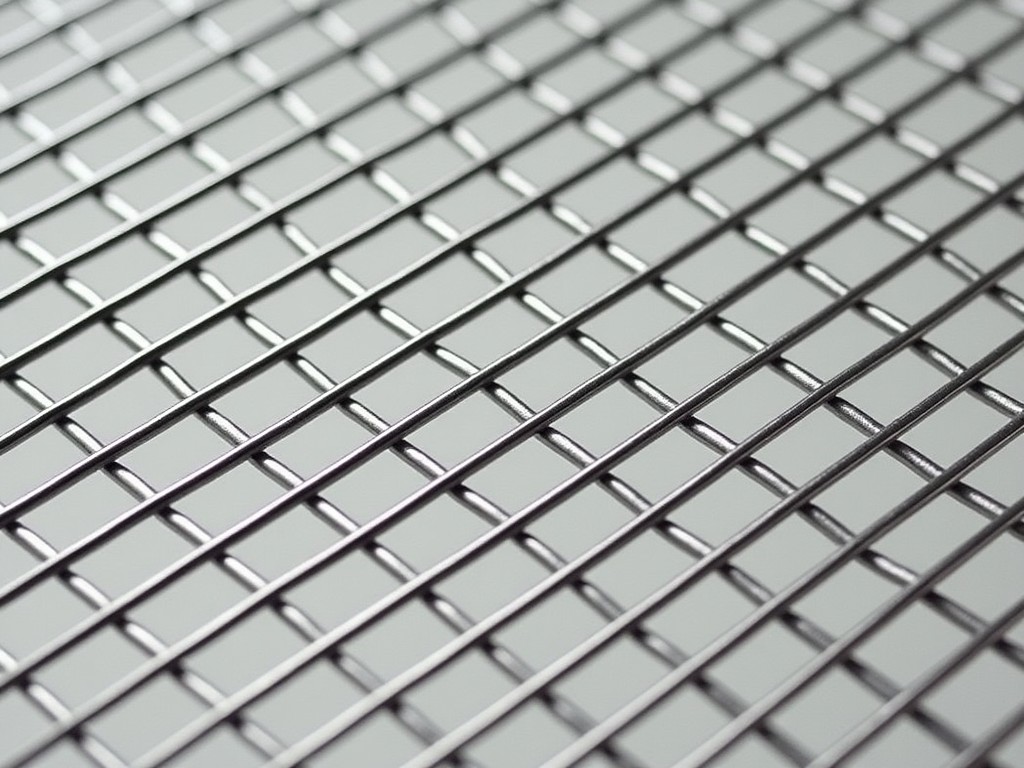
Plain Weave Stainless Steel Wire Mesh Supplier
Plain Weave Stainless Steel Wire Mesh Supplier
Plain weave stainless steel wire mesh is a fundamental filtration and screening material characterized by an equal number of warp and weft wires crossing at right angles in a simple over-under pattern. This balanced construction delivers uniform opening sizes, consistent tensile strength in both directions, and predictable flow dynamics—making it suitable for applications where dimensional stability and repeatable performance are critical. As a supplier specializing in this weave type, we focus on providing mesh that meets precise engineering specifications rather than offering generic commercial grades.
Material Selection and Corrosion Resistance
The base material for plain weave mesh directly determines its suitability for specific environments. Stainless steel grades are selected based on their chromium, nickel, and molybdenum content, which influence resistance to oxidation, pitting, and stress corrosion cracking. For general industrial use in dry or mildly humid conditions, 304 stainless steel (18% Cr, 8% Ni) provides adequate resistance to atmospheric corrosion and many organic chemicals. In environments exposed to chlorides, marine atmospheres, or acidic process streams, 316L stainless steel (with 2-3% Mo) is typically required to prevent localized corrosion at grain boundaries and weld points. Lower carbon variants like 304L and 316L minimize carbide precipitation during welding, preserving corrosion resistance in fabricated assemblies.
Wire diameter and opening size are interdependent parameters that define mesh performance. A common specification approach expresses mesh count as wires per linear inch (or per centimeter), paired with wire diameter in microns or millimeters. For example, a 100 mesh count with 50 micron wire diameter yields approximately 200 micron nominal openings. Actual open area percentage depends on both variables and can be calculated precisely: (opening size / (opening size + wire diameter))² × 100. This relationship allows engineers to balance flow rate, particle retention, and mechanical strength according to process requirements.
Manufacturing Considerations for Dimensional Stability
Producing plain weave mesh with consistent geometry requires tight control over wire drawing, weaving tension, and post-processing. Wire must be drawn to precise tolerances—typically ±2% for diameter—to ensure uniform opening dimensions across the fabric width. During weaving, warp and weft tensions are balanced to prevent distortion; excessive tension in either direction causes elongation and permanent set, while insufficient tension leads to crimp instability and sagging under load. Post-weaving processes such as calendaring or light rolling can improve planarity but must be carefully applied to avoid over-deformation of the wire cross-sections, which would reduce effective open area and alter flow characteristics.
Edge treatment is another critical factor often overlooked in specification. Unfinished edges may exhibit loose wires or inconsistent crimp, leading to premature fraying or unsafe handling. Suppliers commonly offer selvedged edges—where the outer warp wires are looped back and woven into the fabric—to provide a clean, fray-resistant border. For applications requiring gasketing or clamping, folded or welded edges may be specified to increase edge strength and provide a uniform sealing surface. The choice of edge treatment should align with installation method and expected mechanical stress at the perimeter.
Typical Industrial Applications
In chemical processing, plain weave mesh serves as a reliable medium for catalyst retention, where consistent pore size prevents catalyst loss while allowing unimpeded reactant diffusion. The uniform flow distribution minimizes channeling and hot spots in fixed-bed reactors, directly impacting reaction yield and catalyst lifespan. Unlike twill or Dutch weaves, which offer higher filtration efficiency at the cost of increased pressure drop, plain weave provides a balanced compromise suitable for moderate filtration duties where pressure drop must be minimized—such as in solvent recovery systems or polymer melt filtration.
Food and pharmaceutical industries utilize plain weave mesh for sieving, drying, and containment applications where cleanability and compliance with hygiene standards are essential. The smooth, non-directional surface minimizes product entrapment and facilitates effective cleaning-in-place (CIP) or steam-in-place (SIP) procedures. Mesh specifications in these sectors often prioritize electropolished finishes to reduce surface roughness and microbial adhesion points, combined with full traceability of raw material lots to meet FDA 21 CFR §177.2600 or EU 10/2011 requirements for food contact materials.
Aerospace and automotive sectors employ plain weave mesh in environmental control systems, such as cabin air filtration or oil mist separation, where reliability under vibration and thermal cycling is non-negotiable. The isotropic strength of plain weave resists deformation under multidirectional stresses, maintaining opening integrity over extended service life. In these high-reliability contexts, suppliers often provide material certification (e.g., EN 10204 3.1) and perform additional testing such as burst strength or fatigue cycling to validate performance under simulated operating conditions.
Customization Options and Engineering Support
Customization begins with understanding the functional requirements: particle size distribution, flow rate, operating temperature, chemical exposure, and mechanical load. Based on these inputs, we determine the optimal combination of stainless steel grade, wire diameter, mesh count, and width. For non-standard widths, we can splice multiple lengths using ultrasonic welding or resistance welding techniques that maintain tensile strength above 90% of the base material—critical for applications where seam failure could lead to contamination or process downtime. Widths up to 3000 mm are routinely available, with wider formats achievable through specialized looms.
Length is typically supplied in rolls or cut-to-size panels depending on handling and installation constraints. Rolls are preferred for continuous processing lines where the mesh is fed directly into machinery, while cut panels suit static installations such as vent covers or access panels. Tolerances on length and width are usually held to ±0.5% for custom-cut parts, with squareness verified via diagonal measurement. For applications requiring precise registration—such as multi-layer stacking or alignment with machined frames—we offer edge marking or hole punching to facilitate accurate positioning during assembly.
Quality Control and Inspection Protocol
Quality assurance starts with incoming wire inspection, where diameter, tensile strength, and surface finish are verified against mill test reports using laser micrometers and tensile testers. During production, in-line cameras monitor wire alignment and crimp consistency, triggering automatic alerts if deviations exceed ±5% of target opening size. Final inspection includes dimensional verification via optical comparators or coordinate measuring machines (CMM), open area calculation using image analysis software, and visual inspection for defects such as broken wires, skips, or double picks under 10x magnification.
Mechanical properties are validated through grab tensile tests per ASTM E8/E8M, measuring both warp and weft direction strength to confirm isotropy. For corrosion-critical applications, we can perform salt spray testing (ASTM B117) or electrochemical potentiodynamic reactivation (EPR) tests to assess susceptibility to intergranular attack—particularly important for welded or heat-affected zones. All test results are documented and traceable to the specific production batch, with retention periods aligned to industry standards or customer requirements.
Comparison Table: Plain Weave vs. Alternative Weaves
| Property | Plain Weave | Twill Weave | Dutch Weave |
|---|---|---|---|
| Filtration Efficiency | Moderate (controlled by open area) | Higher than plain weave | Very high (tight downstream side) |
| Pressure Drop | Lower at equivalent micron rating | Moderate | Highest |
| Tensile Strength (Warp/Weft) | Nearly isotropic | Anisotropic (weft > warp) | Highly anisotropic |
| Typical Applications | Catalyst screens, food sieving, vents | Filtration, shielding, decorative | High-pressure filtration, micron ratings |
| Cleanability | Excellent (smooth, non-directional) | Good (slight trapping in twill lines) | Poor (deep crevices trap particles) |
Packaging and Logistics
Mesh is typically wound onto corrosion-resistant cores—plastic, cardboard, or wooden—depending on width and weight, then wrapped in polyethylene film to protect against moisture and particulate contamination during transit. For widths exceeding 1500 mm or lengths over 50 meters, wooden crates with internal bracing are used to prevent sagging or edge damage. Each package includes a label with batch number, material grade, dimensions, and quantity, enabling traceability from raw material to end use. For export shipments, desiccant packs and humidity indicators are added upon request to mitigate moisture-related corrosion during long transit or storage in variable climates.
Lead times depend on material availability and complexity of customization. Standard grades like 304/316L in common mesh counts often ship within 2-3 weeks from order confirmation. Custom alloys, non-standard widths, or specialized edge treatments may extend lead time to 4-6 weeks. We maintain safety stock of frequently ordered specifications to accommodate urgent requests, and we provide production schedule updates at key milestones—wire receipt, weaving completion, inspection, and packaging—to ensure transparency throughout the fulfillment cycle.
Ordering Information and Technical Support
To initiate a quotation, we require the following technical details: stainless steel grade (or environmental conditions if grade selection is needed), wire diameter, mesh count or opening size, width, length, and any special requirements such as edge treatment, finish (e.g., electropolished, degreased), or certification needs. Providing a sketch or assembly drawing helps us anticipate installation challenges and recommend appropriate tolerances or reinforcements. For replacement parts, supplying a sample or detailed specification from the existing mesh ensures compatibility and avoids costly misfits.
Our engineering team reviews each request for feasibility and potential design optimizations—for example, suggesting a slight adjustment in wire diameter to improve open area without compromising strength, or recommending a selvedged edge to reduce fraying during handling. We do not impose minimum order quantities for standard specifications, allowing customers to order precisely what is needed for prototyping, maintenance, or small-scale production. Volume pricing applies automatically based on total linear meters ordered, with breaks typically at 50m, 200m, and 500m thresholds.
For technical consultation or to request a quote for plain weave stainless steel wire mesh tailored to your application, please contact our engineering team.
Request Technical Quote