


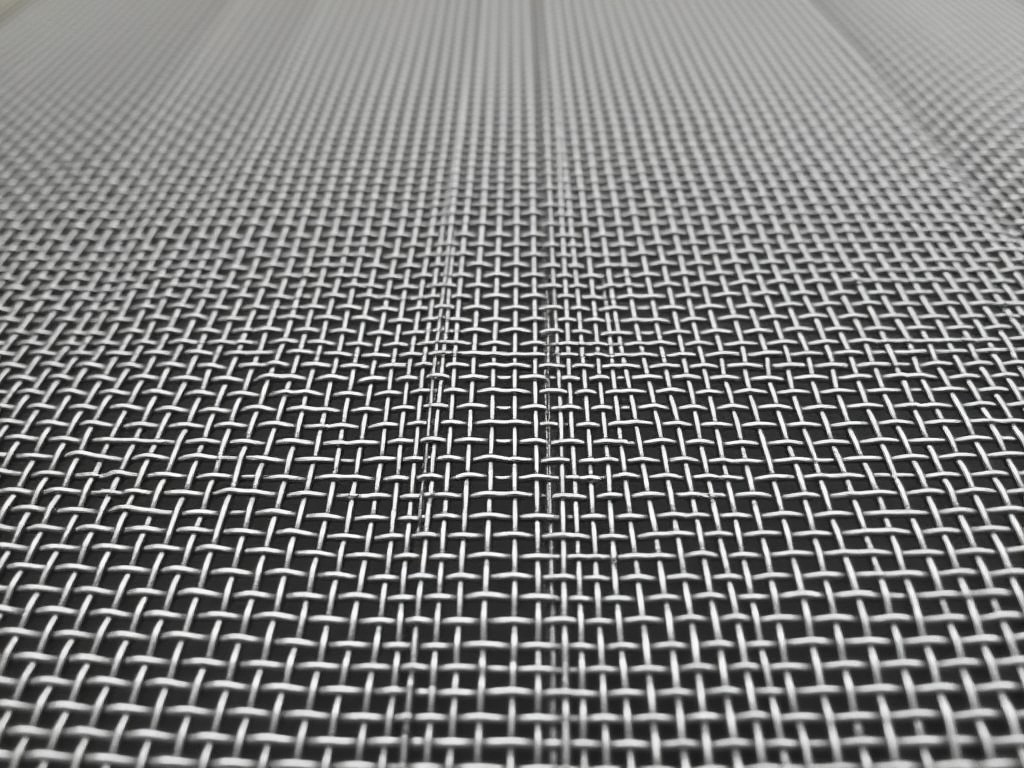
Plain Woven Stainless Steel Filter Mesh
Plain Woven Stainless Steel Filter Mesh
Plain woven stainless steel filter mesh is a precision-engineered filtration medium characterized by its simple over-one-under-one interlacing pattern of warp and weft wires. This construction creates uniform square openings with consistent pore geometry, making it suitable for applications requiring accurate particle retention, controlled flow rates, and mechanical stability under varying process conditions.
Material Selection and Corrosion Resistance
The base material for plain woven mesh is selected from austenitic stainless steel grades based on the chemical and thermal demands of the filtration environment. Grade 304 offers general-purpose corrosion resistance in mildly acidic or alkaline conditions, while 316L provides enhanced resistance to chlorides and pitting due to its molybdenum content. For high-temperature applications exceeding 400°C, grades such as 310S or 321 may be specified to maintain structural integrity and oxidation resistance. Wire diameter and tensile strength are chosen to balance open area with mechanical durability, ensuring the mesh withstands cleaning cycles, backflushing, and differential pressure without deformation.
Weave Characteristics and Filtration Performance
The plain weave structure results in a symmetrical flow path with minimal turbulence, reducing the likelihood of particle trapping in flow dead zones. Opening size is determined by the combination of wire diameter and mesh count (wires per inch), allowing precise control over micron-rated filtration. For example, a 100 mesh count with 0.10mm wire yields approximately 150 micron openings, while a 200 mesh count with 0.05mm wire achieves around 75 microns. The open area percentage—calculated as the ratio of open space to total surface area—directly influences flow capacity and pressure drop, enabling engineers to match mesh specifications to system hydraulics.
Typical Industrial Applications
In chemical processing, plain woven mesh is used in catalyst recovery systems where consistent particle retention prevents fines from migrating into downstream reactors. In food and beverage production, it serves in inline strainers for syrup clarification, removing particulate contaminants without altering product viscosity or introducing metallic traces due to its inert surface. Pharmaceutical manufacturers utilize it in bulk drug filtration stages where regulatory compliance requires traceable material certification and cleanability to CIP/SIP standards. Additionally, it functions as a pre-filter in water treatment systems, protecting finer membranes from large debris that could cause fouling or mechanical damage.
Comparison with Alternative Weave Types
| Property | Plain Weave | Twill Weave | Dutch Weave |
|---|---|---|---|
| Flow Dynamics | Laminar, low turbulence | Moderate turbulence | Directional flow, higher resistance |
| Mechanical Strength | Balanced warp/weft support | Higher tensile strength in diagonal | Reinforced warp direction |
| Typical Use Case | General filtration, uniform retention | High-pressure differential | Fine particle capture, high dirt holding |
| Cleanability | Easy backflush, minimal trapping | Moderate, potential fouling | Difficult, requires ultrasonic cleaning |
Customization and Specification Parameters
Plain woven mesh is specified by four interdependent parameters: mesh count ( openings per linear inch ), wire diameter ( in mm or microns ), alloy grade, and roll dimensions. Mesh count and wire diameter together determine the nominal opening size and open area percentage, which are critical for hydraulic calculations. For instance, increasing mesh count while reducing wire diameter maintains open area but improves filtration fineness. Conversely, decreasing mesh count with thicker wire increases open area and flow capacity at the cost of larger particle passage. Rolls are typically supplied in widths ranging from 500mm to 2000mm and lengths up to 50m, though slit-to-width and custom lengths are available to minimize waste in fabrication processes such as pleating, framing, or ultrasonic welding into filter elements.
Quality Assurance and Inspection
Each roll undergoes dimensional verification using optical comparators or laser scanning to confirm mesh count and wire diameter within tolerance, typically ±5% for opening size. Visual inspection identifies defects such as broken wires, misweaves, or surface contamination that could compromise integrity. Chemical composition is validated via mill test reports to ensure alloy grade conformity, and surface cleanliness is assessed to meet industry-specific requirements—for example, residue-free finishes for food-grade applications. While burst strength and airflow ratings are application-dependent, they can be provided upon request based on standardized test methods such as ASTM F316 for air permeability or ISO 9096 for liquid flow characteristics.
For technical consultation, custom specification requests, or to discuss how plain woven stainless steel filter mesh can be integrated into your filtration system, please contact our engineering team.
Request Technical Specification or Quote