


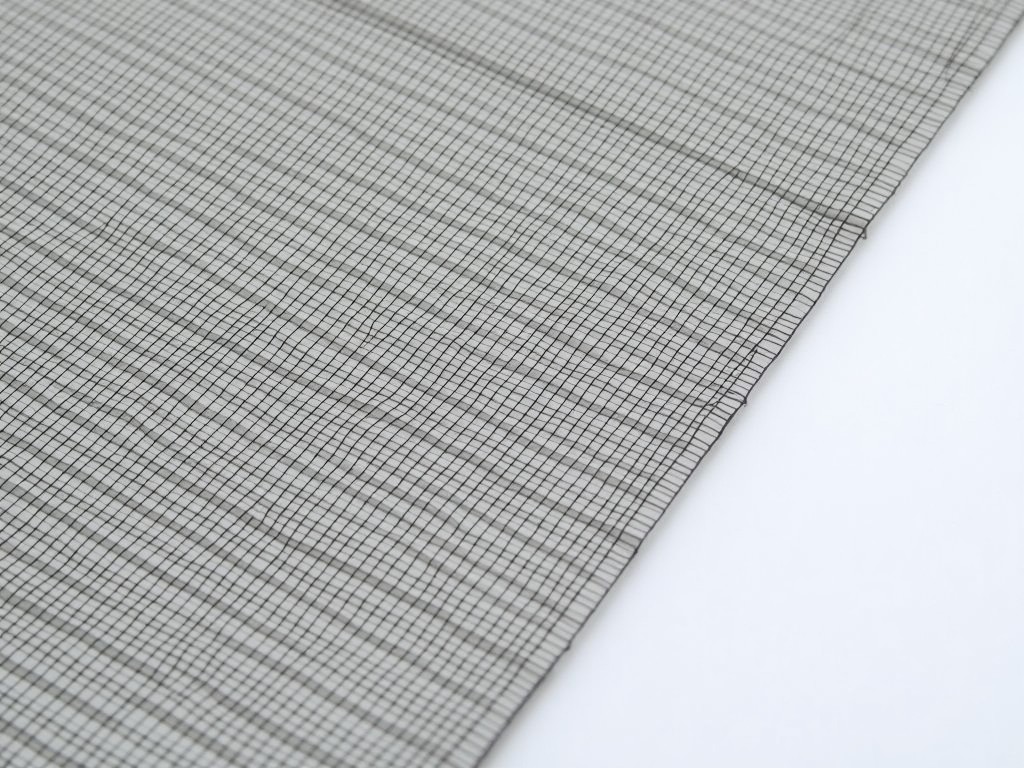
Powder Coated 304 Stainless Steel Window Screen Mesh
Powder Coated 304 Stainless Steel Window Screen Mesh
Overview: Powder coated 304 stainless steel window screen mesh combines the inherent corrosion resistance of austenitic stainless steel with a uniform polymer coating that adds color stability, UV protection, and reduced glare. The coating encapsulates the wire surface, minimizing direct environmental exposure while maintaining the mechanical strength of the base alloy. This construction is specified for architectural screening, industrial filtration guards, and ventilation panels where service life, aesthetics, and low maintenance are simultaneous requirements.
Material Composition and Coating Architecture
The substrate is Type 304 (UNS S30400) austenitic stainless steel, containing 18–20% chromium and 8–10.5% nickel. This composition forms a passive chromium oxide layer that resists oxidation in atmospheric, mild chemical, and marine splash environments. Wire diameters typically range from 0.23 mm to 0.45 mm (0.009"–0.018"), selected based on mesh opening and required tensile load.
The powder coating is applied via electrostatic spray deposition (ESD) followed by thermal curing at 180–200 °C. Common resin systems include polyester (TGIC-free), polyester-urethane hybrids, and super-durable polyester for extended UV exposure. Dry film thickness (DFT) is controlled between 60 µm and 100 µm per AAMA 2604 or 2605 performance tiers. The coating bridges the wire intersections, creating a continuous film that resists moisture ingress at the knuckles — a common failure point in uncoated woven mesh.
Adhesion is verified by cross-hatch testing (ASTM D3359 Method B) with a minimum 4B rating. Impact resistance (ASTM D2794) and flexibility (ASTM D522) are confirmed to withstand the forming and tensioning operations during screen frame assembly. Salt spray exposure per ASTM B117 typically exceeds 1,500 hours for standard polyester and 3,000+ hours for super-durable formulations before creep from scribe exceeds 2 mm.
Performance Characteristics in Service
Corrosion resistance is the primary driver for specifying 304 stainless over carbon steel or aluminum substrates. In coastal installations, uncoated 304 may develop tea staining within 12–18 months; the powder coating eliminates this aesthetic degradation by isolating the passive layer from chloride deposition. The coating also reduces solar absorptance — black mesh with a low-gloss finish reflects less visible light, cutting glare by 40–60% compared to bare stainless, which improves outward visibility for building occupants.
Abrasion resistance is governed by coating hardness (typically 2H–3H pencil hardness) and film continuity at wire crossovers. During handling and spline rolling, the mesh experiences localized point loads. A DFT below 50 µm risks holiday formation at knuckles; exceeding 120 µm increases brittleness and reduces formability. The 60–100 µm window balances these competing factors. UV stability is quantified by ΔE* color shift and gloss retention after 2,000–4,000 hours QUV-A (ASTM G154). Super-durable polyesters limit ΔE* to < 3.0 and retain > 50% initial gloss.
Airflow and insect exclusion are determined by open area percentage. An 18×16 mesh (18 wires per inch warp, 16 weft) with 0.28 mm wire yields approximately 68% open area. This meets ASHRAE 62.1 ventilation requirements for operable windows while blocking common mosquitoes (Aedes, Culex) and no-see-ums (Culicoides) when mesh opening is ≤ 1.2 mm. Heavier 0.40 mm wire at 14×14 mesh reduces open area to ~55% but increases burst pressure resistance for security screening applications.
Manufacturing Process and Quality Control
Production begins with wire drawing to target diameter, followed by annealing to relieve work hardening and ensure consistent elongation (≥ 35%). The wire is woven on high-speed rapier or air-jet looms in plain weave (standard) or twill weave (for heavier wire/mesh combinations). Loom-state mesh is degreased in an alkaline wash, rinsed, and dried before coating.
The coating line uses a five-stage pretreatment: alkaline clean, rinse, iron phosphate or zirconium conversion coating, rinse, and seal rinse. Conversion coating weight targets 20–40 mg/ft² for phosphate or 10–20 mg/ft² for zirconium. This nano-ceramic layer enhances adhesion and underfilm corrosion resistance. Powder is applied in a climate-controlled booth (20–25 °C, 45–55% RH) using reciprocating guns with 60–80 kV corona charging. Parts cure in a gas-fired convection oven with dwell time calculated for wire mass — typically 8–12 minutes at peak metal temperature.
In-line QC includes: DFT measurement at three positions per roll (magnetic or eddy current gauge), visual inspection for pinholes/orange peel, gloss verification at 60° geometry, and adhesion cross-hatch every 4 hours. Finished rolls undergo tensile testing per ASTM E8 (subsize specimens) to confirm wire UTS ≥ 515 MPa. Salt spray coupons are pulled per lot for accelerated validation. Traceability is maintained via heat number, loom ID, coating batch, and cure oven profile logs.
Application Engineering Guidance
Architectural window screening is the dominant use case. For residential and low-rise commercial, 18×16 mesh with 0.28 mm wire in charcoal or black matte finish provides optimal visibility, insect exclusion, and curb appeal. The dark coating absorbs incident light, reducing the "screen door effect" where bright mesh reflects sky glare. In high-rise curtain wall integration, the mesh is laminated between glass lites or tensioned in extruded aluminum frames; specify super-durable polyester (AAMA 2605) to match the 20-year fluoropolymer warranty of adjacent cladding.
Industrial machine guards and HVAC intake screens benefit from the non-sparking characteristic of stainless steel combined with color-coded coatings — yellow for caution zones, red for fire suppression access, blue for potable water ventilation. The coating also dampens wire vibration in high-velocity airflow, reducing fatigue at frame clamping points. For food processing equipment, FDA 21 CFR 175.300 compliant powder formulations are available; these resist caustic washdown (pH 12–14, 80 °C) without chalking or delamination.
Marine and offshore applications should evaluate 316L substrate upgrade. While 304 with heavy DFT super-durable coating performs well in splash zones, continuous immersion or crevice conditions (under gaskets, at frame interfaces) favor molybdenum-containing alloys. If 304 is retained for cost reasons, specify a two-coat system: epoxy primer (50 µm) + polyester topcoat (75 µm) for barrier redundancy.
Customization and Fabrication Support
- Width: Standard 914 mm (36"), 1219 mm (48"), 1524 mm (60"); custom slit widths from 200 mm to 3000 mm
- Roll Length: 30 m (100 ft) standard; 15 m, 50 m, 100 m available
- Edge Finish: Selvedge (woven), cut edge, or heat-sealed edge to prevent fraying during handling
- Pre-cut Panels: CNC cut-to-size with ±0.5 mm tolerance; corner radius options for frame insertion
- Coating Match: RAL, Pantone, or physical chip match; minimum 500 m² for custom color runs
- Printable Surface: Low-surface-energy topcoats available for downstream UV inkjet or screen printing (wayfinding, branding)
Fabrication notes: The coated mesh can be spline-rolled into standard aluminum screen frames (0.125"–0.160" spline groove) without coating damage if spline roller durometer is 50–60 Shore A. Avoid sharp-edged rollers. For welded frame assemblies, the coating must be locally removed at weld zones — laser ablation or mechanical masking before coating is recommended to avoid zinc contamination from galvanized frames. Touch-up repair uses air-dry acrylic urethane matched to the cured film; do not use epoxy or alkyd touch-up on polyester topcoats.
Packaging, Logistics, and Export Compliance
Rolls are wound on 3-inch (76 mm) ID fiber cores, wrapped in VCI (volatile corrosion inhibitor) poly film, then over-wrapped in UV-stabilized stretch hood. Each roll is labeled with: material grade, mesh count, wire diameter, coating spec, color code, DFT range, lot number, and length. Palletization uses 48"×40" heat-treated (ISPM-15) wooden pallets with corner boards and strapping; maximum stack height 2 pallets to prevent core crush.
Container loading: 20' GP holds ~18,000 m² (48" width rolls); 40' HC holds ~36,000 m². Moisture control includes container desiccants (1.5 kg per 20' container) and ventilation tape for ocean transit exceeding 30 days. Documentation package includes Mill Test Certificate (EN 10204 3.1) for wire, Coating Certificate of Conformance, and SDS for powder formulation. REACH/RoHS compliance declarations available on request.
Frequently Asked Technical Questions
Can the mesh opening and wire diameter be customized for specific filtration or security ratings?
Yes. Loom setup allows wire diameters from 0.20 mm to 0.55 mm and mesh counts from 4×4 to 40×40. For security screening (ASTM F2248), 0.45 mm wire at 12×12 or 14×14 is typical. For fine filtration (pollen, dust), 0.23 mm wire at 20×20 or 30×30 achieves 30–50 µm nominal openings. Minimum order quantities apply for non-standard loom configurations — typically 5,000 m².
What information is required for an accurate quotation?
Provide: target mesh count (wires per inch), wire diameter, roll width and length, coating resin type (polyester vs. super-durable), color (RAL/Pantone or standard), gloss level, total quantity, and destination port. If the application involves caustic washdown, coastal exposure > 500 m from shore, or food contact, note this so the correct pretreatment and powder chemistry are quoted.
How is coating adhesion verified on woven mesh, given the complex geometry?
Cross-hatch testing (ASTM D3359) is performed on flat coupon samples coated alongside the production run. For the mesh itself, a 90° peel test (ASTM D3330) on spline-rolled frame samples validates adhesion under tension. Holiday detection (ASTM D5162) at 80 V/µm DFT identifies pinholes at wire crossovers. All three methods are part of the standard QC plan.
What is the typical production lead time?
Standard items (18×16, 0.28 mm, charcoal/black matte) ship within 7–10 business days from stock or scheduled coil. Custom mesh counts, colors, or slit widths require 3–4 weeks: 1 week for wire drawing/weaving, 1 week for pretreatment/coating/cure, 1 week for QC/slitting/packaging. Expedited 2-week cycles are available with surcharge for super-durable powder availability.
Are samples available for evaluation before full order commitment?
Yes. A4 (210×297 mm) swatch cards in standard configurations are provided at no charge; freight collect. For custom colors or mesh specifications, a 1 m × 1 m lab-coated sample is produced after powder qualification — lead time 10 business days. This sample undergoes the same DFT, adhesion, and gloss checks as production material.
Request technical data sheets, coating specifications, or a project-specific quotation.
Submit Inquiry →