


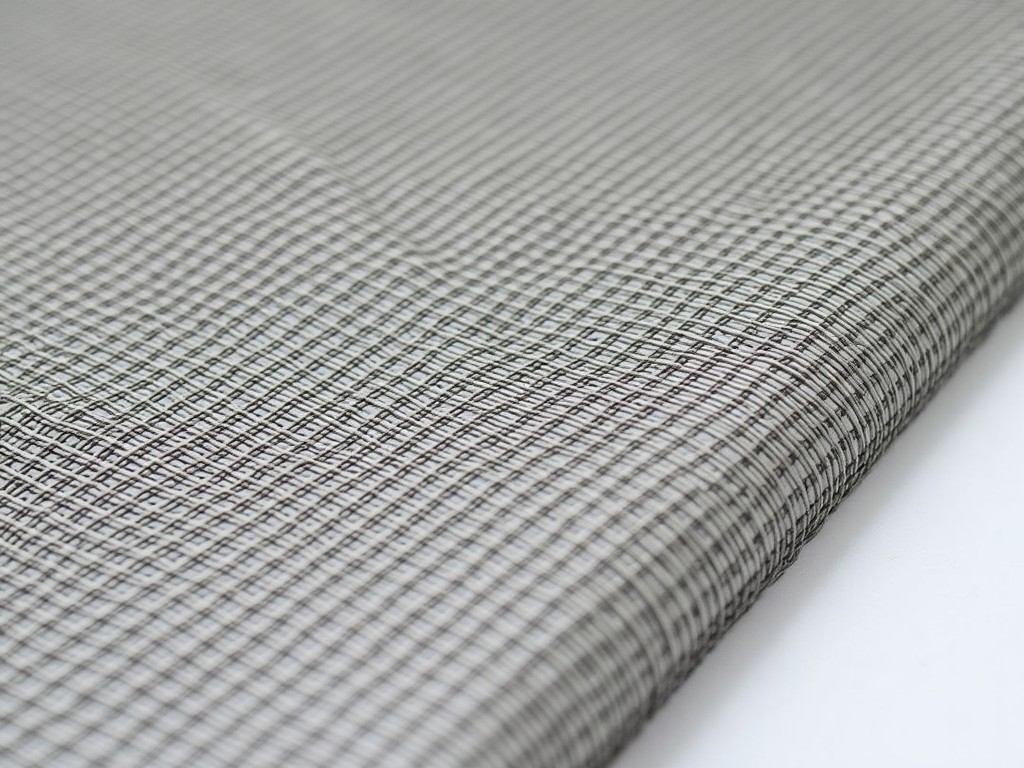
Powder Coated 316 Stainless Steel Fly Screen Manufacturer
Powder Coated 316 Stainless Steel Fly Screen Manufacturer
Powder coating applied to 316 stainless steel fly screens creates a dual-protection system where the inherent corrosion resistance of the alloy is enhanced by a thermally cured polymer layer. This combination addresses environmental challenges that neither material solves alone, particularly in coastal, industrial, or high-humidity settings where chloride exposure and UV degradation occur simultaneously.
The process begins with thoroughly cleaned 316SS mesh or perforated panels, followed by electrostatic application of epoxy or polyester-based powder, then curing at 180–200°C to form a continuous, adherent film typically 60–100 micrometers thick. This coating does not significantly alter the screen’s open area or airflow characteristics but adds measurable resistance to surface scratching, chemical splash, and color fading under prolonged sunlight.
Material and Coating Specifications
The base material uses ASTM A240 Type 316 stainless steel, containing 16–18% chromium, 10–14% nickel, and 2–3% molybdenum, which provides superior pitting resistance compared to 304 grades in environments with salt spray or chemical pollutants. Wire diameters typically range from 0.25mm to 0.8mm depending on mesh count, with common openings from 1.2mm (for insect exclusion) to 6.0mm (for debris screening while maintaining visibility).
Powder coating options include standard polyester for general architectural use, epoxy-polyester hybrids for enhanced chemical resistance, and UV-stabilized formulations for direct sun exposure. Coating thickness is verified using magnetic induction gauges, with adhesion tested per ASTM D3359 (cross-hatch tape test) and hardness measured via ASTM D3363 (pencil scale), typically achieving 2H–4H after curing.
Performance Characteristics in Service Conditions
In salt fog testing per ASTM B117, powder coated 316SS fly screens typically show no red rust or coating blistering for over 1,000 hours, whereas uncoated 316SS may begin showing surface staining around 500 hours in the same test. The coating acts as a barrier, delaying chloride ion penetration to the substrate and reducing maintenance frequency in offshore platforms, marine facilities, and coastal food processing plants.
Thermal cycling tests (–40°C to +80°C) demonstrate that the coating maintains flexibility without cracking, attributed to the selection of powder formulations with appropriate glass transition temperatures. Unlike liquid paints that may powder-coated films retain integrity under repeated expansion-contraction cycles, which is critical for screens installed in environments with daily temperature swings.
Visibility and light transmission are minimally affected; typical haze values remain below 5% for light-colored coatings, ensuring that screens used in windows, vents, or machinery guards do not significantly alter optical clarity or require increased lighting compensation. Airflow resistance increases by less than 3% compared to bare mesh, verified via AMCA 500-L test methods on representative samples.
Customization and Manufacturing Considerations
Mesh geometry can be customized beyond standard square weave to include twill, Dutch, or perforated plate configurations, each affecting flow dynamics, structural rigidity, and ease of cleaning. For example, a 50x50 mesh with 0.4mm wire offers approximately 63% open area, while a 20x20 Dutch weave with 0.6mm warp and 0.4mm shute wires provides similar filtration efficiency with higher burst strength due to the finer shute wires being locked between thicker warp strands.
Frame integration options include welding, mechanical fastening, or adhesive bonding, with powder coating applied either before or after assembly depending on design requirements. Pre-coating allows full coverage of complex geometries but requires masking of weld or fastener zones; post-coating ensures coating continuity over joints but may leave heat-affected zones exposed if welding occurs after coating. Manufacturers typically recommend post-coating for structural frames and pre-coating for infill panels to balance protection and manufacturability.
Color matching is available using RAL, Pantone, or custom samples, with batch-to-batch variation controlled within ΔE<2 under="" standardized="" lighting="">
Quality Control and Testing Protocol
Incoming 316SS material is verified via mill certificates and spot-check PMI (Positive Material Identification) using XRF analyzers to confirm molybdenum content, as substitutions with lower-grade alloys cannot be detected visually. Mesh tension and flatness are inspected during fabrication using calibrated gauges and surface plates to ensure dimensional stability before coating, preventing issues like coating pooling or thin spots on curved surfaces.
Post-coating inspection includes visual examination under 500 lux lighting for defects such as pinholes, orange peel, or insufficient coverage, followed by systematic testing of thickness (5 points per square meter), adhesion, and hardness. For batch consistency, one sample per production lot undergoes accelerated weathering (QUV or Xenon arc) to validate color stability and chalking resistance, with results archived for traceability.
Documentation provided with each shipment includes material test reports, coating certification, and inspection records. Custom test protocols—such as salt spray duration, cyclic corrosion testing, or specific chemical immersion—can be accommodated upon request, with test parameters defined in the purchase agreement to align with the end-use environment’s severity level.
Typical Applications and Environmental Suitability
Coastal architectural installations benefit from the combined resistance to salt spray and UV radiation, where powder coated 316SS screens are used in balcony enclosures, HVAC louvers, and façade ventilation systems requiring both insect exclusion and long-term aesthetic stability. Unlike painted carbon steel or lower-grade stainless alternatives, these screens maintain appearance and function without repainting for 10+ years in Class C4–C5 environments per ISO 12944.
In food and beverage processing, the smooth, non-porous coating facilitates cleaning and resists contamination from acidic washes or alkaline sanitizers, making it suitable for drying tunnels, packaging lines, and waste handling areas where screens must withstand frequent washdowns. The coating prevents metal-to-metal contact in dynamic applications, reducing wear and particulate generation compared to bare metal meshes.
Industrial facilities use these screens as protective guards for machinery, ventilation intakes for control rooms, and debris barriers in water treatment plants where exposure to chlorine, sulfur compounds, or abrasive particulates occurs. The ability to specify mesh size, coating color, and frame configuration allows integration into OEM equipment without compromising safety standards or maintenance access requirements.
| Parameter | Typical Range / Value | Test Method / Standard |
|---|---|---|
| Base Material | ASTM A240 Type 316 Stainless Steel | Mill Certificate, PMI Verification |
| Wire Diameter | 0.25mm – 0.8mm | Caliper Measurement |
| Mesh Opening | 1.2mm – 6.0mm | Optical Comparator |
| Coating Type | Polyester, Epoxy-Polyester Hybrid, UV-Stabilized | Supplier Data Sheet |
| Coating Thickness | 60–100 μm | Magnetic Induction (ASTM D1186) |
| Adhesion | 5B (ASTM D3359) | Cross-Hatch Tape Test |
| Pencil Hardness | 2H – 4H | ASTM D3363 |
| Salt Fog Resistance | >1,000 hours (no blistering/rust) | ASTM B117 |
| Open Area (Example: 50x50 Mesh) | ~63% | Geometric Calculation |
| Airflow Resistance Increase | <3%<> | AMCA 500-L |
Lead times for standard configurations typically range from 3–4 weeks after drawing approval, depending on mesh availability and coating line scheduling. Custom mesh sizes, special colors, or integrated frames may extend this to 5–6 weeks. Samples are available upon request, usually shipped within 5–7 business days of request receipt, with sample sizes limited to 300x300mm or equivalent area to represent coating and mesh characteristics accurately.
Quotations require detailed specifications including mesh count, wire diameter, panel dimensions, frame type (if any), coating color and texture, quantity, and delivery destination. For architectural projects, wind load calculations or maintenance access plans may be requested to ensure the product meets local building codes. All technical inquiries are directed to engineering staff who can discuss material behavior, coating performance, and installation considerations without relying on generic marketing claims.
To discuss your specific requirements for powder coated 316 stainless steel fly screens, including custom sizes, coating options, or application-specific testing, contact our technical team.
Request Technical Consultation