


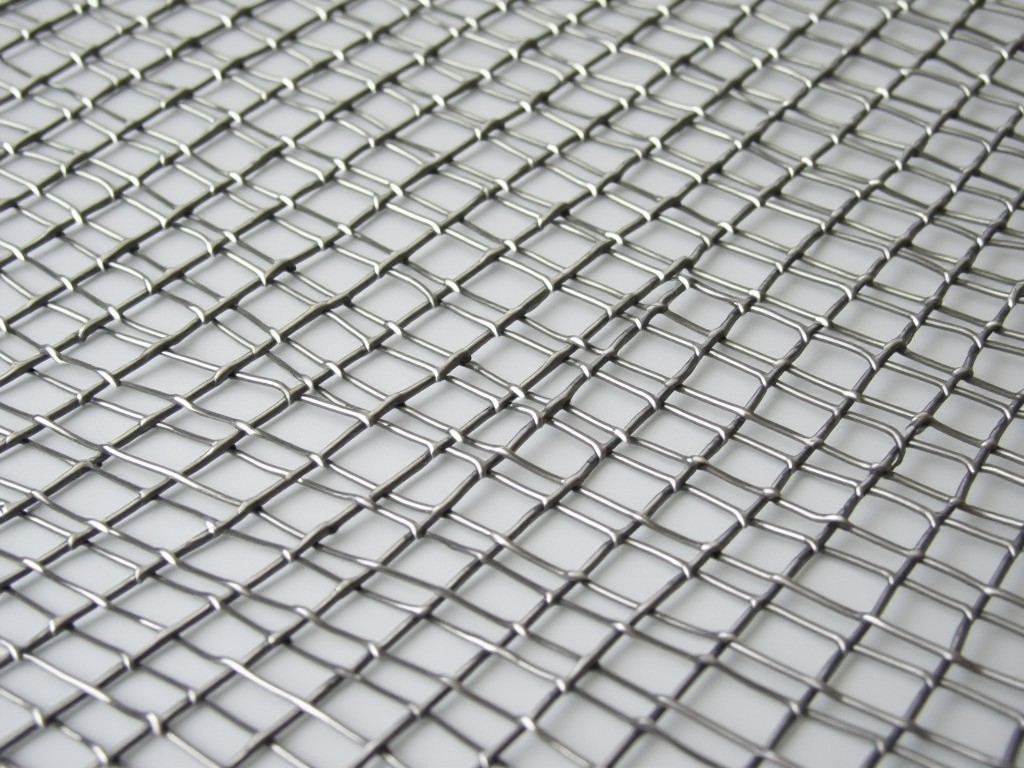
Powder Coated 316 Stainless Steel Window Screen Mesh
Powder Coated 316 Stainless Steel Window Screen Mesh
Powder coated 316 stainless steel window screen mesh combines the inherent corrosion resistance of marine-grade alloy with a durable polymeric finish to enhance performance in aggressive environments. The base material, AISI 316 stainless steel, contains 16-18% chromium, 10-14% nickel, and 2-3% molybdenum, providing superior resistance to chlorides and industrial pollutants compared to 304 grades. The powder coating adds a protective barrier that further mitigates surface oxidation while allowing for color customization to match architectural specifications.
This product is engineered for applications where long-term exposure to moisture, salt spray, or chemical vapors demands both structural integrity and aesthetic stability. Unlike painted finishes that may chip or peel, electrostatic powder coating fuses uniformly to the substrate, creating a continuous film that adheres tightly to the wire geometry without compromising mesh openness or tensile properties. The coating thickness typically ranges from 60 to 100 microns, depending on the polymer system and cure cycle.
Industrial buyers select this configuration when standard stainless steel mesh shows premature staining or when visual consistency across façades is critical. The combination eliminates the need for frequent maintenance while preserving the high strength-to-weight ratio of 316 stainless steel—ultimate tensile strength remains approximately 515–725 MPa, and yield strength stays above 205 MPa after coating. These mechanical characteristics ensure the mesh resists deformation under wind load or impact, making it suitable for high-rise installations and coastal infrastructure.
Technical Specifications
| Parameter | Typical Value | Notes |
|---|---|---|
| Base Material | AISI 316 Stainless Steel | UNS S31600, EN 1.4401 |
| Wire Diameter | 0.20 mm – 0.80 mm | Customizable per mesh count |
| Mesh Opening | 0.8 mm – 6.0 mm | Determined by wire dia and count |
| Mesh Count | 4 × 4 to 40 × 40 per inch | Standard industrial ranges |
| Open Area Percentage | 30% – 70% | Depends on weave and diameter |
| Powder Coating Type | Polyester, Epoxy, or Hybrid | UV-stable options available |
| Coating Thickness | 60 – 100 µm | Measured per ASTM D1186 |
| Color Options | RAL, Pantone, or Custom | Color match upon request |
| Weave Patterns | Plain, Twill, Dutch | Plain weave most common for screens |
| Width (Roll Form) | Up to 2000 mm | Custom slitting available |
| Length (Roll Form) | Up to 50 m | Splicing avoided in standard rolls |
Material and Finish Selection Logic
The choice of 316 stainless steel as the substrate is driven by its molybdenum content, which significantly improves resistance to pitting and crevice corrosion in chloride-rich environments—such as coastal zones, swimming pool facilities, or industrial exhaust areas. In contrast, 304 stainless steel lacks sufficient molybdenum and may exhibit surface rust within months under similar conditions, necessitating costly replacement or maintenance.
Powder coating is applied after wire drawing and weaving to ensure complete coverage of all surfaces, including intersections and crevices. The electrostatic process charges the powder particles, which are then attracted to the grounded mesh, followed by thermal curing at 180–200°C. This method avoids drips, sags, or thin spots common in liquid painting, resulting in uniform film thickness even on fine wires.
Color selection is not merely aesthetic; darker pigments (e.g., black, dark bronze) absorb more UV radiation, which can elevate surface temperature and potentially affect polymer longevity. Lighter colors (white, beige, light gray) reflect solar energy and are often preferred in high-exposure applications to reduce thermal cycling stress on the coating. Technical data sheets for specific polymer systems should be consulted for UV stability ratings and expected service life.
Applications in Industrial and Architectural Contexts
In coastal commercial buildings, powder coated 316 mesh is used for window and balcony enclosures where uninterrupted visibility and corrosion resistance are both required. The coating prevents rust transfer to adjacent glass or framing, maintaining clean sightlines over decades. Standard stainless steel mesh in these locations often develops orange-brown staining that detracts from appearance and may be mistaken for structural degradation.
Food and beverage processing facilities specify this mesh for ventilation screens and pest barriers in washdown zones. The smooth, non-porous coating resists biofilm accumulation and withstands frequent cleaning with alkaline detergents or steam, unlike uncoated mesh which can trap particulates in surface pores. Compliance with hygiene standards such as ISO 22000 or FDA guidelines is supported by the material’s inertness and ease of sanitation.
Pharmaceutical and cleanroom environments use the mesh in HVAC pre-filters and containment barriers where particle shedding must be minimized. The coating encapsulates the wire edges, reducing the risk of metallic fines dislodging during air flow. Combined with the non-corrosive nature of 316 stainless, this ensures long-term particulate control without introducing contamination risks from corrosion byproducts.
Marine infrastructure—such as ferry terminals, offshore platforms, and harbor control buildings—relies on this product for protective screens exposed to salt spray and wind-driven particulates. The duplex protection (alloy + coating) significantly extends service life compared to either solution alone, reducing lifecycle costs associated with access equipment and downtime for replacement.
Customization and Ordering Considerations
Mesh specifications are defined by four interdependent parameters: wire diameter, mesh count, weave pattern, and coating color. Altering one affects the others—for example, increasing wire diameter reduces open area unless mesh count is decreased. Engineers should calculate required open area for airflow or visibility needs first, then select wire and count combinations that achieve it while meeting structural load requirements.
Width and length are customizable within equipment limits. Standard rolls are slit to customer-specified widths (e.g., 600 mm, 900 mm, 1200 mm) to minimize waste during installation. Lengths are optimized to avoid splices; for heights exceeding standard roll lengths, horizontal seams are recommended over vertical ones to maintain tension uniformity in framed installations.
Color matching requires a physical sample or standardized reference (RAL, Pantone) due to variances in gloss, texture, and substrate appearance. Gloss levels typically range from matte (10–20 GU) to semi-gloss (50–70 GU), affecting both appearance and dirt retention. Lower gloss finishes hide surface imperfections better but may show more dust; higher gloss is easier to clean but highlights scratches.
Lead time depends on coating line availability and color changeover. Standard colors (black, white, bronze) are often in stock or have short queues; custom colors require purging and testing, adding 3–5 days. Customers should provide CAD drawings or installation details early to allow for optimal packaging—flat sheets for rigid frames, rolled for flexible retention systems.
Quality Control and Testing
Incoming 316 stainless wire is verified via mill certificates and spot-check optical emission spectrometry (OES) to confirm chromium, nickel, and molybdenum content within spec. Wire diameter is measured with laser micrometers at multiple points per coil to ensure tolerance compliance—typically ±0.01 mm for precision meshes.
After weaving, mesh width and count are inspected using digital vision systems or calibrated gauges. Open area is calculated from actual measurements rather than nominal values to account for weaving tension variations. Tensile strength is validated on samples taken from each batch using ASTM A370 procedures, with results tracked against historical data for the specific wire grade and diameter.
Powder coating adhesion is tested per ASTM D3359 (tape test) with a target rating of 5B (no removal). Coating thickness is measured with a magnetic induction gauge at multiple locations, ensuring uniformity across the mesh surface. Cure is confirmed via solvent rub testing (ASTM D5402) to verify full polymerization—under-cured coating shows tackiness or solvent sensitivity.
UV resistance is assessed using accelerated weathering testers (ASTM G154, Cycle 6) for 1000 hours, with color change (ΔE) and gloss retention monitored. Salt spray resistance (ASTM B117) is evaluated on coated samples, with failure defined as red rust exceeding 3% of surface area. These tests inform expected performance but do not replace real-world evaluation in the target environment.
Packaging and Handling
Mesh is wound onto corrugated cores with internal diameter sized to prevent deformation—typically 76 mm or 102 mm for standard widths. Outer wrapping uses UV-stable polyethylene film with desiccant packets to mitigate moisture ingress during transit. End plugs protect the core and prevent unwinding.
For widths over 1200 mm, mesh may be shipped flat on pallets with interleaving sheets to prevent abrasion between layers. Flat packaging is preferred when the mesh will be cut to size immediately upon receipt, as it avoids curl memory from rolling. Each package includes a label with part number, dimensions, weight, and coil direction for efficient inventory management.
Handling recommendations include using a mesh unwinder or brake system to control tension during installation. Pulling the mesh laterally off a roll without support can cause edge stretching or birdcaging. For coated surfaces, avoid dragging across abrasive substrates; use protective slings or clean rollers. Storage should be in a dry, shaded area—prolonged UV exposure even before installation can begin to degrade certain pigment systems.
For technical inquiries, custom specifications, or to request a sample cut-to-size, contact our engineering team. Provide your required dimensions, environmental exposure details, and any color or finish preferences to receive a prompt, accurate response.
Request Technical Specification or Sample