


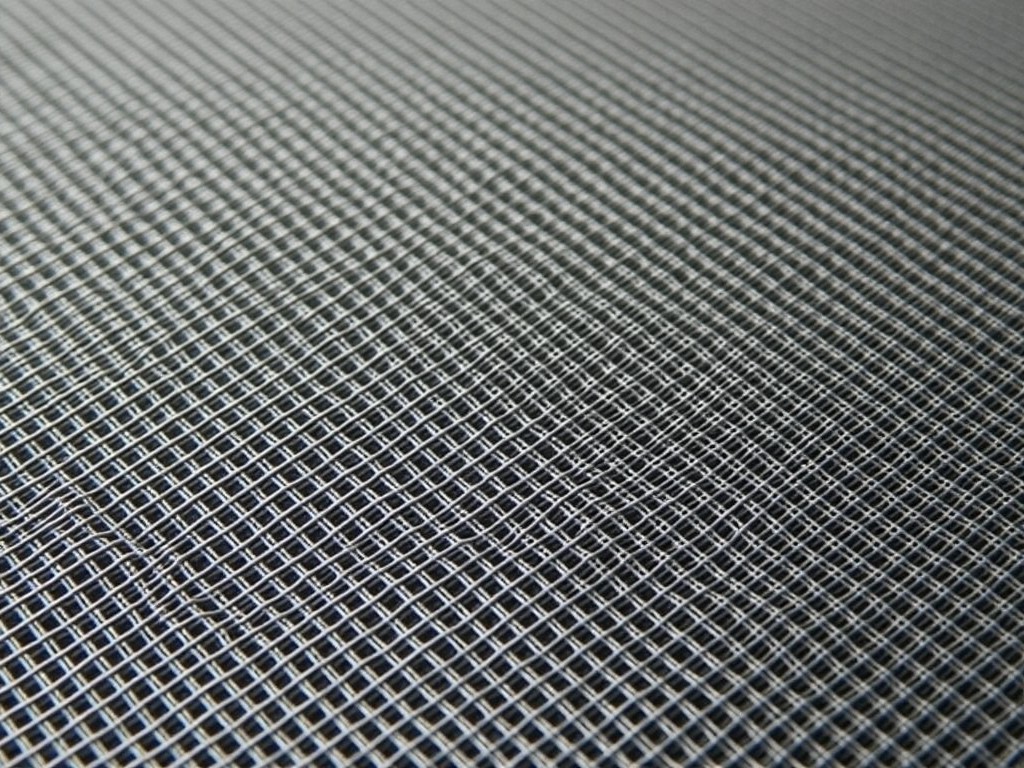
Powder Coated Stainless Steel Fly Screen Factory
Powder Coated Stainless Steel Fly Screen Factory
Stainless steel fly screens treated with powder coating combine the corrosion resistance of stainless steel with a durable polymer finish that protects against UV exposure, chemical splashes, and mechanical wear. This dual-layer protection extends service life in aggressive environments where uncoated screens may suffer from staining, pitting, or coating delamination. The factory-controlled process ensures consistent coating thickness and adhesion, critical for maintaining screen integrity over years of operation.
Material Selection and Substrate Preparation
The base material is typically austenitic stainless steel grades 304 or 316, selected for their chromium-nickel content that resists oxidation in humid or saline conditions. Prior to coating, substrates undergo alkaline cleaning, deionized water rinsing, and phosphating to remove oils, oxides, and particulates. Surface profiling via light abrasion creates a uniform anchor pattern, measured by profilometry to achieve Ra values between 1.2–1.8 µm, which optimizes mechanical bonding of the powder coat.
Powder Coating Process Parameters
Electrostatic spray application uses thermosetting powders formulated from epoxy, polyester, or hybrid resins, with particle sizes ranging from 20–80 µm for uniform film formation. Cure temperatures are maintained between 180–200°C for 10–15 minutes, monitored by infrared pyrometers to ensure complete cross-linking without thermal degradation of the stainless steel substrate. Film thickness is controlled to 60–1–80 µm dry film thickness (DFT), verified via magnetic induction gauges at multiple points per panel.
Performance Characteristics
Coated screens demonstrate superior resistance to chalking and fading under ASTM G154 UV exposure, retaining >80% color and gloss after 1,000 hours. Salt spray testing per ASTM B117 shows no blistering or creepage at the scribe line for 500 hours, indicating effective barrier properties. Impact resistance, measured by ASTM D2794, exceeds 160 in·lb, confirming the coating remains intact during handling and installation.
Design and Customization Options
Mesh opening sizes range from 0.8 mm to 2.0 mm wire diameter with corresponding aperture dimensions tailored to exclude specific insect species while maintaining airflow. Frame profiles include extruded aluminum or stainless steel channels with integrated spline grooves for secure retention. Custom dimensions are achievable through CNC cutting and precision welding, with tolerances held to ±0.5 mm on length and width.
Industrial Applications
In food processing facilities, these screens prevent pest ingress without compromising hygiene standards, as the non-porous coating withstands frequent washdowns with caustic cleaners. Marine environments benefit from the coating’s resistance to salt-induced corrosion, reducing maintenance cycles on vessel ventilation systems. Pharmaceutical cleanrooms utilize the smooth, non-particulate surface to maintain ISO Class 5–8 air quality by preventing contamination from screen degradation.
Quality Control and Testing
Each production lot undergoes adhesion testing per ASTM D3359 Method B, requiring a minimum 4B rating (no more than 5% coating removal). Holiday detection identifies micro-pinholes using high-voltage spark testing at 675 V/µm of coating thickness. Dimensional inspection verifies squareness and flatness using coordinate measuring machines, with deviations limited to 0.3 mm per meter.
Packaging and Logistics
Screens are interleaved with polyethylene film and stacked in corrugated cardboard sheets to prevent abrasion during transit. Corner protectors and edge guards minimize impact damage, while humidity indicator cards monitor internal moisture levels. Export shipments include ISPM 15-compliant wooden crates or steel frames, secured with polyester strapping and shock-absorbing foam to meet ISTA 3A standards.
| Parameter | Typical Value | Test Method |
|---|---|---|
| Coating Thickness | 61–80 µm DFT | ASTM D7091 |
| Adhesion | 4B (ASTM D3359) | ASTM D3359 Method B |
| Salt Spray Resistance | 500 hours (no creepage) | ASTM B117 |
| UV Stability (Gloss Retention) | >80% after 1,000 h | ASTM G154 |
| Impact Resistance | >160 in·lb | ASTM D2794 |
Technical datasheets, material safety data sheets (MSDS), and sample panels are available upon request to support specification development and validation testing. Lead times vary based on mesh geometry, coating color, and order volume, typically ranging from 3 to 6 weeks for standard configurations.