


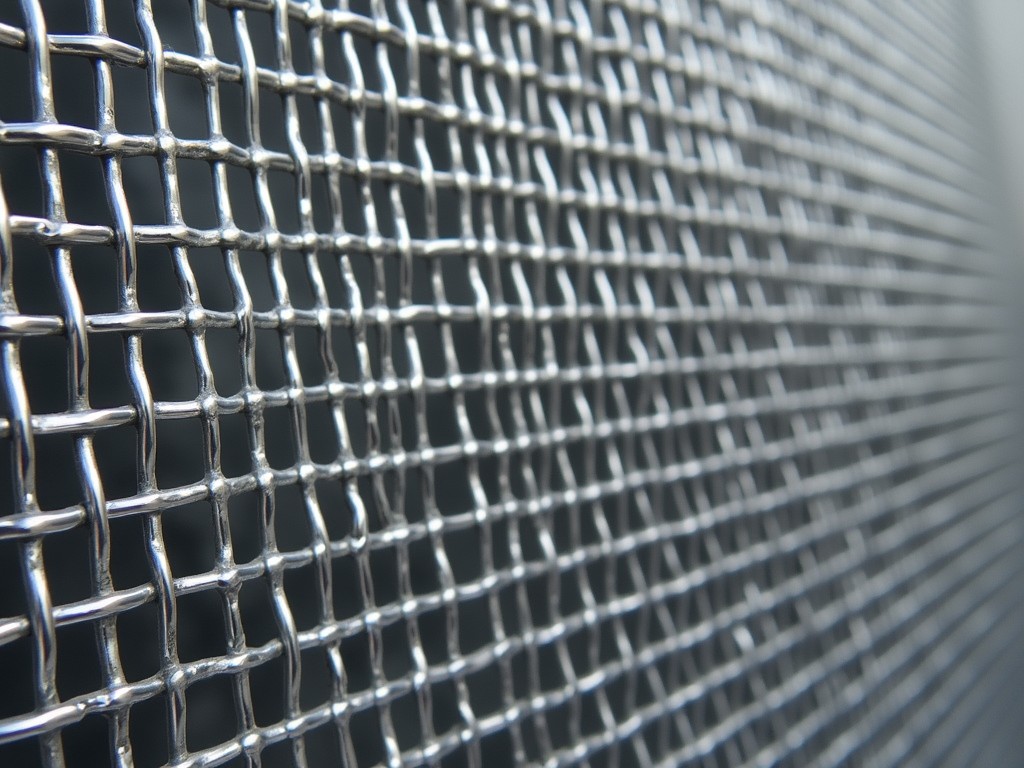
Security Stainless Steel Mesh
Security Stainless Steel Mesh: Industrial-Grade Perimeter Protection Solutions
Security stainless steel mesh provides engineered barrier protection for high-risk infrastructure where unauthorized access, climbing attempts, or tool-based breaches pose significant threats. Unlike standard fencing materials, this product combines specific alloy compositions, precise aperture geometries, and controlled tensile properties to resist common intrusion methods while maintaining long-term structural integrity in exposed environments.
Material selection directly determines performance limits—grade 304 stainless steel offers adequate corrosion resistance for most temperate climates, while grade 316L contains molybdenum to withstand chloride-induced pitting in coastal or industrial settings. Wire diameter typically ranges from 2.0mm to 4.0mm, with aperture sizes engineered between 12.7mm and 50.8mm to balance visibility, climb resistance, and cut-tool effectiveness.
Core Engineering Characteristics
Tensile strength varies significantly based on wire diameter and alloy condition—cold-drawn 3.0mm 304 stainless steel wire achieves approximately 850–950 MPa ultimate tensile strength, sufficient to resist manual cutting with bolt cutters under 24 inches. The mesh undergoes stress-relief annealing after weaving to minimize residual stresses that could lead to stress corrosion cracking over time.
Aperture geometry influences both climb resistance and tool penetration—smaller apertures (e.g., 12.7mm square) prevent finger and toe holds while increasing mesh rigidity, whereas larger apertures (e.g., 50.8mm) improve wind load resistance and reduce material cost but may allow small tools to pass through. Wire spacing tolerance is typically held to ±0.5mm to ensure uniform load distribution.
Surface finish affects both corrosion initiation and maintenance requirements—mill finish retains the natural passive oxide layer, while electropolished surfaces remove embedded contaminants and micro-scratches that could act as corrosion sites in aggressive environments. No coatings or paints are applied, preserving the material’s inherent corrosion resistance without risk of delamination.
Material and Configuration Options
| Parameter | Typical Range | Engineering Implication |
|---|---|---|
| Stainless Steel Grade | 304, 316L, 316Ti | 316L preferred for chloride exposure; 316Ti for elevated temperature stability |
| Wire Diameter | 2.0mm – 4.0mm | Directly impacts cut resistance and tensile strength (≈ diameter²) |
| Aperture Size | 12.7mm – 50.8mm square | <19mm prevents="" hand="" holds="">38mm improves airflow and visibility |
| Weave Pattern | Plain weave, twill weave | Twill weave offers higher drape conformity for curved surfaces |
| Roll Width | 0.5m – 3.0m | Standard widths minimize seams; custom widths available for full-height applications |
| Tensile Strength (Typical) | 600–1100 MPa | Dependent on grade, diameter, and temper; verified per ASTM A370 |
Application-Specific Design Considerations
In correctional facilities, mesh is often installed at 3.0m–3.5m height with a 45° overhang to prevent climbing—apertures of 12.7mm or 19.1mm square with 3.0mm wire eliminate footholds while maintaining visibility for surveillance. The system resists sustained attempts with common tools due to the high shear strength of stainless steel wires compared to mild steel alternatives.
For substations and utility sites, electromagnetic transparency becomes critical—stainless steel mesh with apertures >25.4mm minimizes eddy current induction and signal interference compared to solid panels or smaller apertures. Grade 316L is frequently specified here due to potential exposure to cleaning chemicals and atmospheric pollutants near transformers.
Transportation infrastructure applications require dynamic load consideration—wind-induced vibration can cause fatigue failure at attachment points if mesh tension is improperly calculated. Engineers typically limit maximum deflection to L/150 under 150km/h wind loads, using spring-loaded or elastomeric mounts to dissipate energy rather than rigid fixation.
Installation and Integration Methods
Attachment methods significantly influence long-term performance—welding stainless steel mesh to carbon steel posts risks galvanic corrosion unless isolators (e.g., nylon washers or ceramic sleeves) are used. Mechanical fastening with stainless steel bolts and nylon-lock nuts is preferred for field serviceability, with torque values typically set to 70% of bolt yield strength to prevent creep relaxation.
Tensioning systems must accommodate thermal expansion—stainless steel expands approximately 16µm/m·°C, requiring expansion joints or slip brackets in runs exceeding 15m to prevent buckling or over-tensioning during temperature swings. Bottom edges are often reinforced with a steel rod or angle iron to prevent sagging and maintain aperture integrity.
Integration with electronic security systems demands careful planning—mesh can interfere with RFID, GPS, or microwave sensors if aperture size approaches half the signal wavelength. Conductive coatings or intentional gaps in the mesh pattern may be required; consultation with system integrators during design phase avoids costly retrofits.
Quality Assurance and Traceability
Material traceability begins with mill certification—each heat of stainless steel wire is accompanied by EN 10204 3.1 certification documenting chemical composition, mechanical properties, and heat treatment history. Incoming wire undergoes verification via optical emission spectroscopy and tensile testing before weaving to ensure batch consistency.
Post-weaving inspection includes aperture measurement using calibrated gauges, tensile spot testing per ASTM A370, and visual examination for defects such as broken wires, skipped weaves, or contamination. Surface cleanliness is assessed via water break test or wipe test to confirm absence of oils or particulates that could compromise passive layer formation.
Packaging for shipment prevents surface damage—rolls are wrapped in UV-stabilized polyethylene film, placed on sturdy cores, and secured with polyester strapping. Corner protectors and edge guards mitigate impact damage during handling. Each package includes a label with heat number, dimensions, grade, and QC reference for full traceability to raw material.
Engineers and procurement teams seeking detailed specifications, custom configuration options, or application-specific guidance for security stainless steel mesh can request technical documentation or initiate a quotation through our direct inquiry channel.