


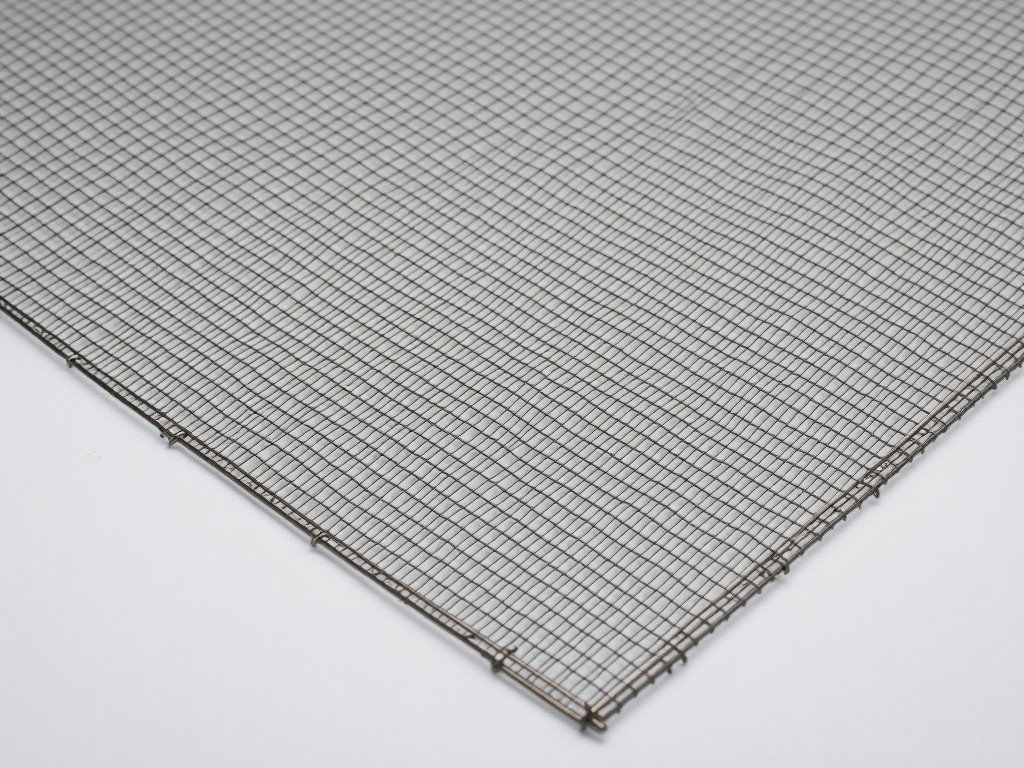
Stainless Steel 304 Mesh Sheet
Stainless Steel 304 Mesh Sheet
Stainless steel 304 mesh sheet is a perforated or woven material made from austenitic chromium-nickel alloy, widely used where corrosion resistance, mechanical strength, and filtration precision are required. Its composition—typically 18% chromium and 8% nickel—provides excellent resistance to oxidation and many corrosive environments, making it suitable for both indoor and industrial applications. Unlike coated or carbon steel alternatives, 304 stainless steel maintains its integrity without additional protection in mildly aggressive atmospheres.
Material Properties and Specifications
The mechanical and chemical properties of 304 stainless steel mesh sheet are defined by its alloy composition and manufacturing process. It exhibits a tensile strength of approximately 505–750 MPa and a yield strength of 215 MPa, depending on temper and thickness. The material is non-magnetic in the annealed condition and maintains ductility down to cryogenic temperatures. These characteristics allow it to withstand forming, welding, and mechanical stress without cracking or significant degradation.
Corrosion resistance is a key attribute, particularly in environments exposed to moisture, food acids, detergents, and mild chemicals. The passive chromium oxide layer self-repairs when damaged, providing ongoing protection. However, it is susceptible to chloride-induced pitting in saline or marine conditions, where higher alloy grades like 316 may be preferred. For most industrial, architectural, and processing applications, 304 offers a balanced performance-to-cost ratio.
| Property | Typical Value |
|---|---|
| Chromium (Cr) | 17.5–19.5% |
| Nickel (Ni) | 8.0–10.5% |
| Carbon (C) | ≤0.08% |
| Tensile Strength | 505–750 MPa |
| Yield Strength (0.2% offset) | 215 MPa |
| Elongation at Break | 40–55% |
| Density | 8.0 g/cm³ |
| Melting Range | 1400–1450°C |
Mesh Types and Manufacturing Methods
Stainless steel 304 mesh sheet is produced using two primary methods: weaving and perforating. Woven mesh is created by interlacing warp and weft wires in patterns such as plain weave, twill weave, or Dutch weave, each affecting flow dynamics, strength, and filtration efficiency. Perforated mesh is generated by punching or laser-cutting holes into a solid sheet, allowing precise control over hole size, shape, and arrangement. The choice between methods depends on the required open area, structural integrity, and flow characteristics.
Wire diameter, mesh count (openings per linear inch), and open area percentage are critical design parameters. For example, a 10x10 mesh with 0.38mm wire has approximately 63% open area, while a 50x50 mesh with 0.18mm wire reduces open area to about 36%. These values directly influence pressure drop, flow rate, and particle retention in filtration or screening applications. Custom specifications are available to match process requirements.
Industrial Applications
In food processing, 304 stainless steel mesh sheet is used for sieving, drying racks, and conveyor belts due to its non-toxic surface and resistance to frequent washdowns. Its smooth finish minimizes bacterial harborage, supporting compliance with hygiene standards such as FDA and 3-A SSI. The material does not impart taste or odor, making it suitable for direct contact with edible products.
Chemical and pharmaceutical industries utilize the mesh for catalyst support, filtration of intermediates, and containment of fine powders. Its resistance to organic solvents, alkalis, and dilute acids allows reliable operation in batch and continuous processes. In pharmaceutical manufacturing, it aids in granule drying and sterile filtration where material purity is essential.
Automotive and aerospace sectors employ 304 mesh in EMI shielding, ventilation panels, and structural guards. Its combination of strength, corrosion resistance, and electromagnetic properties makes it effective for enclosing sensitive equipment while allowing airflow. Architectural applications include facade panels, sunscreens, and decorative elements where long-term exposure to weather demands durable, low-maintenance materials.
Customization and Fabrication Options
Mesh sheets can be supplied in standard rolls or cut-to-size panels based on project dimensions. Common thicknesses range from 0.5mm to 3.0mm for perforated sheets and vary by wire diameter in woven types. Widths typically extend up to 1500mm, with lengths constrained by handling and transport considerations. Edge treatments such as deburring, framing, or welding are available to improve safety and integration.
Secondary operations include bending, forming, and spot welding to create enclosures, trays, or filtration housings. Laser cutting enables complex geometries without mechanical stress, while stamping is efficient for high-volume production of identical parts. Surface finishes can be adjusted from mill finish to brushed or electropolished, depending on aesthetic or cleanliness requirements.
Quality Assurance and Inspection
Dimensional accuracy is verified using calibrated gauges and optical measurement systems to ensure wire diameter, pitch, and open area conform to tolerances. Visual inspection checks for defects such as broken wires, misalignment, or surface contamination. For critical applications, additional testing may include bubble point analysis for filtration integrity or pressure drop verification across specified flow rates.
Material traceability is maintained through mill certificates that confirm chemical composition and mechanical properties. These documents support compliance with industry standards such as ASTM A240 for sheet and ASTM E2016 for woven mesh. Non-destructive methods like eddy current testing can detect subsurface flaws without damaging the product.
Packaging and Handling
To prevent deformation and surface damage during transit, mesh sheets are typically wrapped in protective film and secured on wooden pallets or in rigid cartons. Perforated sheets may be interleaved with paper or plastic to avoid abrasion between layers. Woven rolls are often suspended on cores or laid flat to maintain dimensional stability. Humidity-controlled storage is recommended for long-term inventory to avoid staining or corrosion initiation.
Handling instructions emphasize wearing gloves to avoid leaving contaminants or oils that could affect downstream processes. Sheets should be lifted uniformly to prevent bending or creasing, especially in thinner gauges. For export shipments, additional sealing and desiccant packs are used to mitigate moisture exposure during transit.
Comparison with Alternative Materials
Compared to carbon steel mesh, 304 stainless steel offers significantly better corrosion resistance without the need for painting or galvanizing, reducing lifecycle maintenance costs. While carbon steel has higher yield strength, it requires protective coatings that can chip or wear, exposing the base material to rust. In wet or humid environments, unprotected carbon steel degrades rapidly, making it unsuitable for applications requiring long-term reliability.
When compared to 316 stainless steel, 304 provides adequate resistance for most indoor and mildly corrosive settings at a lower material cost. 316 contains molybdenum, which enhances resistance to chlorides and acids, making it preferable for marine, chemical processing, or coastal environments. However, for general industrial use where chloride exposure is limited, 304 delivers sufficient performance with better formability and weldability.
Aluminum mesh is lighter and naturally corrosion-resistant but lacks the mechanical strength and temperature tolerance of 304 stainless steel. It is more prone to deformation under load and has lower wear resistance, limiting its use in high-abrasion or high-pressure filtration systems. Stainless steel 304 remains the preferred choice when durability, hygiene, and structural integrity are priorities.