


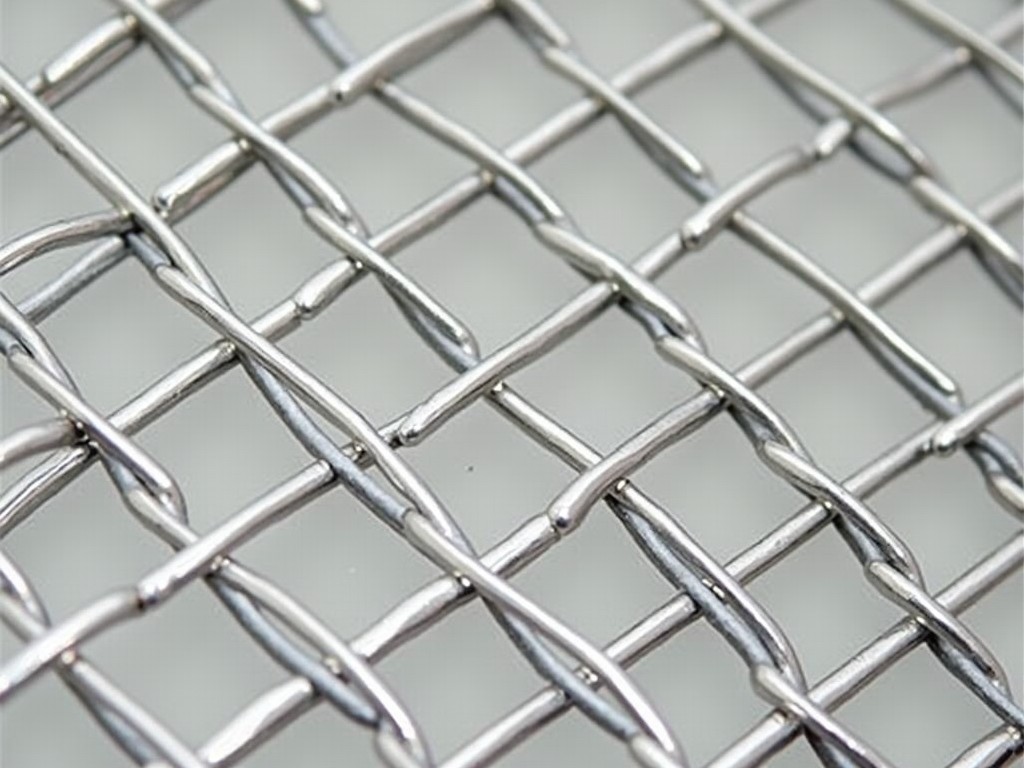
Stainless Steel Dutch Weave Wire Mesh
Stainless Steel Dutch Weave Wire Mesh
Dutch weave wire mesh is a precision filtration medium characterized by a distinct weave pattern where warp wires are substantially thicker and fewer in number than weft wires. This asymmetric construction creates a tight, tortuous path for fluid flow, enabling superior particle retention compared to plain weave meshes of similar nominal micron rating. Stainless steel construction provides corrosion resistance, mechanical strength, and thermal stability essential for demanding industrial filtration and separation applications.
Technical Characteristics of Dutch Weave Construction
The Dutch weave pattern achieves filtration efficiency through two primary mechanisms: size exclusion via the narrow interstitial channels formed by the dense weft packing, and depth filtration as particles navigate the winding path between warp wires. Unlike square mesh weaves where opening size is determined by wire diameter and pitch in both directions, Dutch weave opening size is primarily governed by the weft wire diameter and the number of weft wires per inch, while warp wires provide structural support. This allows for much finer nominal filtration ratings than would be possible with equivalent wire diameters in a plain weave.
Typical Dutch weave specifications are expressed as warp count × weft count (e.g., 80×700), where the first number indicates warp wires per inch and the second indicates weft wires per inch. The ratio between warp and weft counts typically ranges from 1:8 to 1:12, reflecting the significant disparity in wire density between the two directions. Warp wires are usually 2-4 times thicker than weft wires, contributing to the mesh’s structural integrity while minimizing pressure drop across the filtration surface.
Material Selection and Properties
Stainless steel grades commonly used for Dutch weave wire mesh include 304, 316L, and 316Ti, selected based on chemical compatibility, temperature exposure, and mechanical requirements. Grade 304 offers adequate corrosion resistance for many water-based and mildly acidic environments up to approximately 400°C. Grade 316L, with added molybdenum, provides enhanced resistance to chlorides and reducing acids, suitable for marine, chemical processing, and pharmaceutical applications. Grade 316Titanium stabilized variant resists sensitization during welding or prolonged exposure to temperatures between 425–850°C.
Mechanical properties such as tensile strength, yield strength, and elongation vary by grade and wire temper. Typical tensile strength for cold-drawn 316L stainless steel wire ranges from 800–1000 MPa, enabling the mesh to withstand differential pressures common in industrial filtration systems. The mesh retains its dimensional stability and filtration characteristics under cyclic thermal loading due to the low thermal expansion coefficient of austenitic stainless steel (approximately 16×10⁻⁶/°C).
Filtration Performance Parameters
Nominal micron rating in Dutch weave mesh does not correspond to a single pore size but rather reflects the particle size at which a defined retention efficiency (e.g., 90% or 98%) is achieved under standardized test conditions. Actual performance depends on particle shape, size distribution, fluid viscosity, and flow dynamics. For liquid filtration, retention efficiency increases with decreasing particle size below the nominal rating due to the depth filtration effect, while gas filtration may rely more on inertial interception and diffusion mechanisms.
Pressure drop across the mesh is influenced by open area percentage, which in Dutch weave is typically lower than plain weave equivalents due to the high weft density. However, the tortuous flow path can sometimes result in lower-than-expected pressure drop for viscous fluids due to reduced turbulence. Designers must balance filtration efficiency, pressure drop, and dirt-holding capacity based on specific process requirements, often validated through pilot testing with actual process fluids.
Typical Specifications and Customization Options
| Parameter | Typical Range / Options |
|---|---|
| Warp Count (wires/inch) | 20 – 200 |
| Weft Count (wires/inch) | 100 – 1200 |
| Warp Wire Diameter | 0.10 – 0.50 mm |
| Weft Wire Diameter | 0.05 – 0.20 mm |
| Nominal Micron Rating | 1 – 150 µm |
| Width | Up to 2000 mm (custom slit widths available) |
| Length / Roll Size | Standard rolls: 30m – 50m; cut-to-length available |
| Edge Treatment | Plain, hemmed, welded, or fringed |
| Surface Finish | Bright annealed, pickled, or electropolished |
Customization extends beyond standard dimensions to include dual-layer constructions for increased dirt-holding capacity, laminated configurations for structural reinforcement, and shaped pieces (discs, cylinders, cones) for specific housing geometries. Post-weaving treatments such as stress relieving or sintering may be applied to enhance mechanical stability or reduce media migration in critical applications. All custom specifications require detailed engineering input to ensure compatibility with process conditions and equipment design.
Industrial Applications and Functional Advantages
In hydraulic and lubrication systems, Dutch weave mesh serves as a final filter element to remove micron-sized particulates that cause abrasive wear in pumps, valves, and actuators. Its high dirt-holding capacity extends service intervals compared to surface filters, while the rigid stainless steel structure withstands pressure spikes and cyclic loading without deformation. The smooth, non-fibrous surface minimizes fiber shedding, critical in systems where contamination must be strictly controlled.
Chemical and pharmaceutical manufacturers use Dutch weave mesh for catalyst recovery, product filtration, and solvent purification where product purity and equipment sanitation are paramount. The mesh withstands repeated cleaning-in-place (CIP) cycles with aggressive detergents and sanitizers, and its smooth surface facilitates complete drainage and drying, reducing microbial retention risk. In catalyst applications, the mesh retains fine powders while allowing unimpeded flow of reactants, maximizing contact efficiency.
Food and beverage processing employs Dutch weave mesh for juice clarification, wine filtration, and dairy processing where clarity, microbial control, and compliance with food-grade standards are required. The inert nature of stainless steel ensures no leaching or taste alteration, and the mesh can be integrated into plate-and-frame or rotary drum filters. Its ability to retain yeast cells, haze-forming proteins, or fine sediments while minimizing product loss makes it suitable for precision separation steps.
Quality Assurance and Inspection Protocols
Quality control begins with raw material verification, including mill test reports for wire chemistry and mechanical properties. During weaving, tension control and pick density are monitored to ensure dimensional consistency and weave integrity. Post-production inspection includes visual examination for defects such as broken wires, skips, or double picks, and dimensional verification of width, length, and wire counts using calibrated optical or video measuring systems.
Filtration performance is validated through standardized test methods such as ISO 12103-1 (for test dust) or ISO 16889 (multi-pass test) for liquid filtration, or bubble point and porometry tests for gas-rated media. Results are compared against predefined acceptance criteria based on the specified nominal rating and application requirements. Full traceability is maintained from raw material lot to finished product, with inspection records retained for a minimum period as per quality system requirements.
Packaging, Handling, and Storage
To prevent damage during transit and storage, Dutch weave mesh is typically wound on rigid cores with protective interleaving paper or film between layers to avoid abrasion. Rolls are wrapped in polyethylene shrink film or placed in corrugated cardboard cartons, with edge protectors applied to prevent corner deformation. For cut-to-length pieces or custom shapes, flat packaging in rigid containers or custom trays ensures protection against bending or twisting.
Storage conditions should avoid excessive humidity, direct sunlight, and exposure to corrosive atmospheres. Ideal storage is in a clean, dry environment with stable temperature between 10–30°C. Mesh should be kept away from sources of mechanical damage such as forklift traffic or sharp edges. Handling procedures recommend using clean gloves and appropriate lifting equipment to avoid contamination or physical distortion, particularly for precision filtration media.