


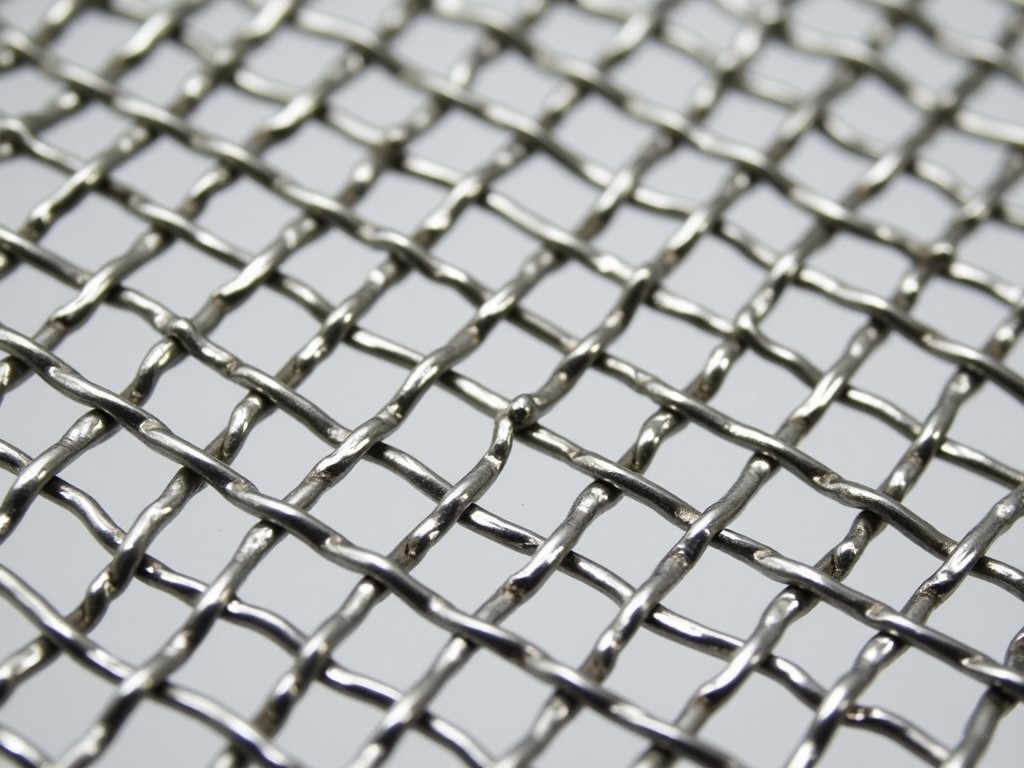
Stainless Steel Insect Screen Mesh Manufacturer
Stainless Steel Insect Screen Mesh Manufacturer
Stainless steel insect screen mesh is a precision-engineered barrier designed to exclude pests while maintaining airflow, light transmission, and structural integrity in demanding environments. Unlike polymer-based screens, stainless steel variants resist UV degradation, thermal cycling, and mechanical wear, making them suitable for long-term installation in industrial, agricultural, and architectural applications where reliability over decades is critical. The material’s inherent corrosion resistance eliminates the need for protective coatings that can crack or delaminate, ensuring consistent performance without maintenance interventions. Manufacturers produce these meshes using controlled weaving or welding processes to achieve uniform aperture dimensions and tensile strength across the entire sheet. This technical foundation allows buyers to specify mesh characteristics based on environmental exposure, pest size exclusion requirements, and load-bearing expectations rather than relying on generic marketing claims.
Material Composition and Grade Selection
The performance of stainless steel insect screen mesh is directly determined by the alloy grade selected, as different compositions offer varying resistance to specific corrosive agents. Grade 304 stainless steel contains 18% chromium and 8% nickel, providing adequate protection against atmospheric oxidation and mild chemical exposure in most indoor and temperate outdoor settings. For environments with higher chloride exposure—such as coastal facilities, food processing plants with salt-based cleaning agents, or agricultural zones using fertilizers—grade 316 stainless steel, which adds 2-3% molybdenum, significantly reduces pitting and crevice corrosion risk. Duplex grades like 2205 offer enhanced strength and corrosion resistance in highly aggressive chemical or marine environments but require specialized weaving equipment due to higher work hardening rates. Manufacturers typically specify mesh using ASTM A240 or EN 10088-2 standards to ensure traceable material properties, allowing engineers to verify compliance with project-specific corrosion allowances.
Weave Patterns and Aperture Control
The functional performance of insect screen mesh depends on precise aperture geometry, which is defined by the weave pattern and wire diameter. Plain weave, where each warp wire alternates over and under each weft wire, produces symmetrical openings and is the most common configuration for general exclusion applications due to its dimensional stability and ease of inspection. Twill weave, characterized by a staggered over-two-under-two pattern, delivers higher tensile strength and finer aperture control at the same wire diameter, making it suitable for excluding smaller pests like thrips or whiteflies under tension. Dutch weave combines varying warp and weft wire diameters to achieve asymmetric flow characteristics—high flow in one direction with fine filtration in the perpendicular axis—useful in ventilation systems requiring directional airflow management. Aperture tolerance is typically held to ±0.05 mm for precision grades, verified through optical microscopy or laser measurement systems during in-process quality checks to ensure consistent pest exclusion performance across production batches.
Wire Diameter and Tensile Strength Specifications
Wire diameter directly influences both the mechanical strength and open area percentage of the mesh, requiring careful balancing based on application demands. Typical wire diameters range from 0.10 mm for fine insect exclusion in greenhouse ventilation to 0.50 mm for heavy-duty industrial barriers subjected to wind load or impact exposure. Tensile strength of the base wire, usually between 500–1000 MPa for cold-drawn stainless steel, translates to mesh burst strength values that can exceed 1500 N/50mm in plain weave configurations, depending on wire count per inch. Open area percentage—calculated as the ratio of aperture area to total surface area—varies inversely with wire diameter and weave density; for example, a 1.2 mm aperture with 0.25 mm wire yields approximately 68% open area, while the same aperture with 0.40 mm wire drops to 49%. Manufacturers provide open area and tensile strength data per ISO 9044 or equivalent standards, enabling HVAC engineers to model pressure drop and structural designers to calculate wind load resistance accurately.
Surface Treatment and Edge Finishing
Post-weaving treatments significantly affect the longevity and safety of stainless steel insect screen mesh in installed conditions. Passivation, typically performed using nitric or citric acid baths, removes free iron particles from the surface created during wire drawing and weaving, enhancing the spontaneous formation of the chromium oxide passive layer that prevents rust initiation. Electropolishing may be specified for applications requiring ultra-clean surfaces, such as pharmaceutical or food processing facilities, as it micro-smooths the wire surface to reduce particle adhesion and biofilm formation. Edge finishing options include heat-sealed borders for polymer-coated frames, ultrasonic welding for seamless integration into thermoplastic housings, or mechanical crimping into aluminum or stainless steel frames using splines or beading. Unfinished edges are avoided in industrial specifications due to the risk of wire protrusion causing abrasion injuries or unraveling under cyclic loading; all cut edges are either fused, overcast, or framed to maintain structural integrity throughout the product’s service life.
Comparison of Common Mesh Configurations
| Parameter | Fine Insect Exclusion (0.6 mm aperture) | General Purpose (1.2 mm aperture) | Heavy-Duty Barrier (2.0 mm aperture) |
|---|---|---|---|
| Typical Wire Diameter | 0.15–0.20 mm | 0.25–0.30 mm | 0.40–0.50 mm |
| Weave Pattern | Plain or Twill | Plain | Plain |
| Open Area (%) | 55–60 | 68–72 | 75–80 |
| Tensile Strength (N/50mm) | 800–1200 | 1200–1800 | 1800–2500 |
| Typical Applications | Greenhouse thrips exclusion, laboratory containment | HVAC intake, food processing vents, warehouse doors | Industrial machinery guards, agricultural livestock barriers, marine ventilation |
Customization Logic and Engineering Support
Manufacturers approach customization not as a standard option but as an engineering response to specific environmental, mechanical, and regulatory constraints. Buyers are expected to provide target pest size (to derive minimum aperture), wind load calculations (to determine required tensile strength), exposure duration and chemical agents (to select appropriate alloy grade), and frame interface details (to define edge treatment and dimensions). For example, a food export facility in a humid tropical zone requesting exclusion of fruit flies (approximately 1.2 mm body width) would typically receive a recommendation for 316L stainless steel, 0.25 mm wire, 1.0 mm aperture plain weave, with electropolished surface and heat-sealed edges to withstand daily alkaline washdowns. Production batches are tagged with material lot numbers, weave specifications, and inspection records, enabling full traceability from raw coil to finished roll. This process ensures that the delivered mesh meets not only dimensional specs but also the functional performance criteria implied by the application.
Quality Control and Testing Protocols
Quality assurance extends beyond dimensional verification to include functional and environmental validation under simulated service conditions. Aperture uniformity is measured using laser scanning micrometers across multiple sample points per square meter, with acceptance criteria typically set at ±10% deviation from nominal size to ensure consistent pest exclusion. Tensile testing follows ASTM A370, where five specimens per batch are pulled to failure to verify minimum strength thresholds; elongation at break is also recorded to assess ductility and resistance to sudden impact. Salt spray testing per ASTM B117 is conducted on representative samples for grades 304 and 316, with 316 typically showing<5% 500="" red="" rust="" after="" hours="">
Packaging and Logistics for Industrial Delivery
Industrial buyers require packaging that preserves mesh integrity during transit, handling, and storage until installation. Rolls are typically wound onto rigid plastic or cardboard cores with inner diameter matching standard unwinding equipment (76 mm or 152 mm), preventing telescoping or edge damage. The mesh is wrapped in polyethylene film with UV inhibitors to prevent degradation during outdoor storage, then placed in corrugated cardboard boxes or crush-resistant plywood crates for palletized shipment. Each package includes a label indicating material grade, weave specifications, dimensions, batch number, and handling instructions—such as “keep dry, avoid direct sunlight, do not fold”—to mitigate environmental exposure risks. For long-distance export, desiccant packs and vapor corrosion inhibitors (VCI) are added to the packaging to control moisture and chloride ingress during sea freight. Loading procedures avoid point loading; rolls are stacked flat or stood vertically with core support to prevent permanent deformation that could affect flatness during installation.
Environmental and Regulatory Compliance
Stainless steel insect screen mesh contributes to compliance with various international standards related to hygiene, safety, and environmental management. In food processing facilities, mesh made from 316L stainless steel meets the requirements of FDA 21 CFR Part 110 for equipment that may contact food indirectly, as it does not shed particles or leach substances under normal use. For pharmaceutical applications, the mesh can be supplied with documentation supporting compliance with ISO 14644-1 for cleanroom particle retention, particularly when electropolished and installed in sealed HVAC systems. The material is 100% recyclable at end-of-life, aligning with ISO 14001 environmental management goals, and contains no substances restricted under REACH or RoHS directives. Manufacturers often provide material safety data sheets (MSDS) and recycled content declarations upon request, enabling procurement teams to verify compliance with corporate sustainability policies or green building certifications like LEED or BREEAM without relying on unverified claims.
To discuss your specific requirements for stainless steel insect screen mesh—including material grade, aperture size, weave pattern, edge treatment, or certification needs—contact our technical team. Provide details about your application environment, pest exclusion targets, and performance expectations to receive a precise quotation and lead time estimate.
Request Technical Consultation