


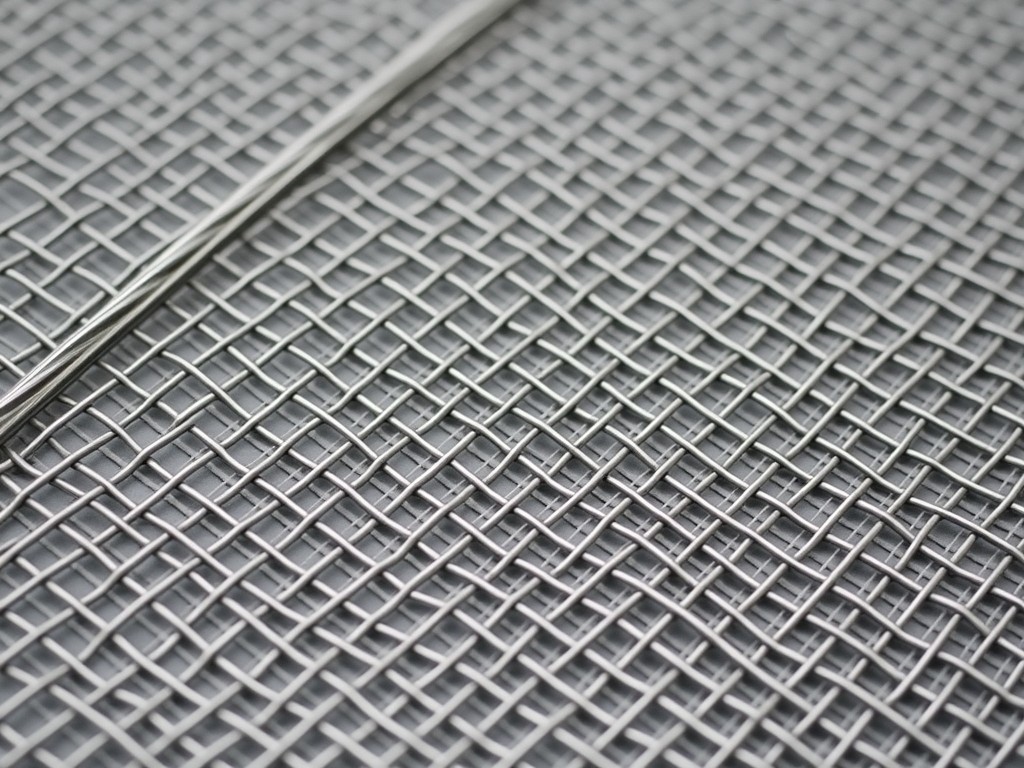
Stainless Steel Mesh Factory Price
Stainless Steel Mesh: Factory Price Considerations for Industrial Applications
When evaluating stainless steel mesh for industrial use, the factory price reflects more than just material cost—it encompasses alloy composition, wire diameter, opening size, weave pattern, and surface finish, all of which directly influence performance in corrosive, high-temperature, or high-pressure environments.
Procurement engineers must balance initial expenditure with lifecycle value, as suboptimal mesh selection can lead to premature failure, contamination risks, or inefficient filtration—costs that far exceed upfront savings.
Material Composition and Cost Drivers
The base alloy significantly affects both price and suitability. Grade 304 stainless steel (18-8 Cr-Ni) offers adequate corrosion resistance for general industrial filtration at a lower cost, while Grade 316L (with 2-3% molybdenum) provides superior resistance to chlorides and acids, justifying a 15-25% price premium in chemical processing or marine environments.
Wire diameter, measured in millimeters or gauge, directly impacts material usage and tensile strength. For example, doubling the wire diameter increases cross-sectional area—and thus material cost—by approximately 4x, while significantly improving burst resistance and durability in abrasive service.
Weave Pattern and Opening Size Specifications
Plain weave remains the most economical option due to its simple interlacing pattern, offering uniform flow characteristics and ease of cleaning. Twill weave, where wires pass over two and under two, provides greater strength and finer filtration capability but requires more complex weaving, increasing production time and cost by 10-20%.
Opening size, defined as the clear space between adjacent wires, is calculated as: Opening = Pitch – Wire Diameter. Finer meshes (e.g., 200 mesh, 74µm openings) use thinner wires and more threads per inch, increasing material and machining costs disproportionately—often 3x higher than coarse meshes (e.g., 20 mesh, 840µm) for the same alloy and width.
Typical Price Ranges by Specification
| Specification | Typical Factory Price Range (USD/m²) | Notes |
|---|---|---|
| 304 SS, Plain Weave, 2mm Wire, 10mm Opening | $12–$18 | Coarse filtration, guards, shelving |
| 304 SS, Plain Weave, 0.5mm Wire, 2mm Opening | $22–$30 | General process filtration, screens |
| 316L SS, Twill Weave, 0.3mm Wire, 0.5mm Opening | $45–$65 | Chemical processing, pharmaceutical, marine |
| 316L SS, Plain Weave, 0.1mm Wire, 74µm Opening (200 mesh) | $80–$120 | Fine filtration, catalyst recovery, lab use |
*Prices are indicative ex-factory for standard widths (1m–1.5m), mill finish, uncut rolls. Volume discounts, custom widths, edge treatments, or special packaging alter final cost. Always request project-specific quotation.
Customization Factors Affecting Quotation
Non-standard widths require slittting or custom weaving, adding setup and edge-finishing costs. Widths under 300mm often incur a 20-30% surcharge per linear meter due to lower yield and higher handling complexity, while widths over 2m may need specialized looms, increasing lead time and price.
Surface treatments such as electropolishing (to reduce product adhesion and improve cleanability) or passivation (to enhance corrosion resistance) add $5–$15/m² depending on complexity. Custom cutting to length, hole punching, or framing for integration into equipment further increases cost but reduces buyer-side processing time and waste.
Quality Assurance and Inspection Criteria
Reputable manufacturers verify mesh specifications using calibrated optical comparators or laser scanning systems to measure wire diameter, opening size, and weave consistency across the roll. Tensile testing per ASTM A370 ensures the material meets minimum strength requirements for the intended load.
Visual inspection under standardized lighting checks for defects such as broken wires, missed picks, or uneven tension—issues that can cause premature tearing or inconsistent filtration. Documentation including mill test reports (MTRs) for alloy composition and inspection reports should be available upon request to validate compliance with industrial standards.
Applications Where Specifications Justify Cost
In food and beverage processing, 316L stainless steel mesh with electropolished finish prevents bacterial harborage and withstands frequent CIP (clean-in-place) cycles with caustic solutions—justifying its higher cost through compliance with FDA 21 CFR and reduced downtime.
For catalyst recovery in petroleum refining, precise 50-mesh (297µm opening) 316L twill weave retains valuable particles while allowing efficient flow; the increased material cost is offset by higher yield and longer service life compared to coarser or lower-grade alternatives.
In architectural applications such as façades or safety guards, 304 SS plain weave with 3mm wire and 20mm opening provides adequate impact resistance and aesthetic openness at a lower cost, where extreme corrosion resistance is unnecessary.
To receive a detailed, project-specific quotation for stainless steel mesh, provide your required alloy grade, wire diameter, opening size, weave pattern, width, length, and any additional treatments or fabrication needs. Our technical team will review your specifications and deliver a factory-direct price with lead time and quality documentation.
Request Factory Price Quotation