


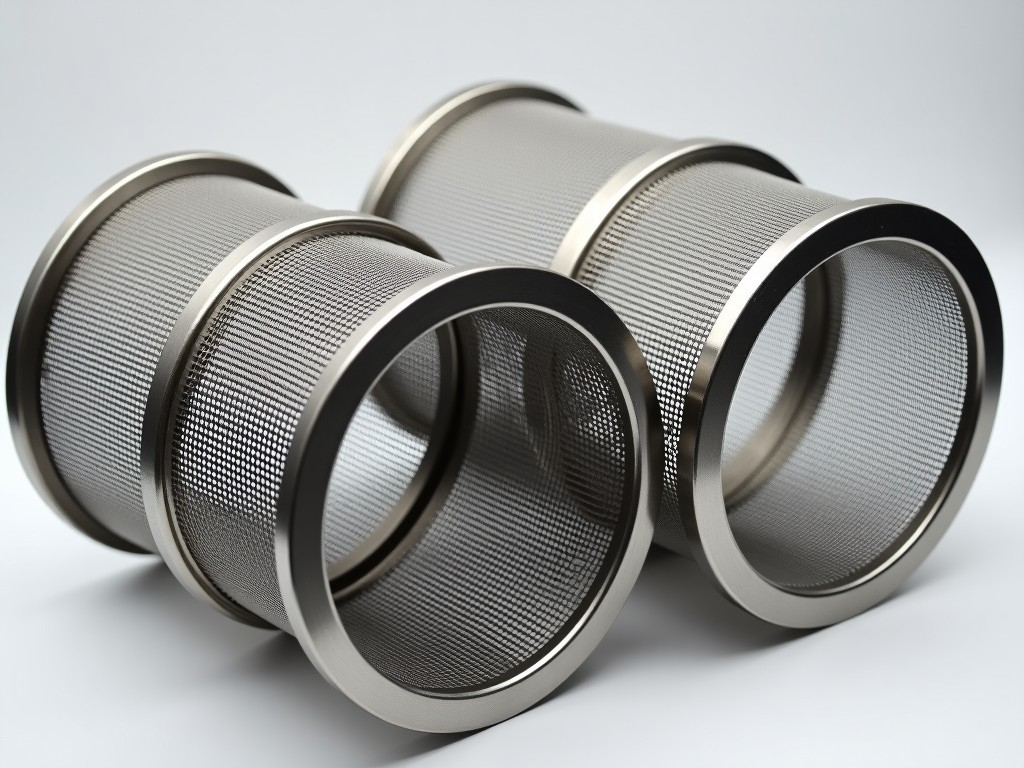
Stainless Steel Mesh Grease Filters
Stainless Steel Mesh Grease Filters
Stainless steel mesh grease filters are engineered components designed to capture and retain airborne grease particles, oil aerosols, and particulate contaminants in commercial kitchen exhaust systems. Their primary function is to prevent grease buildup in ductwork, reduce fire hazards, maintain airflow efficiency, and extend the lifespan of downstream equipment such as fans and heat exchangers. Unlike disposable filters, these reusable components are constructed from corrosion-resistant alloys to withstand repeated cleaning cycles and prolonged exposure to high-temperature, humid, and chemically aggressive environments typical of food preparation areas.
Material Composition and Alloy Selection
The performance of grease filters depends critically on the stainless steel alloy used in the mesh and frame. Commonly selected grades include 304 and 316L, chosen for their balance of corrosion resistance, mechanical strength, and formability. Grade 304 offers sufficient resistance to atmospheric oxidation and mild chemical exposure in most kitchen environments, while 316L provides enhanced protection against chloride-induced pitting and crevice corrosion, making it suitable for installations near coastal areas or where aggressive cleaning agents are frequently used. The wire diameter and mesh count are engineered to optimize particle capture efficiency without imposing excessive pressure drop on the ventilation system.
Mesh Geometry and Filtration Efficiency
Filtration effectiveness is determined by the interplay of mesh opening size, wire diameter, and weave pattern. Typical mesh specifications range from 20x20 to 100x100 wires per inch, with wire diameters between 0.25mm and 0.5mm. Finer meshes capture smaller grease aerosols but increase resistance to airflow; coarser meshes allow higher flow rates but may permit finer particulates to pass through. The most common configurations use a plain weave or Dutch weave structure, where the latter enhances surface filtration by trapping particles on the upstream face, reducing depth loading and simplifying cleaning. Engineers select mesh parameters based on the expected grease load, cooking equipment type, and required maintenance frequency.
Frame Design and Structural Integrity
The filter frame must maintain dimensional stability under thermal cycling, mechanical handling during cleaning, and pressure differentials across the filter face. Frames are typically formed from 1.2mm to 1.5mm thick stainless steel sheet, bent into a channel or flange profile to secure the mesh edges. Welding or mechanical fastening methods are used to attach the mesh to the frame, with attention to avoiding crevices where grease can accumulate. Reinforcing ribs or cross-bracing may be added for larger filters to prevent sagging or deformation under sustained airflow pressure. Corner radii are designed to minimize stress concentrations and facilitate smooth cleaning without snagging on brushes or pressure washers.
Pressure Drop and Airflow Characteristics
A critical design consideration is the initial and fouled pressure drop across the filter, which directly impacts fan energy consumption and system airflow balance. Clean pressure drop for a standard 304 stainless steel mesh filter (20x20 mesh, 0.35mm wire) typically ranges from 25 to 40 Pa at 2.5 m/s face velocity. As grease accumulates, pressure drop increases nonlinearly; a well-designed filter should allow for safe operation up to a fouled pressure drop of 150–200 Pa before mandatory cleaning is required. Manufacturers provide pressure drop curves based on ASTM F1291 or equivalent test methods to enable accurate system modeling and fan selection.
Cleaning Methods and Maintenance Intervals
Reusability is a key advantage of stainless steel mesh filters, but effective cleaning is essential to maintain performance and hygiene. Common methods include manual soaking in alkaline degreasers, ultrasonic cleaning, pressure washing (up to 1500 psi), or automated CIP (clean-in-place) systems. The choice of cleaning agent must consider compatibility with the stainless steel grade—chloride-based cleaners should be avoided with 304 to prevent pitting, while 316L tolerates higher chloride exposure. Maintenance frequency varies by application: high-volume fry stations may require weekly cleaning, whereas low-use hoods might need monthly attention. Visual inspection for mesh damage, frame distortion, or residual grease after cleaning is a standard quality check.
Customization Options for OEM and Retrofit Applications
Industrial buyers often require filters tailored to specific hood dimensions, mounting configurations, or airflow constraints. Customization options include non-standard frame sizes (from 100mm x 100mm to over 1000mm x 600mm), angled or tapered frames for sloped hood installations, integrated handles or lift tabs for easier removal, and perforated backing plates to reinforce large-area meshes. For OEMs, filters can be designed to match existing mounting hardware or incorporate quick-release mechanisms. All custom designs undergo airflow validation to ensure pressure drop remains within acceptable limits for the intended system.
Quality Control and Manufacturing Considerations
Consistency in mesh tension, frame flatness, and weld integrity is essential for reliable performance. Manufacturing processes include precision stamping or laser cutting of frames, controlled mesh tensioning during assembly, and automated welding or clinching to secure the mesh edge. Post-production inspection involves visual examination for defects, dimensional verification against CAD models, and optionally, airflow testing on a sample batch. Traceability is maintained through lot numbers linking raw material certificates to finished goods. While certifications like ISO 9001 are common in reputable manufacturers, buyers should verify actual process controls rather than relying solely on documentation.
Applications Across Food Service and Industrial Ventilation
These filters are not limited to restaurant kitchens; they are widely used in food processing plants, institutional cafeterias, hotels, and even industrial settings where oil mist or coolant aerosols are generated—such as machining centers or textile drying lines. In each case, the selection criteria remain consistent: capture efficiency, pressure drop tolerance, cleaning compatibility, and durability under cyclic thermal loads. For example, in a bakery exhaust system, filters must handle flour particulates combined with oil vapors from proofing equipment, requiring a mesh fine enough to capture hybrid aerosols without rapid blinding. In contrast, a wok station filter prioritizes high-temperature resistance and ease of cleaning over ultrafine filtration due to the large, viscous grease droplets produced.
| Parameter | Typical Range / Options | Engineering Implication |
|---|---|---|
| Stainless Steel Grade | 304, 316L | 304 for standard kitchens; 316L for high-chloride or coastal environments |
| Mesh Count (wires/inch) | 20x20 to 100x100 | Higher count = finer filtration, higher pressure drop |
| Wire Diameter | 0.25mm – 0.5mm | Thicker wire = greater durability, slightly reduced open area |
| Frame Thickness | 1.2mm – 1.5mm | Ensures rigidity under thermal cycling and handling |
| Clean Pressure Drop (at 2.5 m/s) | 25–40 Pa | Baseline for fan energy calculation |
| Max Fouled Pressure Drop | 150–200 Pa | Triggers cleaning cycle to maintain airflow |
| Standard Sizes | 300x300mm, 400x400mm, 500x500mm | Common hood module dimensions; custom sizes available |
| Cleaning Method Compatibility | Manual soak, ultrasonic, pressure wash (<1500 psi=""> | Agent selection critical to avoid corrosion |
Engineers and procurement teams evaluating grease filters should prioritize verifiable performance data over marketing claims. Request pressure drop curves, material test reports (MTRs) for the stainless steel used, and details on cleaning validation cycles. Suppliers who provide transparent testing methodology and are willing to discuss application-specific trade-offs demonstrate greater technical credibility. Long-term value is derived not from initial cost alone, but from reduced maintenance frequency, extended duct cleaning intervals, and lowered fire risk—factors that compound over the system’s operational lifespan.