


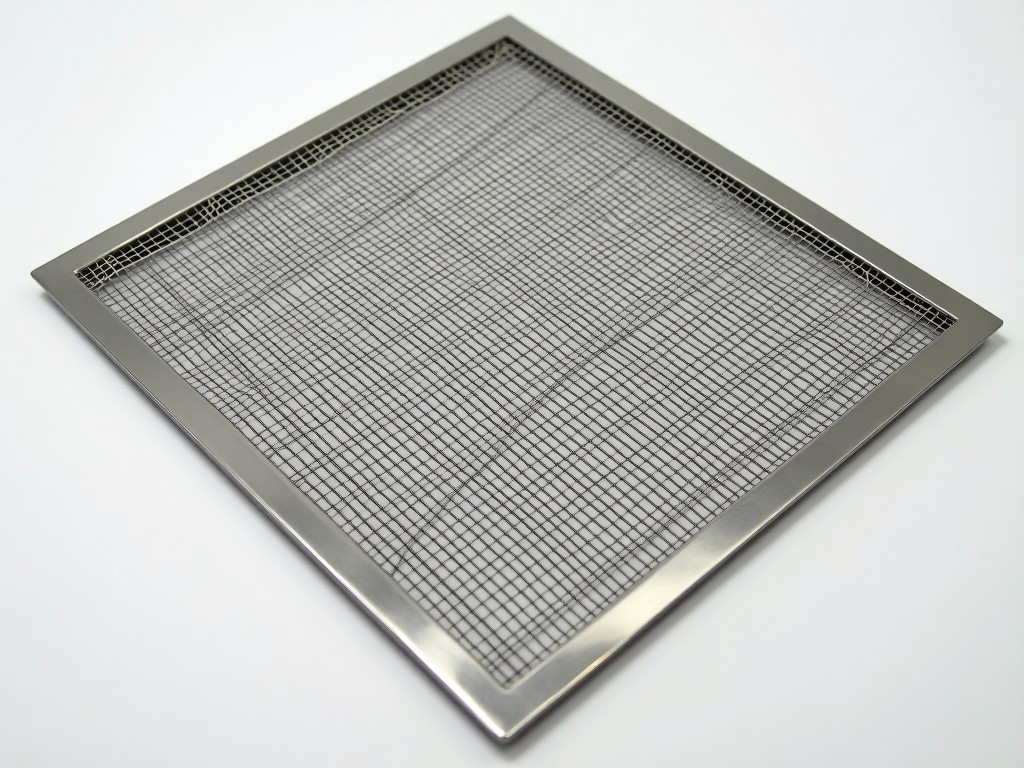
Stainless Steel Mesh Screen Filter Sheet
Stainless Steel Mesh Screen Filter Sheet
A stainless steel mesh screen filter sheet is a precision-engineered component designed for fluid and particulate separation in industrial processes. It consists of woven or welded stainless steel wire arranged in a uniform grid pattern, forming a porous barrier that retains contaminants while allowing fluid flow. Unlike disposable filters, these sheets are reusable, cleanable, and maintain dimensional stability under varying pressure and temperature conditions. The open area percentage and wire diameter are carefully selected to balance flow efficiency with particle retention capability.
Material Selection and Corrosion Resistance
The base material is typically austenitic stainless steel grades such as 304, 316, or 316L, chosen for their resistance to oxidation and chemical attack. Grade 304 offers adequate protection in mild environments and general water filtration, while 316/316L provides superior resistance to chlorides and acidic compounds, making it suitable for marine, chemical processing, and food-grade applications. The wire diameter and mesh count directly influence the sheet’s mechanical strength and filtration rating, with finer meshes requiring higher nickel and chromium content to prevent wire fatigue during cleaning cycles.
Surface finish options include mill finish, electropolished, or passivated treatments. Electropolishing removes surface impurities and reduces roughness, minimizing particle adhesion and simplifying cleaning-in-place (CIP) procedures. Passivation enhances the chromium oxide layer, improving resistance to pitting in halide-containing fluids. These treatments are not cosmetic; they directly affect service life and maintenance frequency in continuous operation.
Mesh Specifications and Filtration Performance
Filtration rating is defined by the nominal micron size, which corresponds to the largest particle expected to pass through the mesh under standard test conditions. Common mesh counts range from 20 to 400 wires per inch, translating to approximate openings from 840 microns down to 38 microns. The actual retention efficiency depends on particle shape, fluid viscosity, and flow dynamics—spherical particles are retained more effectively than fibrous or deformable contaminants.
Open area percentage, calculated as the ratio of open space to total surface area, directly impacts pressure drop across the filter. A 50% open area mesh will generate approximately half the pressure drop of a 25% open area mesh at identical flow rates, assuming similar wire thickness. Engineers must balance retention requirements with system energy costs; excessive pressure drop increases pump load and operational expense over time.
Manufacturing Process and Dimensional Stability
The mesh is produced via precision weaving or resistance welding. Woven mesh interlaces warp and weft wires in a plain, twill, or Dutch weave pattern, offering flexibility and uniform flow distribution. Welded mesh fuses wires at each intersection, providing greater rigidity and resistance to deformation under high differential pressure—ideal for deep-bed filtration or high-viscosity fluids. Both methods yield consistent aperture dimensions critical for repeatable filtration performance.
Sheets are typically supplied in standard sizes such as 1000mm x 2000mm or 1219mm x 2439mm, but can be cut to custom dimensions using laser, waterjet, or shearing methods without compromising edge integrity. Edge treatments include folded hems, welded frames, or adhesive-backed sealing strips to prevent bypass and facilitate installation in filter housings. Tolerances on thickness and flatness are maintained within ±0.1mm to ensure proper sealing and prevent channeling.
Industrial Applications and Process Integration
In chemical processing, these filter sheets protect catalysts and downstream equipment from particulate contamination in solvent recovery and resin synthesis loops. The 316L grade withstands exposure to amines, esters, and weak acids common in polymerization processes, while the smooth electropolished surface prevents polymer buildup that could alter flow characteristics or require frequent shutdowns.
Food and beverage manufacturers use 316L mesh sheets for liquid clarification in juice, dairy, and brewing applications. The non-toxic, non-reactive surface complies with FDA 21 CFR 177.1520 and EU 10/2011 standards for food contact materials. CIP compatibility allows for automated cleaning with caustic and acidic solutions without degradation, supporting continuous operation in hygienic zones.
Water treatment facilities deploy these screens in pretreatment stages to remove sand, algae, and debris before membrane filtration or UV disinfection. Their resistance to biofouling and ability to withstand backwash cycles at pressures up to 10 bar make them suitable for municipal and industrial wastewater systems. Unlike polymeric screens, they do not degrade under UV exposure or chlorine dosing, ensuring consistent performance over years of service.
Quality Control and Inspection Protocols
Each batch undergoes dimensional verification using optical comparators or coordinate measuring machines (CMM) to confirm mesh count, wire diameter, and sheet flatness. Aperture uniformity is assessed via bubble point testing or glass bead retention analysis to detect anomalies that could compromise filtration efficiency. Visual inspection under 10x magnification identifies welding defects, wire breaks, or surface contamination that may serve as nucleation points for corrosion.
Material traceability is maintained through mill test reports (MTRs) verifying chemical composition and mechanical properties of the raw wire. For critical applications, additional testing such as intergranular corrosion assessment (ASTM A262 Practice E) or ferrite content measurement (for weld integrity) may be performed. These procedures are not optional add-ons—they are essential to prevent field failure in processes where contamination risks carry significant financial or safety consequences.
Customization Options and Engineering Support
Customization begins with defining the required micron rating based on the contaminant size distribution and acceptable breakthrough limits. Engineers can specify mesh count, wire diameter, alloy grade, and sheet dimensions to match housing geometry and flow requirements. Non-standard shapes—such as circular discs, conical filters, or custom perforated frames—are achievable through CNC cutting or stamping, enabling integration into existing equipment without redesign.
Surface modifications like PTFE coating or silicone gasketing can be applied to enhance chemical resistance or improve sealing in dynamic assemblies. For high-vibration environments, edge reinforcement with stainless steel strips or integral flanges prevents fatigue cracking. These options are evaluated case-by-case, with technical teams providing flow simulation data and pressure drop calculations to validate performance before prototyping.
| Parameter | Typical Range | Notes |
|---|---|---|
| Mesh Count | 20 – 400 wires/inch | Higher count = finer filtration, lower open area |
| Wire Diameter | 0.05mm – 1.0mm | Selected based on mesh count and required strength |
| Open Area | 10% – 60% | Inversely related to mesh count and wire thickness |
| Material Grade | 304, 316, 316L | 316L preferred for chloride exposure |
| Sheet Thickness | 0.2mm – 3.0mm | Dependent on wire diameter and weave/weld type |
| Standard Size | 1000x2000mm, 1219x2439mm | Custom sizes available upon request |
The table above reflects typical industrial configurations. Actual values are determined by application-specific parameters such as fluid properties, operating pressure, temperature cycles, and cleaning methodology. Deviations from standard specifications require engineering review to ensure mechanical integrity and filtration efficacy under expected load conditions.
Installation, Maintenance, and Lifecycle Considerations
Proper installation requires ensuring the filter sheet is seated flat within the housing with no twisting or tension that could induce stress concentrations. Gasket surfaces must be clean and compatible with the process fluid to prevent leakage or chemical degradation. Initial pressure drop should be measured and recorded as a baseline; a 25% increase typically indicates the need for cleaning, assuming no structural damage.
Cleaning methods include backflushing, ultrasonic agitation, or chemical soaking with compatible solvents. Abrasive scrubbing is discouraged as it can deform wires and enlarge apertures irreversibly. For biological fouling, enzymatic or oxidizing agents may be used, followed by thorough rinsing to prevent residue buildup. Electropolished surfaces recover flow characteristics more rapidly after cleaning due to reduced surface adhesion.
With proper maintenance, a stainless steel mesh filter sheet can operate effectively for 3–5 years in continuous service, significantly longer than disposable alternatives. End-of-life indicators include permanent deformation, irreversible aperture enlargement, or localized corrosion that compromises structural integrity. Recyclability is high—contaminated sheets can be decontaminated and remelted, supporting circular economy initiatives in manufacturing facilities.