


Stainless Steel Mesh Suppliers Quotation
Stainless Steel Mesh Suppliers Quotation
Procuring stainless steel mesh requires more than comparing unit prices. Engineers and procurement teams must evaluate material grade, wire diameter, opening size, weave pattern, and edge treatment to ensure the mesh performs as specified in filtration, separation, or structural applications. A comprehensive quotation addresses these technical variables upfront, reducing the risk of receiving non-conforming material that could compromise process efficiency or safety. Suppliers who provide detailed technical documentation alongside pricing demonstrate an understanding of industrial purchasing priorities.
Key Technical Parameters in a Stainless Steel Mesh Quotation
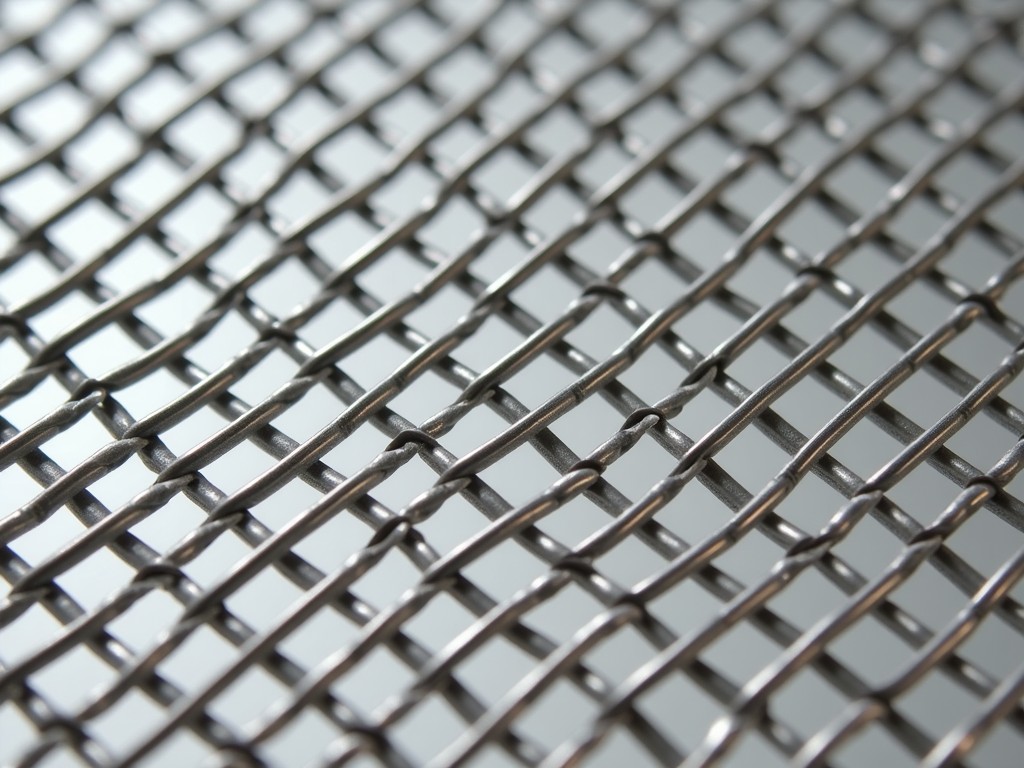
A proper quotation begins with precise specification of the mesh construction. Wire diameter is typically measured in millimeters or micrometers and directly influences tensile strength and clogging resistance. Opening size, defined as the clear distance between adjacent wires, determines particle retention efficiency. Weave pattern—such as plain dutch, twill dutch, or reverse dutch—affects flow dynamics and mechanical stability. Edge treatment options like selvaged, welded, or fused edges impact handling safety and integration into housings or frames.
Material grade selection is equally critical. While 304 and 316L stainless steel are common, specific applications may require duplex grades for chloride resistance or precipitation-hardened grades for elevated strength. Quotations should explicitly state the ASTM or EN standard compliance (e.g., ASTM A580, EN 10270-3) and provide mill test reports upon request. Surface finish, whether annealed, pickled, or electropolished, influences corrosion resistance and cleanability, particularly in pharmaceutical or food processing environments.
How Quotations Reflect Manufacturing Capability
The level of detail in a quotation often indicates the supplier’s manufacturing maturity. Suppliers who ask for application-specific data—such as operating temperature, pressure differential, chemical exposure, or required flow rate—demonstrate a consultative approach. This enables them to recommend optimal mesh parameters rather than simply quoting a generic product. Conversely, quotations lacking technical inquiry may signal limited engineering support or reliance on standardized inventories unsuitable for demanding processes.
Lead time and minimum order quantity (MOQ) are practical considerations embedded in the quotation. Custom mesh specifications—non-standard widths, precise tolerances, or specialized weaves—typically require longer lead times and higher MOQs due to loom setup and material sourcing. Transparent communication of these factors helps buyers align procurement schedules with production timelines. Some suppliers offer prototyping services at reduced MOQs to validate performance before full-scale commitment.
Typical Quotation Components for Industrial Buyers
| Quotation Element | What It Indicates |
|---|---|
| Wire diameter and tolerance | Precision of weaving process and consistency control |
| Opening size and mesh count | Accuracy of specifications for filtration or screening duty |
| Material grade and standard | Traceability and compliance with industry requirements |
| Weave pattern and edge finish | Structural integrity and ease of installation |
| Width, length, and roll specifications | Compatibility with existing equipment or fabrication needs |
| Surface treatment and certification | Suitability for hygienic or corrosive environments |
| Lead time and MOQ | Production flexibility and supply chain reliability |
| Packaging and shipping terms | Protection against damage during transit and handling |
Applications Where Quotation Accuracy Matters
In pharmaceutical manufacturing, stainless steel mesh used in fluid bed dryers or sieving systems must maintain precise opening dimensions to ensure uniform granule size. A quotation that specifies electropolished 316L mesh with ±5µm opening tolerance and provides surface roughness (Ra) data supports validation protocols. Similarly, in chemical processing, mesh employed as catalyst support or in evaporator housings requires verified corrosion resistance; quotations referencing Pitting Resistance Equivalent Number (PREN) values or intergranular corrosion test results (per ASTM A262) allow engineers to assess suitability for specific oxidizing or reducing environments.
Architectural and decorative applications, while less stringent, still benefit from technical transparency. Quotations for mesh used in facade cladding or interior partitions should specify tensile strength per wire and overall panel load capacity to ensure compliance with building codes. Suppliers who provide finite element analysis (FEA) data or reference past projects with similar wind load requirements help reduce uncertainty in structural validation. Even in these cases, the quotation serves as a risk mitigation tool rather than a mere price list.
Requesting a Quotation: What Information to Provide
To receive an accurate and actionable quotation, buyers should supply operational context alongside dimensional requirements. Key details include: the substance being filtered or separated (liquid, gas, slurry), operating temperature range, pressure drop constraints, cleaning method (CIP, backwash, ultrasonic), and expected service life. For structural uses, specify load type (static, cyclic, impact), exposure conditions (indoor, outdoor, marine), and attachment method. Providing this information enables suppliers to recommend appropriate alloys, weaves, and finishes rather than guessing based on incomplete data.
Including a sketch or CAD file of the intended mesh configuration—especially for custom shapes, perforated sections, or integrated framing—further improves quotation accuracy. Suppliers can then assess manufacturability, identify potential stress points, and advise on necessary reinforcements. Some manufacturers offer design-for-manufacturability (DFM) feedback at no cost, helping buyers avoid costly redesigns later. The willingness to engage in this technical exchange is a strong indicator of supplier capability.
A well-structured quotation transforms a transactional inquiry into a technical collaboration. By clearly articulating material properties, manufacturing capabilities, and application-specific considerations, suppliers enable buyers to make confident, informed decisions. This approach not only reduces the likelihood of field failures but also builds long-term trust based on demonstrated expertise rather than promotional claims.