


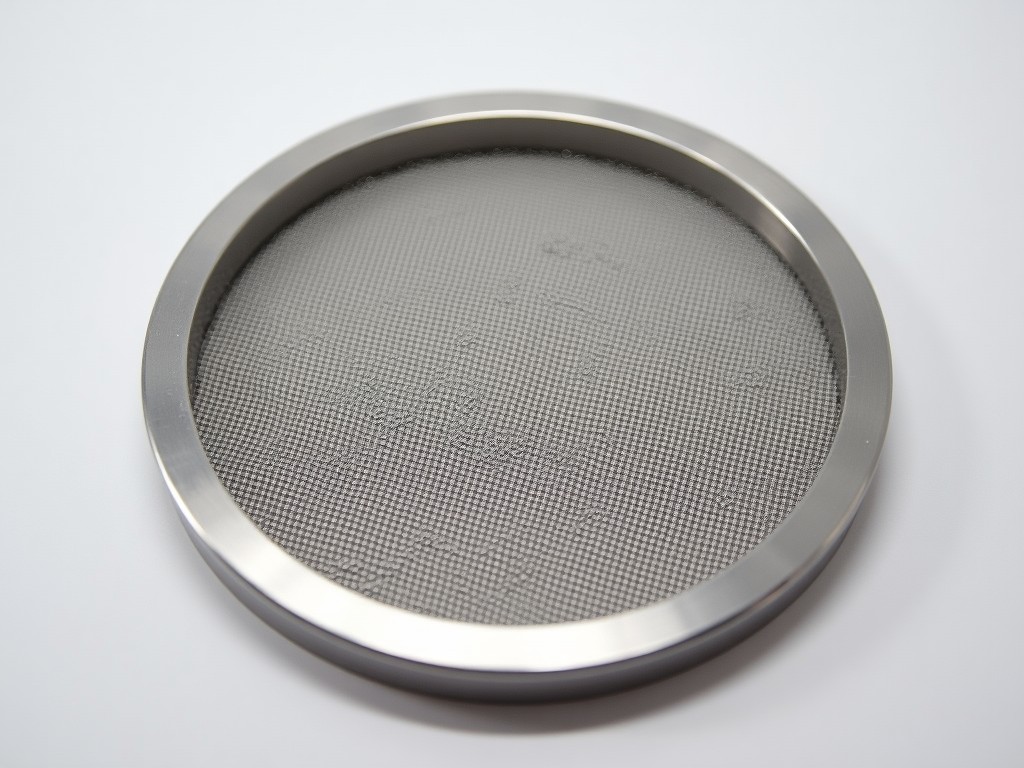
Stainless Steel Micro Mesh Filter Screen
Stainless Steel Micro Mesh Filter Screen
Stainless steel micro mesh filter screens are precision-engineered filtration components designed for applications requiring fine particle separation under demanding conditions. These screens utilize tightly woven wire meshes with opening sizes typically ranging from 5 to 100 micrometers, enabling effective removal of sub-micron contaminants while maintaining structural integrity. The base material is selected from corrosion-resistant stainless steel grades, ensuring compatibility with aggressive fluids, elevated temperatures, and cyclic loading environments commonly found in industrial processes.
Unlike standard filtration media, micro mesh screens offer a combination of mechanical strength, thermal stability, and chemical resistance that cannot be achieved with polymeric or fibrous alternatives. Their open area percentage is carefully balanced to optimize flow rate versus filtration efficiency, with typical values between 20% and 40% depending on mesh count and wire diameter. This balance minimizes pressure drop while maximizing contaminant capture, which is critical in continuous operation systems where downtime for cleaning or replacement must be minimized.
Manufacturing begins with precision drawing of stainless steel wire to exact tolerances, followed by weaving on specialized looms capable of maintaining consistent mesh geometry across large surfaces. Post-weaving processes such as heat treatment, stress relieving, and surface passivation enhance dimensional stability and corrosion resistance. Each screen undergoes dimensional verification using optical comparators or laser scanning to confirm opening size, wire diameter, and flatness before leaving the facility.
Material Selection and Performance Characteristics
The most commonly used stainless steel grades for micro mesh screens are 304, 316L, and 316Ti, each selected based on the specific chemical and thermal challenges of the application. Grade 304 provides adequate resistance to mild oxidizing environments and is suitable for water, food-grade liquids, and non-corrosive gases up to approximately 400°C. For exposure to chlorides, acids, or marine atmospheres, 316L is preferred due to its molybdenum content, which significantly improves pitting and crevice corrosion resistance.
In high-temperature applications exceeding 500°C or where sensitization is a concern, 316Ti offers stabilized titanium carbide formation that prevents chromium depletion at grain boundaries. Wire diameters typically range from 15 to 50 micrometers, with tensile strength values between 1,800 and 2,500 MPa depending on grade and temper. Elongation at break remains above 10%, ensuring the mesh can withstand handling and installation stresses without cracking or permanent deformation.
Surface finish is controlled through passivation or electropolishing to remove embedded contaminants and enhance the chromium oxide layer. Electropolished surfaces reduce particle adhesion and facilitate cleaning-in-place (CIP) procedures, which is particularly important in pharmaceutical and semiconductor manufacturing. Surface roughness (Ra) values after electropolishing typically fall below 0.4 micrometers, minimizing fouling potential and improving long-term flow consistency.
Design Parameters and Customization Options
Micro mesh screens are defined by three primary parameters: mesh count (openings per linear inch), wire diameter, and opening size. These are interrelated—opening size equals the inverse of mesh count minus wire diameter. For example, a 200 mesh screen with 30-micrometer wire yields approximately 95-micrometer openings. Custom combinations are achievable within manufacturing limits, allowing engineers to tailor filtration performance to specific particle size distributions.
Aspect ratio and weave pattern significantly influence mechanical behavior and flow dynamics. Plain weave offers symmetric flow resistance and is standard for most applications. Twill weave provides greater flexibility and higher open area for the same mesh count, beneficial in low-pressure drop scenarios. Dutch weave, though less common in micro mesh, uses varying wire diameters in warp and fill directions to achieve asymmetric filtration—fine retention in one direction, coarse support in the other—ideal for layered filtration systems.
Screens can be supplied as flat sheets, die-cut discs, pleated elements, or formed cylinders depending on housing geometry. Edge treatments include welding, crimping, or overlaying with broader mesh to prevent fraying and facilitate sealing. Frames or support rings made from matching stainless steel are available for high-pressure applications to prevent bulging or rupture under differential pressure loads exceeding 2 bar.
Industrial Applications and Process Integration
In semiconductor wafer processing, stainless steel micro mesh screens protect photolithography equipment by filtering resist developers and rinse water down to 10-micrometer particles, preventing nano-scale defects on critical layers. The thermal stability of 316L ensures performance is maintained during hot deionized water rinses at 80–95°C without degradation or particle shedding.
Pharmaceutical manufacturers use these screens in sterile filtration lines for buffer preparation and final product filtration, where microbial retention and extractables control are paramount. The smooth, electropolished surface minimizes protein adsorption and allows for effective steam sterilization (SIP) at 121°C without compromising mesh integrity or leaching metallic ions into the product stream.
Chemical processing plants install micro mesh screens as pre-filters in catalyst recovery systems to capture fines before they enter centrifugation or drying units. By removing particles as small as 20 micrometers, screen installation extends catalyst life and reduces fouling in downstream reactors. The corrosion resistance of 316Ti withstands exposure to organic solvents, acidic intermediates, and elevated temperatures common in fine chemical synthesis.
Food and beverage producers rely on these screens for syrup clarification, wine stabilization, and dairy processing, where they remove yeast, tartrates, or milk stone without altering flavor or nutritional content. Compliance with FDA 21 CFR 177.1520 and EU 10/2011 is achievable through material traceability and surface finish documentation, supporting audit readiness in regulated environments.
Quality Assurance and Inspection Protocols
Quality control begins with raw material verification, including mill test reports for chemical composition and mechanical properties of the stainless steel wire. Incoming wire is sampled for diameter tolerance (±2 micrometers) and tensile strength before weaving. During production, in-line vision systems monitor mesh uniformity, detecting missing wires, double picks, or tension variations that could affect opening consistency.
Finished screens undergo dimensional inspection using calibrated optical microscopes or laser diffraction systems to measure opening size across multiple points, ensuring compliance with specified tolerances (typically ±10% for opening size). Bubble point testing is performed for critical applications to verify the largest pore size via gas-liquid displacement, providing a functional measure of retention capability under wet conditions.
Visual inspection under 10x magnification identifies surface defects such as scratches, embedments, or discoloration that could indicate contamination or processing flaws. For hygienic applications, swab testing for particulates and non-volatile residue (NVR) is conducted to confirm cleanliness levels meet ISO 14644-1 or USP<788>standards. All inspection data is retained with traceability to lot number, wire heat, and production shift.
Typical Specifications
| Parameter | Typical Range / Value | Notes |
|---|---|---|
| Stainless Steel Grade | 304, 316L, 316Ti | Selected based on corrosion and temperature requirements |
| Mesh Count | 100 to 800 mesh | Opening size range: 5–100 μm |
| Wire Diameter | 15–50 μm | Affects strength and open area |
| Open Area Percentage | 20–40% | Balances flow rate and filtration efficiency |
| Tensile Strength | 1,800–2,500 MPa | Dependent on grade and temper |
| Maximum Operating Temperature | Up to 600°C (316L) | Limited by oxidation and creep above threshold |
| Surface Finish | Passivated or electropolished | Ra < 0.4 μm after electropolishing |
Values presented are typical for standard configurations. Actual performance depends on specific mesh geometry, wire grade, and surface treatment. Custom specifications are available upon request to match unique process conditions, including non-standard weave patterns, asymmetric openings, or integrated frame designs. Engineers are encouraged to provide particle size distribution, flow rate, temperature, pressure, and fluid chemistry details for accurate screening recommendations.
Ordering and Technical Support
To initiate a quotation, provide the required mesh count, wire diameter, stainless steel grade, dimensions, and any special features such as edge treatment, forming, or framing. Include intended operating conditions—maximum temperature, pressure differential, fluid composition, and cleaning method—to ensure material suitability and design adequacy. For replacement parts, supplying a sample or detailed drawing with tolerance notes accelerates matching and reduces lead time.
Technical engineers are available to review application data and recommend optimal mesh parameters based on filtration goals, hydraulic constraints, and compatibility requirements. Prototypes or sample sections can be provided for validation in test rigs or pilot systems before full-scale procurement. Lead times vary from 2–4 weeks for standard sheets to 6–8 weeks for complex geometries or material certifications, depending on current capacity and specification complexity.
Contact our technical team to discuss your filtration requirements and receive a detailed quotation.