


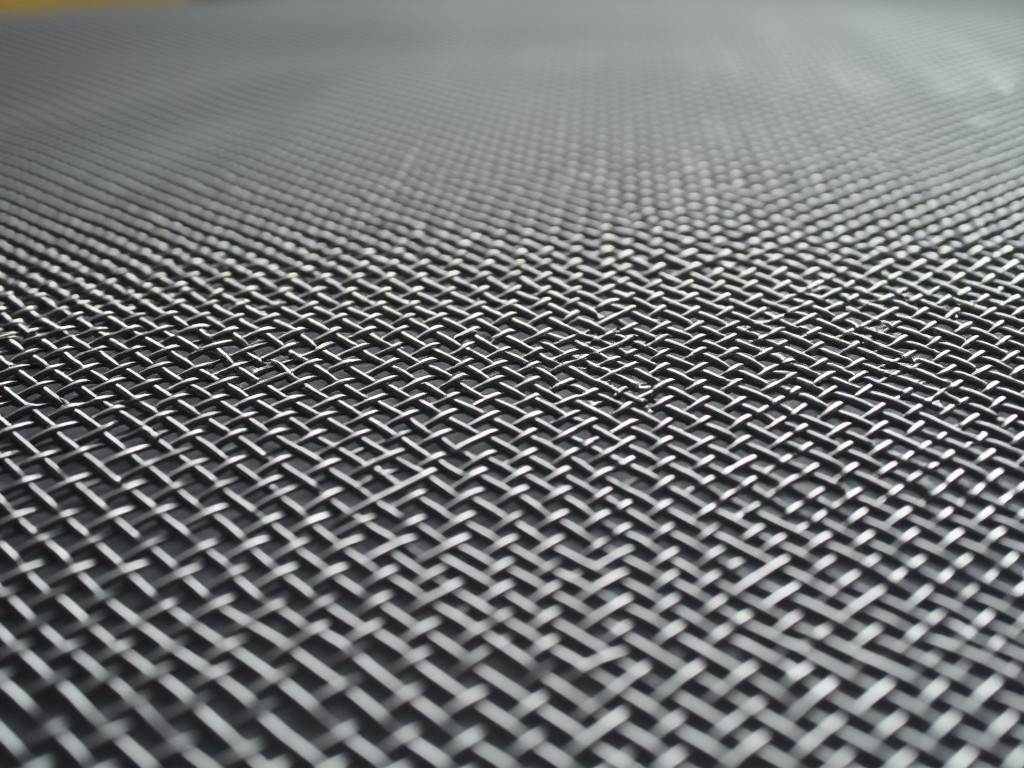
Stainless Steel Plain Weave Wire Mesh Factory
Stainless Steel Plain Weave Wire Mesh Factory
A stainless steel plain weave wire mesh factory specializes in the production of woven mesh using stainless steel wire in a simple over-and-under pattern. This weave structure creates a uniform grid with square openings, where each warp wire passes alternately over and under each weft wire. The result is a symmetrical, balanced fabric with consistent opening size and wire diameter in both directions. Plain weave is the most fundamental and widely used weave type in industrial filtration, screening, and separation applications due to its mechanical stability and predictable performance.
The manufacturing process begins with precision-drawn stainless steel wire, typically in grades 304, 316, or 316L, selected based on corrosion resistance requirements and operating environment. Wire diameters range from 0.025 mm for fine filtration to 3.0 mm for heavy-duty screening. These wires are fed into high-speed weaving looms where tension, pitch, and beat-up are tightly controlled to ensure dimensional accuracy. Post-weaving processes may include annealing to relieve internal stresses, electro-polishing for surface smoothness, or passivation to enhance corrosion resistance.
Technical Characteristics of Plain Weave Construction
The plain weave structure provides inherent mechanical symmetry, meaning tensile strength and elongation properties are nearly identical in both warp and weft directions. This isotropy reduces the risk of directional deformation under load, making it ideal for applications where consistent opening size must be maintained under pressure or vibration. Unlike twill or dutch weaves, plain weave does not rely on wire nesting for stability; instead, its integrity comes from the balanced interlacement pattern, which resists localized wire displacement.
Open area percentage in plain weave mesh is calculated based on wire diameter and opening size. For example, a mesh with 1.0 mm wire diameter and 2.0 mm opening size has an open area of approximately 44.4%. As wire diameter increases relative to opening size, open area decreases linearly, affecting flow rates in filtration or throughput in screening. Engineers select specific combinations of wire diameter and mesh count (openings per linear inch) to achieve target flow characteristics, particle retention ratings, or pressure drop limits.
Material Selection and Performance Factors
Grade 304 stainless steel is commonly used for general industrial applications where exposure to moisture, mild chemicals, or atmospheric corrosion is expected. It offers good formability and weldability with a typical tensile strength of 500–700 MPa. For environments with higher chloride exposure, such as marine environments or chemical processing involving sulfides, grade 316 is preferred due to its molybdenum content (2–3%), which significantly improves resistance to pitting and crevice corrosion. Grade 316L, with lower carbon content, is chosen when welding is required to prevent sensitization and intergranular corrosion.
Surface finish affects both performance and cleanability. A typical mill finish has a roughness average (Ra) of 0.4–0.8 μm, suitable for most industrial uses. For sanitary or pharmaceutical applications, electro-polishing can reduce Ra to below 0.25 μm, minimizing product adhesion and facilitating cleaning-in-place (CIP) procedures. Passivation treatment, typically using nitric or citric acid, removes free iron from the surface and enhances the passive chromium oxide layer, which is critical for long-term corrosion resistance in aggressive environments.
Customization Capabilities in Mesh Production
A dedicated stainless steel plain weave wire mesh factory offers customization across multiple parameters to meet specific process requirements. Wire diameter can be tailored from 0.025 mm to 3.0 mm in increments as small as 0.001 mm for precision filtration. Mesh count (openings per inch) ranges from 2 to 630, enabling opening sizes from over 12 mm down to 20 microns. Widths can be produced up to 4 meters without seaming, and lengths are typically supplied in rolls of 10–50 meters or cut to specified dimensions.
Additional options include edge finishing such as hemming, framing with stainless steel strips, or welding to create custom-shaped panels. For applications requiring electrical conductivity or grounding, mesh can be supplied with integrated bus bars or conductive edge treatments. Specialized treatments like PTFE coating or silicone impregnation are available upon request for non-stick or high-temperature sealing applications, though these may alter the base mesh’s open area and flow characteristics.
Quality Control and Inspection Protocols
Dimensional accuracy is verified using optical comparators, laser scanning systems, or calibrated mesh counters to measure opening size, wire diameter, and mesh count across multiple points in the roll. Tolerances are typically maintained within ±5% for opening size and ±0.002 mm for wire diameter, depending on the specification. Visual inspection under standardized lighting checks for defects such as missing wires, double picks, or uneven tension, which could compromise filtration integrity or cause premature failure.
Mechanical properties such as tensile strength and elongation are tested on sampled wire and finished mesh using universal testing machines per ASTM E8 or ISO 6892 standards. Corrosion resistance is validated through salt spray testing (ASTM B117) or electrochemical methods when required by the end-use industry. All test results are documented and traceable to specific production batches, with material certificates (EN 10204 3.1) available upon request to support compliance with industry regulations.
Typical Industrial Applications
In food and beverage processing, stainless steel plain weave mesh is used for solid-liquid separation in brewing, dairy, and juice production, where hygiene and cleanability are paramount. The uniform opening size ensures consistent particle retention without trapping product in crevices, which could harbor bacteria. In pharmaceutical manufacturing, it serves as a filter medium in fluid bed dryers and sieving equipment, where precise particle size control directly affects drug efficacy and dissolution rates.
Chemical processing plants use this mesh for catalyst retention, polymer filtration, and acid-resistant screening, where corrosion resistance prevents contamination and equipment degradation. In mining and aggregate operations, heavier gauges are employed for dewatering screens and vibratory classifiers, where abrasion resistance and structural stability under cyclic loading extend service life. Architectural applications include insect screening, facade cladding, and safety barriers, where aesthetic uniformity and durability are valued alongside function.
| Parameter | Typical Range | Notes |
|---|---|---|
| Wire Diameter | 0.025 mm – 3.0 mm | Selected based on pressure drop and mechanical load |
| Mesh Count | 2 – 630 openings per inch | Determines opening size and flow characteristics |
| Stainless Steel Grade | 304, 316, 316L | 316L preferred for welded assemblies in corrosive environments |
| Maximum Width | Up to 4000 mm | Seamless widths available; wider requires joining |
| Surface Finish | Mill finish, electro-polished, passivated | Ra < 0.25 μm achievable for sanitary applications |
Engineers and procurement specialists sourcing stainless steel plain weave wire mesh benefit from direct factory engagement, which enables precise specification alignment, shorter lead times for custom orders, and access to technical support during material selection. A factory-focused supplier understands the interplay between weave geometry, wire properties, and post-processing treatments, allowing them to recommend optimal combinations for specific operational challenges rather than offering generic catalog items.
To initiate a quotation or request technical consultation, provide details on the intended application, required opening size, wire diameter, material grade, dimensions, and any special finishes or edge treatments needed. Including information about operating temperature, pressure, chemical exposure, and cleaning methods allows the factory to assess suitability and recommend appropriate specifications. Samples are typically available for evaluation upon request, subject to availability and customization complexity.