


Stainless Steel Reverse Dutch Weave Mesh
Stainless Steel Reverse Dutch Weave Mesh
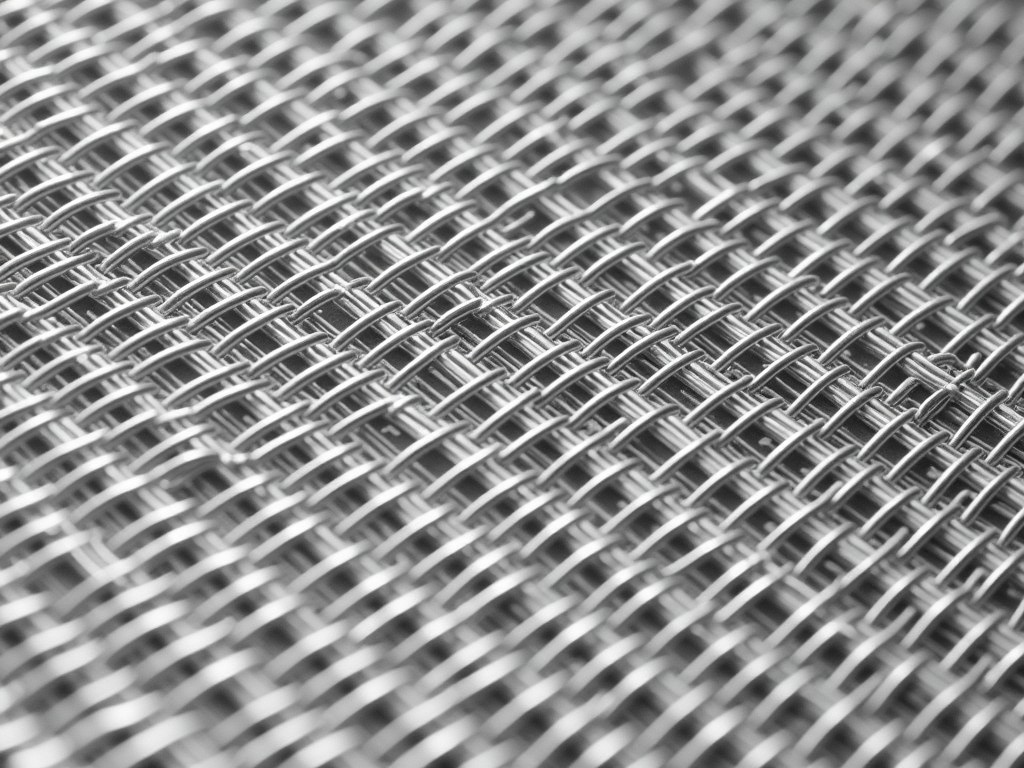
Stainless steel reverse dutch weave mesh is a specialized filtration medium characterized by a weft-dominant construction where finer warp wires are interlaced with heavier weft wires in a pattern that creates a dense, uniform surface on the filtrate side and a more open support structure on the backing side. This weave configuration reverses the typical dutch weave orientation, placing the fine mesh layer on the downstream side to optimize cake release and reduce blinding in pressure filtration applications.
Structural Characteristics and Flow Dynamics
In reverse dutch weave, the warp wires (running lengthwise) are typically thinner and more numerous, while the weft wires (running widthwise) are thicker and spaced farther apart. This arrangement results in a smooth, low-friction surface on the side facing the filtrate, which minimizes particle adhesion and facilitates easy discharge of filtered cakes. The open backing structure provides mechanical strength and allows efficient backwashing or reverse flow cleaning without damaging the fine filtration layer.
The asymmetric wire diameter and spacing create a precise flow path where larger particles are captured near the surface while smaller particles penetrate deeper into the bed, enabling graded filtration. This differs from standard dutch weave where the fine layer is upstream, making reverse dutch weave particularly effective in applications where filter cake integrity and release are critical, such as in chemical processing or pharmaceutical solid-liquid separation.
Material Selection and Corrosion Resistance
Commonly fabricated from austenitic stainless steels such as 304, 316L, or 317L, the mesh inherits the alloy’s resistance to oxidation, pitting, and stress corrosion cracking in diverse chemical environments. 316L is frequently selected for its molybdenum content, which enhances resistance to chlorides and acidic solutions, making it suitable for use in seawater, brine, or process streams containing halides. For higher temperature or more aggressive conditions, duplex or super austenitic grades may be specified based on compatibility requirements.
The wire diameters and mesh counts are engineered to maintain structural integrity under differential pressure while preserving the intended filtration rating. Unlike perforated plates or sintered metals, the woven construction allows for precise control over pore geometry and surface roughness, which directly influences cake release behavior and cleaning efficiency in cyclic filtration operations.
Filtration Performance and Ratings
Reverse dutch weave mesh is typically rated by its air permeability or liquid flow rate under standardized test conditions, often expressed in CFM/ft² or L/min/cm² at a given pressure drop. The micron rating is not absolute but rather indicative of the particle size at which a defined efficiency (e.g., 90% retention) is achieved under specific test conditions. Actual performance depends on fluid viscosity, particle shape, concentration, and operating pressure.
Because the filtration mechanism relies on surface capture and depth filtration within the woven structure, the mesh can retain particles smaller than the nominal pore opening through mechanical entrapment and adhesion. This allows for finer effective filtration than the mesh geometry alone would suggest, particularly with deformable or agglomerating particles. Manufacturers provide performance curves based on ASTM F316 or ISO 9064 test methods to support application-specific selection.
Typical Industrial Applications
In catalyst recovery systems, reverse dutch weave mesh is used to separate fine catalyst particles from reaction mixtures where preserving catalyst morphology and enabling quick discharge are essential for process efficiency. The smooth filtrate surface prevents catalyst embedding, allowing the recovered solids to be easily swept back into the reactor or regenerated without loss of activity.
Pharmaceutical manufacturers employ this mesh in filtration steps for antibiotic or vitamin production where hygienic design, cleanability, and minimal product retention are required. The ability to withstand repeated steam-in-place (SIP) and clean-in-place (CIP) cycles without degradation makes it suitable for biopharmaceutical intermediates filtration, especially when filtering cell cultures or protein precipitates where cake release impacts yield.
In food and beverage processing, the mesh is applied in the filtration of oils, syrups, or wine where clarity and flavor stability depend on minimizing shear and adsorption. The stainless steel construction avoids leaching or contamination, and the reverse weave design reduces the risk of gel formation or polyphenol binding on the filter surface, which can occur with more adhesive media types.
Comparison with Standard Dutch Weave and Plain Weave
| Property | Reverse Dutch Weave | Standard Dutch Weave | Plain Weave |
|---|---|---|---|
| Filtrate Side Surface | Smooth, fine wires | Coarse, thick wires | Uniform, equal wires |
| Cake Release | Excellent | Poor | Moderate |
| Backing Support | Open, coarse weft | Dense, fine warp | Uniform |
| Pressure Drop | Lower for same retention | Higher | Baseline |
| Typical Use Case | Cake filtration, easy discharge | Fine particle retention | General separation |
Customization and Manufacturing Considerations
Mesh specifications are defined by warp count (wires per inch), weft count, warp wire diameter, and weft wire diameter. These parameters are selected based on the required flow rate, particle retention profile, and mechanical strength. For example, a mesh with 100 warp wires/inch of 0.010" diameter and 30 weft wires/inch of 0.025" diameter will exhibit different flow and retention characteristics than one with 80/0.012" and 25/0.030", even if the nominal micron rating appears similar.
Edge treatments such as hemming, framing, or welding to perforated plates are available to facilitate installation in filter housings or cartridges. Custom dimensions, shapes (discs, pleats, cylinders), and multi-layer laminations can be produced to meet specific equipment interfaces. All manufacturing follows ISO 9001 quality management principles, with incoming wire inspected for diameter tolerance, tensile strength, and surface finish before weaving.
Quality Assurance and Testing
Each roll or panel undergoes visual inspection for wire breaks, skips, or misweaves under magnified lighting. Dimensional stability is verified by measuring width and length tolerance, while wire protrusion and weave tightness are assessed using tactile and optical methods. For critical applications, bubble point testing or air permeability testing may be conducted to confirm pore structure integrity and performance consistency across batches.
Material traceability is maintained through heat lot numbers, allowing correlation of performance data to specific alloy batches. Chemical composition verification via spectrometer analysis is available upon request to confirm compliance with ASTM A240 or equivalent standards. These controls ensure that the mesh delivers predictable behavior in validated processes where filtration efficiency directly impacts product yield or safety.