


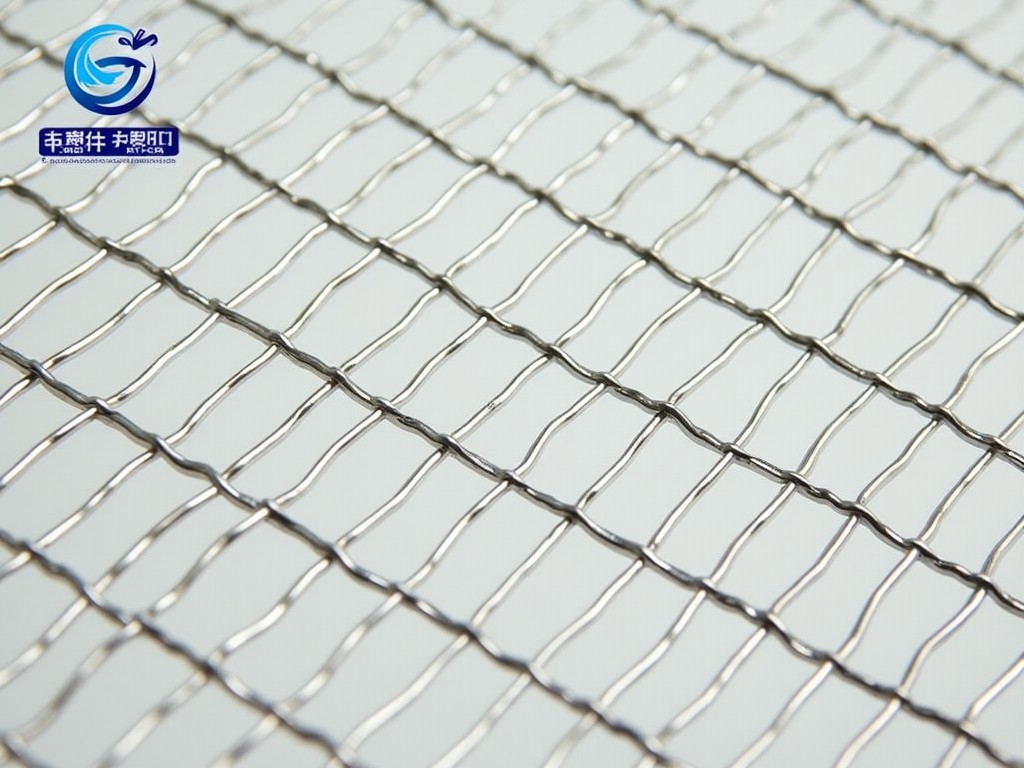
Stainless Steel Security Window Screen Mesh Suppliers
Stainless Steel Security Window Screen Mesh
Security window screens require materials that balance visibility, airflow, and resistance to forced entry or environmental degradation. Stainless steel mesh is selected when long-term structural integrity and corrosion resistance are critical, particularly in coastal, industrial, or high-security environments where standard aluminum or fiberglass screens fail prematurely.
The effectiveness of a security screen depends on wire diameter, aperture size, weave pattern, and alloy composition. These parameters determine tensile strength, shear resistance, and susceptibility to creep under constant load. Industrial buyers evaluate these factors to ensure compliance with local building codes, insurance requirements, or facility-specific threat assessments.
Material Specifications and Performance Characteristics
Stainless steel security mesh is typically manufactured from grades 304 or 316, chosen based on environmental exposure. Grade 304 offers adequate resistance to atmospheric corrosion in inland areas, while 316 contains molybdenum to withstand chloride-induced pitting in marine or chemical environments. Wire diameters range from 0.8 mm to 1.5 mm, with aperture sizes between 1.2 mm and 3.0 mm, directly influencing both security rating and optical transparency.
Tensile strength of cold-drawn stainless steel wire exceeds 1800 MPa, enabling the mesh to resist impact and cutting attempts. The weave pattern—commonly plain dutch or twill—affects load distribution; dutch weaves provide higher filtration precision and mechanical stability due to asymmetric wire spacing. Elongation at break remains below 15%, indicating minimal deformation under sustained tension, which is essential for maintaining frame integrity over time.
| Parameter | Typical Range | Relevance to Security Performance |
|---|---|---|
| Wire Diameter | 0.8 mm – 1.5 mm | Directly correlates with shear and tensile resistance; thicker wires increase cutting resistance but reduce visibility. |
| Aperture Size | 1.2 mm – 3.0 mm | Smaller apertures improve intrusion prevention but reduce airflow and light transmission; must balance security with environmental needs. |
| Alloy Grade | 304 or 316 | 316 preferred for salt spray or chemical exposure; 304 sufficient for moderate urban environments. |
| Weave Pattern | Plain Dutch, Twill | Dutch weave enhances lock-up under load; twill offers flexibility for curved frames without compromising strength. |
Manufacturing Considerations for Industrial Applications
Producing consistent security mesh requires precise wire drawing and weaving tolerances. Variations in wire diameter beyond ±0.02 mm can create weak points in the mesh structure, reducing overall reliability. Manufacturers use inline laser gauging and tension monitoring during weaving to maintain dimensional stability across large rolls, typically 1.0 m to 2.2 m in width.
Post-weaving processes include annealing to relieve internal stresses and electrolytic cleaning to remove surface contaminants that could initiate corrosion. Edge treatment—such as hemming or welding to a reinforcing strip—prevents fraying and facilitates secure attachment to aluminum, steel, or PVC frames. Mesh is supplied in roll form or cut-to-length panels, with edge finishes customized per installation method.
Quality control involves visual inspection for defects, tensile testing of wire samples, and salt spray testing (ASTM B117) for corrosion resistance validation. Batch traceability is maintained through laser-etched identifiers or barcoded labels, supporting audit requirements for infrastructure or government projects.
Applications Where Stainless Steel Security Mesh Is Specified
In correctional facilities, stainless steel mesh is used for cell windows and ventilation grilles where resistance to tampering and contraband passage is mandatory. The small aperture sizes prevent insertion of tools or weapons while allowing sufficient air exchange to meet HVAC requirements. Unlike perforated metal, mesh maintains superior visibility for surveillance purposes.
Data centers and substations deploy these screens to protect cooling intakes and equipment enclosures from unauthorized access or debris ingress. The non-magnetic property of austenitic stainless steel (grades 304/316) ensures no interference with sensitive electromagnetic sensors or communication systems located nearby.
Marine infrastructure—such as port facilities, offshore platforms, and coastal power plants—relies on grade 316 mesh to withstand constant salt spray and humidity. Here, the material’s longevity reduces lifecycle costs compared to coated alternatives that require periodic recoating or replacement due to underfilm corrosion.
Customization and Procurement Options
Suppliers offer customization in width, length, wire diameter, aperture, and alloy grade to match project-specific security levels and environmental conditions. Rolls can be slit to narrow widths for retrofit applications or fabricated into framed panels with pre-drilled mounting holes. Surface finishes include mill finish, passivated, or electropolished for enhanced appearance and corrosion resistance in architectural settings.
Minimum order quantities vary based on width and alloy; standard 304 mesh in 1.2 m width typically starts at 50 linear meters, while 316 grade may require higher minimums due to material cost and processing. Lead times range from 2 to 4 weeks for stocked specifications, extending to 6–8 weeks for custom weaves or special edge treatments.
Technical documentation—including material certifications, weave specifications, and test reports—is provided upon request. Packaging options range from polyethylene-wrapped rolls on cardboard cores to wooden crates for overseas shipment, with desiccant included to prevent moisture accumulation during transit.
For technical inquiries, custom specifications, or project consultation, contact our engineering team to discuss your security screening requirements.
Request Technical Consultation