


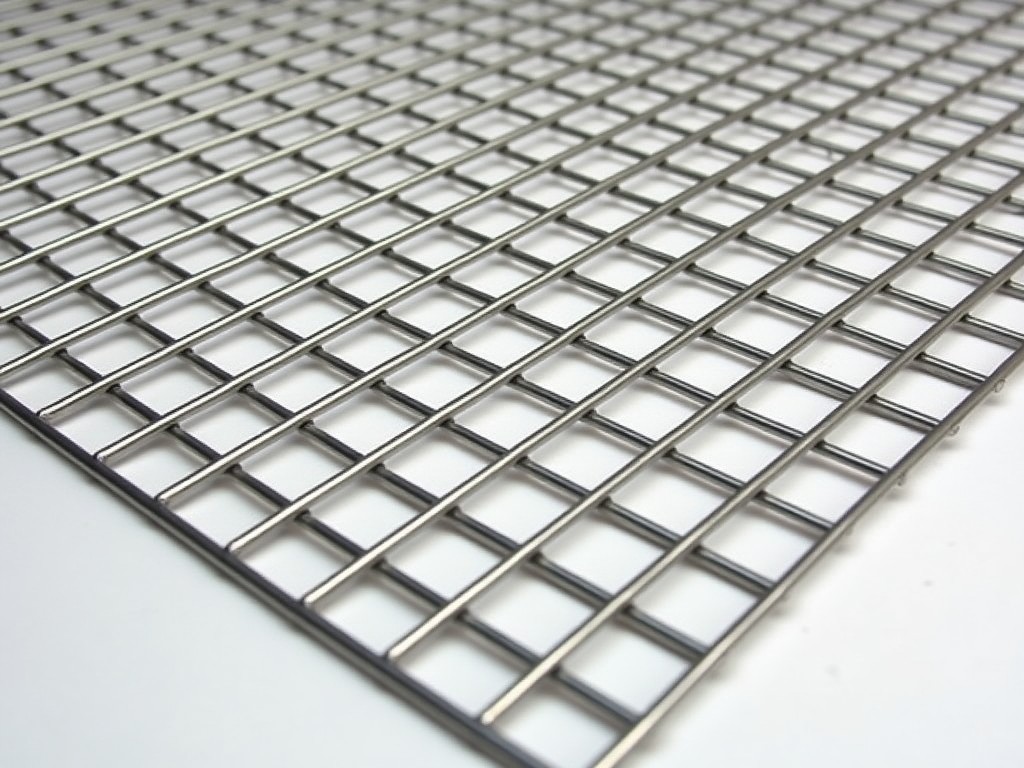
Stainless Steel Square Wire Mesh
Stainless Steel Square Wire Mesh
Stainless steel square wire mesh is a precision-engineered filtration and screening material formed by weaving stainless steel wire in a plain square weave pattern. This construction creates uniform square openings with consistent dimensional stability, making it suitable for applications requiring accurate particle separation, structural reinforcement, or environmental protection.
The mesh is produced using cold-drawn stainless steel wire, typically grades 304, 316, or 316L, selected based on corrosion resistance requirements and mechanical load expectations. Wire diameter and opening size are tightly controlled during weaving to ensure repeatable performance across batches.
Unlike welded or perforated alternatives, woven square mesh offers flexibility without sacrificing opening integrity, allowing it to conform to curved surfaces while maintaining filtration accuracy. This combination of precision and adaptability supports its use in both static and dynamic industrial environments.
Key Technical Characteristics
The performance of stainless steel square wire mesh is defined by four interrelated parameters: wire diameter, opening size, mesh count, and open area percentage. These values are not independent—changing one affects the others and must be balanced according to the intended function.
Mesh count, measured in openings per linear inch (or per centimeter), determines the fineness of filtration. For example, a 10 mesh screen has 10 openings per inch, while a 200 mesh screen provides much finer separation. Wire diameter influences both mechanical strength and pressure drop; thicker wire increases durability but reduces flow rate.
Open area percentage, calculated as the ratio of open space to total surface area, directly impacts throughput efficiency. Higher open area allows greater flow but may reduce mechanical stability if wire becomes too thin relative to opening size. Engineers specify these values based on process requirements such as particle retention, flow velocity, and cleaning frequency.
Material Selection and Corrosion Resistance
Grade 304 stainless steel is the most commonly used alloy for general-purpose square wire mesh due to its balanced corrosion resistance, formability, and cost-effectiveness. It performs well in ambient indoor environments, food processing, and light chemical exposure where chloride levels are low.
For environments with higher chloride exposure, such as marine settings, chemical processing, or outdoor installations, grade 316 or 316L is preferred due to the addition of molybdenum, which enhances resistance to pitting and crevice corrosion. The low-carbon variant (316L) minimizes sensitization during welding, making it suitable for fabricated assemblies.
In high-temperature applications exceeding 400°C, specialized alloys like 310 or 321 may be specified to maintain oxidation resistance and mechanical integrity. Material selection is always guided by the specific chemical, thermal, and mechanical demands of the application rather than generic assumptions.
Typical Specifications and Customization Options
| Parameter | Typical Range | Notes |
|---|---|---|
| Wire Diameter | 0.025 mm to 2.0 mm | Finer wires for filtration; heavier for structural use |
| Opening Size | 0.05 mm to 50 mm | Square apertures; tolerance typically ±10% |
| Mesh Count | 2 to 635 mesh/inch | Higher count = finer filtration |
| Open Area | 10% to 70% | Dependent on wire diameter and mesh count |
| Standard Width | 0.5 m to 2.5 m | Custom widths available upon request |
| Length | Rolls or cut-to-size | Typical roll lengths: 10 m to 50 m |
All dimensions are customizable according to project requirements. Tolerances, edge finishes (selvedge, hemmed, or fused), and roll direction can be specified to match integration needs. For critical applications, material certification and traceability documentation are available.
Industrial Applications and Functional Rationale
In chemical and pharmaceutical processing, stainless steel square wire mesh serves as a reliable medium for gas dispersion, liquid filtration, and catalyst support. Its uniform opening size ensures consistent retention of particulates while allowing controlled flow rates, which is essential for maintaining reaction efficiency and product purity.
Within food and beverage production, the mesh is used in screening conveyors, drying belts, and separation sieves where hygiene and cleanability are paramount. The smooth, non-porous surface of stainless steel resists bacterial adhesion and withstands frequent cleaning-in-place (CIP) cycles with alkaline or acidic solutions.
In architectural and infrastructural contexts, the mesh provides fall protection, wind screening, and debris containment for façades, balconies, and tunnel linings. Its high tensile strength and corrosion resistance allow it to endure prolonged environmental exposure without degradation, reducing lifecycle maintenance costs.
Additional applications include insect screening in HVAC systems, RF shielding enclosures, battery electrode separation, and vibratory sorting equipment. In each case, the selection of square weave over alternatives like twill or Dutch weave is driven by the need for symmetrical flow distribution and predictable pressure drop characteristics.
Quality Assurance and Inspection Protocols
Quality control begins with raw material verification, where incoming stainless steel wire is tested for chemical composition, tensile strength, and surface finish to ensure compliance with ASTM or EN standards. Wire diameter is measured using laser micrometers or optical comparators at multiple points along the spool.
During weaving, tension and pick count are monitored in real time to maintain uniform opening dimensions. Finished mesh undergoes dimensional inspection using calibrated gauges or vision systems to verify mesh count, opening size, and flatness. Any deviation beyond specified tolerances triggers rejection or reprocessing.
For applications requiring high integrity, additional tests such as bubble point testing (for filtration rating), tensile burst strength, or corrosion resistance testing (e.g., salt spray per ASTM B117) may be performed. Inspection reports and material certificates are provided upon request to support traceability and regulatory compliance.
Ordering Information and Lead Times
To receive an accurate quotation, customers should provide the required stainless steel grade, wire diameter, opening size or mesh count, roll width and length, edge finish, and any applicable certifications or testing requirements. Quantities under standard roll sizes may be accommodated via cut-to-length service.
Standard items in common grades and sizes are typically available from stock with lead times of 3–5 business days. Custom specifications, non-standard alloys, or large-format orders generally require 2–4 weeks for production, depending on material availability and loom scheduling.
Packaging options include moisture-resistant paper wrapping, plastic film, or wooden crates for long-distance shipment. All packaging is designed to prevent deformation, corrosion, or contamination during transit and storage.
For technical consultation, custom specifications, or to request a sample, contact our engineering team.
Submit Inquiry