


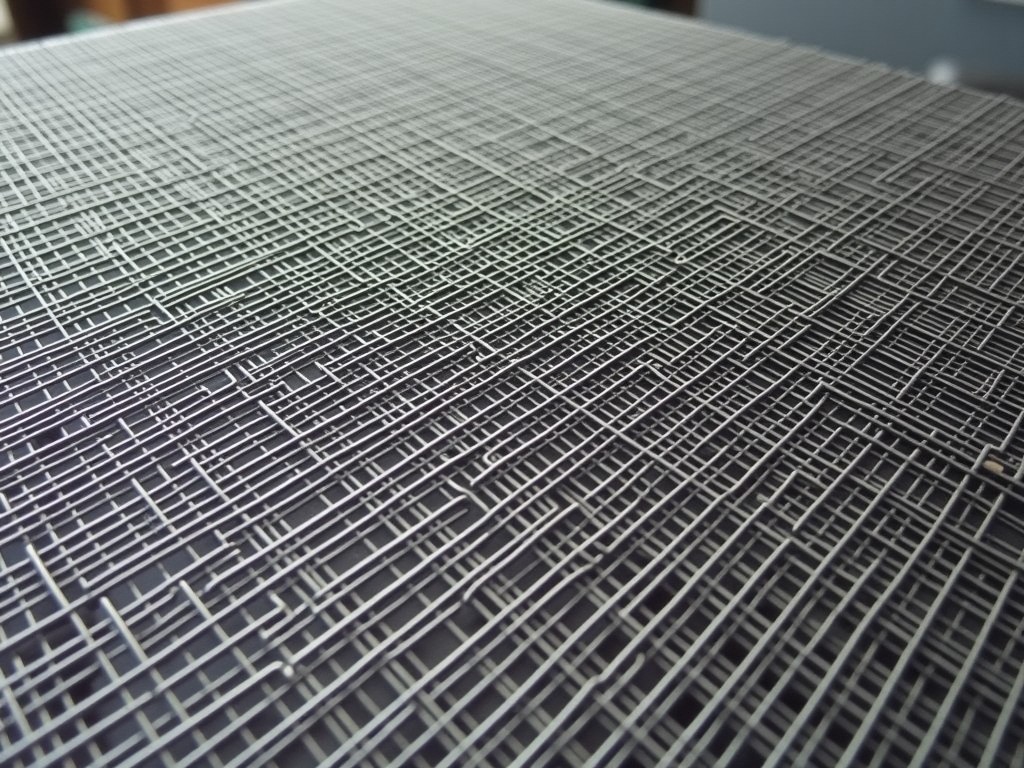
Stainless Steel Wire Mesh Exporter From China
Stainless Steel Wire Mesh Exporter from China
As a manufacturer and exporter of stainless steel wire mesh based in China, we produce technical filtration and separation solutions engineered for demanding industrial environments. Our focus is on delivering mesh products defined by precise dimensional tolerances, material consistency, and performance under specific operational stresses—not generalized claims of quality.
Stainless steel wire mesh derives its functional properties from the interplay of alloy composition, wire diameter, aperture size, and weave pattern. These parameters directly influence corrosion resistance, tensile strength, open area percentage, and flow dynamics. Understanding these relationships is essential for selecting mesh that maintains integrity in process conditions involving chemical exposure, temperature cycling, or mechanical abrasion.
Material Specifications and Alloy Selection
We supply wire mesh fabricated from austenitic stainless steel grades, primarily 304 (1.4301) and 316L (1.4404), selected based on environmental exposure risks. Grade 304 offers adequate resistance to atmospheric oxidation and mild chemical agents at temperatures up to 425°C. Grade 316L, containing molybdenum, provides enhanced protection against chloride-induced pitting and is preferred in marine, chemical processing, and pharmaceutical applications where halide exposure is present.
Wire diameters range from 0.025 mm for precision filtration to 2.0 mm for structural reinforcement or coarse screening. Aperture sizes are achievable from 25 microns (for micron-rated filtration) up to 150 mm (for aggregate sorting or architectural infill). These dimensions are controlled during weaving using calibrated looms and inspected via optical measurement systems to maintain tolerances within ±5% of nominal values.
Weave Patterns and Structural Characteristics
The weave pattern determines mesh stability, flow uniformity, and mechanical behavior under load. Plain weave (square mesh) provides symmetric aperture distribution and equal tensile strength in warp and fill directions, suitable for general sieving and filtration where bidirectional stress is expected. Twill weave, where each wire passes over two and under two adjacent wires, offers greater flexibility and higher wire diameter compatibility for the same aperture, increasing strength and wear resistance in abrasive slurry applications.
Dutch weave variations—including plain Dutch and twill Dutch—feature asymmetric wire diameters (warp thicker than fill) to achieve high mechanical strength with fine filtration ratings. These structures create a tortuous flow path ideal for capturing deformable particles or gel-like substances in chemical and food processing. The tighter fill direction in Dutch weave reduces aperture elongation under tension compared to square weaves of equivalent nominal rating.
Typical Industrial Applications
In chemical processing, stainless steel wire mesh serves as catalyst support, media retention in packed beds, and filtration of corrosive intermediates. The open area and wire diameter are selected to balance pressure drop with particle retention efficiency—critical in continuous operations where downtime for cleaning must be minimized. For example, a 316L twill Dutch mesh with 50 micron nominal rating and 40% open area is commonly used in fine chemical synthesis to retain solid catalysts while allowing solvent permeation.
In food and beverage production, mesh is employed for liquid clarification, pulp dewatering, and screening of granular ingredients. Hygienic design requires smooth surfaces, crevice-free joints, and compatibility with clean-in-place (CIP) systems. Electropolished 304 mesh with plain weave and 200 micron apertures is frequently specified for juice filtration to meet 3-A Sanitary Standards while maintaining flow rates above 15 L/min/cm² under 0.5 bar differential pressure.
Architectural and infrastructural uses include concrete reinforcement, facade cladding, and fall protection systems. Here, mesh must withstand environmental loading, UV exposure, and potential impact. Welded mesh panels made from 3.0 mm diameter 316L wire with 50x50 mm apertures provide tensile strength exceeding 8 kN per wire and are hot-dip galvanized post-welding for extended service life in coastal environments.
Quality Control and Inspection Protocol
Dimensional verification occurs at multiple stages: raw wire diameter is checked via laser micrometry (±0.001 mm accuracy), aperture dimensions are measured using digital microscopes with calibrated reticles, and roll width/tolerance is monitored during winding. Tensile testing follows ASTM A370 standards on extracted wire samples to confirm yield strength and elongation align with grade specifications—typically 205 MPa yield and 40% elongation for 304, 290 MPa and 50% for 316L.
Visual inspection under 10x magnification identifies weaving defects such as skipped wires, double picks, or edge fraying. Surface cleanliness is assessed for residual lubricants or particulates that could contaminate sensitive processes. For hygienic applications, roughness average (Ra) is measured to ensure values remain below 0.8 µm after electropolishing, reducing microbial adhesion risk.
Batch traceability links raw material certificates, weaving parameters, and inspection records to each roll or panel. This enables root-cause analysis if field performance deviates from expectations and supports compliance with industry-specific documentation requirements such as EN 10204 3.1.
Customization and Engineering Support
We collaborate with clients to translate process requirements into mesh specifications. This begins with identifying the separation target (particle size, shape, deformability), fluid properties (viscosity, pH, temperature), and operational constraints (pressure differential, flow rate, cleaning frequency). From these inputs, we recommend alloy, wire diameter, weave pattern, and aperture size using established filtration models such as the Hermia blocking laws or Darcy’s law for porous media.
Custom dimensions are available for roll widths up to 3000 mm and lengths constrained only by handling logistics. Edge finishes include selvaged, hemmed, or welded borders to prevent fraying and facilitate installation. For architectural panels, we provide flatness tolerances (<3 mm="" deviation="" over="" 1m="">
Surface treatments such as passivation (per ASTM A967), electropolishing, or specialized coatings (e.g., PTFE for non-stick surfaces) are applied post-weaving when required. These processes alter surface chemistry and morphology to improve corrosion resistance, reduce friction, or prevent product adhesion—each accompanied by validation data such as contact angle measurements or salt spray test results (ASTM B117).
Packaging and Export Logistics
Mesh rolls are wound onto rigid cores (typically 50–76 mm diameter) with inner protective layers of polyethylene film to prevent abrasion and moisture ingress. Outer wrapping uses UV-stabilized shrink film or water-resistant kraft paper with corner boards to resist deformation during stacking. Rolls are secured within fumigated wooden pallets or steel frames using polyester strapping, with shock indicators attached to detect mishandling exceeding 15G.
Flat panels are stacked vertically with interleaving sheets of corrugated polypropylene to prevent surface contact and edge damage. Corner protectors and edge seals are added before strapping. Each package includes laser-printed labels with part number, material grade, dimensions, weight, and QR code linking to the digital test report. Export documentation includes commercial invoice, packing list, certificate of origin, and material test certificates (MTC) compliant with EN 10204.
Lead times vary based on complexity: standard rolls from stock materials ship within 7–10 working days after order confirmation. Custom alloys, non-standard weaves, or panels requiring fabrication typically require 15–25 days. We provide production schedules with milestone updates upon request, allowing clients to align logistics with project timelines.
Technical Inquiry
To receive a detailed quotation or technical consultation, please provide the following information: intended application, operating temperature and pressure, chemical exposure details, required particle retention size, flow rate specifications, and any applicable industry standards (e.g., ASME, FDA, 3-A, ISO). Drawings or sketches are helpful for custom panel designs.
Send your inquiry to our technical team for evaluation. We respond within 24 hours with material recommendations, weave options, and preliminary pricing based on your specifications.